Saturday Series: Deuteronomy 32:4-6ff

In the previous Saturday Series study, we looked at the opening verses (vv. 1-3) of Deuteronomy 32 (the “Song of Moses”), in light of the earlier critical analysis, to see how the various areas and aspects of Biblical criticism relate to the overall interpretation of a passage. This week we will proceed to the next section of the poem (vv. 4-18), based on the following outline:

    • 1-3: Opening (exordium)—Call to Creation (heaven and earth)
    • 4-18: God’s covenant with His people Israel, and their violation of the covenant
      —The Creator God (YHWH) as their Father (vv. 4-6)
      —His choice of Israel as His people, becoming their God (vv. 7-9)
      —His protection and guidance during the Exodus and wilderness travels (vv. 10-14)
      —His people turned away from Him, worshiping foreign gods (vv. 15-18)
    • 19-42: God’s punishment of His people, and their subsequent deliverance
      —Punishment for violation of the covenant (vv. 19-25)
      —Concern for how this will be perceived by Israel’s enemies (vv. 26-31)
      —Plans to bring punishment on Israel’s enemies in turn (vv. 32-35)
      —Ultimate justice/deliverance for His people, and judgment on His enemies (vv. 36-41)
    • 43: Conclusion—Call to the Nations

We begin with the first portion (vv. 4-6), which establishes the principal theme of the Creator God (YHWH) as the Father of the people Israel.

Deuteronomy 32:4-6

Here is my translation of this section:

4The Rock—His work(s are) complete,
indeed, all His ways (are with) justice,
a Mighty (One) firm with no deviation—
He (is the One ever) true and straight!
5(Yet) His sons <ruined their loyalty to Him>,
an Age (now) crooked and (all) twisted!
6Would you deal this (way) with YHWH,
(as) a foolish people (with) no wisdom?
Is He not your Father who created you?
(Didn’t) He make you and cause you to be?

After the exordium (vv. 1-3), these lines establish the fundamental theme of the poem. However one views the origin and composition of the Song itself, it must be read in the context of its position in the book of Deuteronomy. The entire thrust of the historical narration, presented as a speech (or speeches) by Moses, is as an exhortation (and warning) to the people to follow the terms of the binding agreement (covenant) established by YHWH. In the initial sections of the Epilogue (chapter 31), it is foretold that Israel would, in large measure, violate the covenant (vv. 16-18, 20-22) in the years to come. For critical scholars, who view the book of Deuteronomy as a product of the kingdom period (e.g. the reign of Josiah, and thereafter), the actual historical situation has been retrojected and presented as ex eventu prophecy (i.e. prophecy written after the fact). Many traditional-conservative commentators, of course, accept the book as recording Moses’ actual words, at least in substance, in which case it represents authentic prophecy announced by God. Either way, its purpose (and power) as a warning to Israel, to remain faithful to the covenant and its Torah, comes through loud and clear. We see this especially in verses 26-29:

“26Take this account of the Instruction {Torah}, and you shall set it alongside the box of [i.e. containing] the binding (agreement) of YHWH your Mighty (One) {Elohim}, and it shall be there among you for a witness (always). 27For (indeed) I know your defiance and the hard (back of) your neck! see—in my (be)ing yet alive with you th(is) day, you have been (act)ing defiant with YHWH, and so (then) how (much more will you) following my death! 28Gather to me all the elders of your staffs [i.e. tribes] and (the one)s administering (for you), and I will speak these words in their ears, and I will make [i.e. call on] heaven and earth (to) give witness a(gainst) them. 29For I know that, following my death, you will go (completely) to ruin, and you will turn (aside) from the path which I have charged you (to walk), and the evil shall meet you in the days following, (in) that [i.e. because] you did the (thing that is) evil in the eyes of YHWH, and provoked Him with the (thing)s your hands (have) done.”

There is a strong parallelism at work in these verses:

    • Instruction/exhortation as a witness (of the covenant)—written, i.e. the book of Deuteronomy itself as a record of Moses’ words (v. 26)
      • Prophecy of future disobedience: “For I know (that)…” (v. 27)
    • Instruction/exhortation as a witness (of the covenant)—oral, Moses’ words given directly to the leaders of Israel (v. 28)
      • Prophecy of future disobedience: “For I know (that)…” (v. 29)

All of this sets the stage for Moses’ reciting the poem of chap. 32 (the Song) to the entire assembly of the Israelite people (v. 30). Thus, central to the poem is the idea of the binding agreement (b®rî¾, ‘covenant’) God made with Israel, and their need to remain faithful to it. There is a strong echo of the covenant-treaty formula in the opening words of the Song, as discussed previously. Now, in the first main section (vv. 4-18) the basis of the covenant is established and confirmed, through poetic narrative. The relationship between the two parties—YHWH and Israel—begins with YHWH’s position as Creator (of all humankind), and special role as Father of Israel. As such, verses 4-6 are fundamentally theological—presenting and describing the character and attributes of YHWH; and the primary characteristic is the faithfulness and loyalty He possesses, which informs His side of the binding agreement. This is expressed several ways in the first lines (2 bicola) of verse 4 (a-d):

    • V. 4a (1): The word ƒûr (“rock”) as a title (Haƒƒûr, “The Rock”), used repeatedly in the Song (vv. 15, 18, 30-31, 37); a rock by nature is strong and sure, while a hill or cliff is a natural position of refuge and protection; thus, the title indicates the reliability, security, and protection which God provides.
    • V. 4a (2-3): It is further said that His actions (pœ±al pl., root p¹±al) are complete (t¹mîm)—that is, there is nothing lacking or amiss in anything He does; for His part, He is utterly faithful and reliable. The call for the people of Israel, likewise, to be complete (t¹mîm) in 18:13 is reminiscent of Jesus’ words in Matt 5:48: “Then [i.e. if you follow my teachings] you will be complete, as your heavenly Father is complete”.
    • V. 4b: Similarly, it is declared that “all His ways/paths” (k¹l-d®r¹k¹yw) are “justice”. Here, the noun mišp¹‰ may be used in an adjectival sense (“just, right”); however, one can also understand it in a predicate sense—i.e., “all His paths (are in/with) justice”. Everywhere that YHWH walks and acts, there is justice, and nothing that is not just or right; clearly the thought in this half line (colon) is parallel to the one previous.
    • V. 4c: Here His faithfulness and loyalty is stated more directly, with two declarations:
      (i) He is a firm Mighty One (“God”)—that is, He is firm and true in everything He does, using the noun °§mûnâ, parallel to the noun mišp¹‰ (“justice”) in the previous line. He is also the only true Mighty One (°E~l, “God”); all other supposed “Mighty Ones” (whether “gods” or Rulers) are false and unreliable. This lays the groundwork for the contrast between YHWH and the deities of the surrounding nations later in the poem.
      (ii) There is no deviation (or corruption) in what He does; it is specifically stated that “there is no (°ên) deviation (±¹wel)”; moreover, such “deviation” is characteristic of idolatry, and likewise introduces the dualistic theme than runs through the remainder of the poem.
    • V. 4d: YHWH (“He”, hû°) is characterized by two fundamental attributes:
      (i) ƒadîq, often translated “faithful”, but, in the context of the covenant-setting, perhaps better understood as “true”, “loyal”; it is parallel with the noun °§mûnâ in the prior half-line.
      (ii) y¹š¹r, “straight”, clearly parallel with “there is no deviation”.

If YHWH is a completely faithful and reliable partner in the covenant, the same can not be said of the people (Israel). Their lack of faithfulness (to the covenant) is described in vivid, even difficult, terms, reflecting both past (i.e. the Golden Calf incident) and future violations. Despite the harsh language used, it does not necessarily mean that Israel was responsible for flagrant immorality, and the like; any violation of the covenant, however slight, could be described in this manner.

It is just here, in the bicolon of verse 5, that the force of the language used gives way to a significant textual difficulty, as I discussed in a prior study. Many commentators suggest that the text in the first half line, as it has come down to us in the Masoretic text, requires emendation. For the purposes of this study, I have tentatively adopted a reading along the lines of “His sons ruined their loyalty to Him” (see the translation above). The verb š¹µa¾ (“[go to] ruin, destroy, corrupt”) was used earlier in the section preceding the poem (31:29, see above), in Moses’ foretelling the people’s violation of the covenant. This lack of loyalty—to be understood primarily in terms of “idolatry”, as in the Golden Calf episode—characterizes an entire Age or generation (Heb. dôr) of the people. In the second half-line of verse 5, they are characterized as: “an Age crooked and (all) twisted (up)”. This crooked/twisted character of the people is in marked contrast with the “straightness” of YHWH.

In the two lines of verse 6, the contrast—between YHWH and Israel—is developed further, with a pair of questions (each beginning with the interrogative particle h¦-); the question in the first line is:

“Would you deal this (way) with YHWH, (as) a foolish people (with) no wisdom?”

In Torah scrolls, the initial h¦- particle is especially large, perhaps to emphasize the enormity of the question, i.e. “Would you really treat YHWH this way?”. The contrast between one who is foolish (n¹»¹l) and wise (µ¹k¹m) is an essential element of Hebrew Wisdom literature, with ancient roots. The second question builds upon the first, and continues the contrast between YHWH and the people:

    • Character of the People:
      “Would you deal this (way) with YHWH, (as) a foolish people (with) no wisdom?”
    • Character of YHWH:
      “Is He not your Father who created you? (Didn’t) He make you and cause you to be?”

If the people acts as faithless, defiant sons (v. 4), YHWH, by contrast remains a faithful/loyal Father to them. His role as Father begins with his more primary function as Creator of all things (and of humankind). Three verbs are used which mark YHWH-El as Creator God:

    • q¹nâ—a primitive root with the basic meaning “create”, sometimes confused/conflated with a similar root with the meaning “buy, purchase, acquire”. Its ancient Semitic religious use is attested in the famous formula of Gen 14:19, 22.
    • ±¹´â—a common verb indicating basic action or work, “make, do”.
    • A causative form of a primitive kn root (kûn, k¹nâ, k¹nan), with the basic meaning here of “cause to be” (see the parallel in Psalm 119:73)

This vital contrast in vv. 4-6 prepares the way for the narration in vv. 7-18, in which the contrast in played out through a colorful description of Israel’s early history. I would ask that you read through this section carefully, noting how the contrast is expressed and the various themes or motifs that are introduced within the fabric of the poem. Consider also the specific textual question in verse 8 (discussed in a previous study)—how does the overall sense and thrust of the passage differ depending on which reading is adopted? We will continue moving through this marvelous poem when we meet again here, next Saturday.

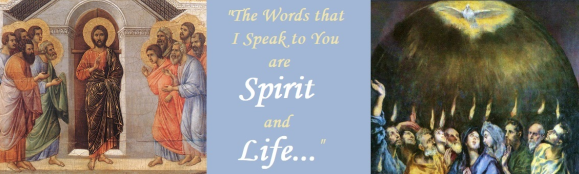
Saturday Series: Deuteronomy 32:1ff

In recent weeks, we have examined various areas of Biblical Criticism, using the Song of Moses in Deuteronomy 32 as a case for study. We have looked at:

    • Textual Criticism—Analysis of the Hebrew text, including variant readings, attempts to determine the most likely original form of the text, and how it may have been shaped during the course of copying and transmission. For the Hebrew Old Testament, the Scripture manuscripts from Qumran (Dead Sea Scrolls) are especially important, when they differ from the Masoretic Text.
    • Form Criticism—Study of the specific form and genre of the passage, as far as it can be determined. What type of material are we dealing with, what are its characteristics, and how is it distinguished from other portions elsewhere in Scripture or in the same book? Specific issues are involved when dealing with ancient Hebrew poetic or psalm/hymn forms, as in the case of Deut 32.
    • Source Criticism—How did the passage come to be incorporated into the book as a whole? Did the writer(s) make use of an existing document or line of tradition? If so, how might it be distinguished from other material in the book?
    • Historical Criticism—Consideration of the (original) historical setting and background of the book, and how it came to be composed. A separate issue involves analysis of the historical accuracy of the material, whether dealing with specific traditions or literary (and narrative) sections. The latter is not merely a question of whether the Scripture is historically reliable (from a particular standpoint), but of how the content of a passage relates to its composition.

We shall now apply these to an examination of the Song of Moses as it has come down to us, looking at specific selected verses or lines of the poem. This will help us to see just how criticism relates to interpretation—here in the case of a famous and influential piece of ancient Hebrew poetry within an Old Testament Scripture. Broadly speaking, this sort of study may be referred to as literary criticism—analysis of the distinct literary form and structure, i.e. the book and passage of Scripture, as it has come down to us.

Before proceeding, it will be helpful to consider the thematic outline of the Song. Such an outline normally would follow the sort of study we are doing, being the result of it; however, in this instance it will help things along to include it here beforehand.

    • 1-3: Opening (exordium)—Call to Creation (heaven and earth)
    • 4-18: God’s covenant with His people Israel, and their violation of the covenant
      —The Creator God (YHWH) as their Father (vv. 4-6)
      —His choice of Israel as His people, becoming their God (vv. 7-9)
      —His protection and guidance during the Exodus and wilderness travels (vv. 10-14)
      —His people turned away from Him, worshiping foreign gods (vv. 15-18)
    • 19-42: God’s punishment of His people, and their subsequent deliverance
      —Punishment for violation of the covenant (vv. 19-25)
      —Concern for how this will be perceived by Israel’s enemies (vv. 26-31)
      —Plans to bring punishment on Israel’s enemies in turn (vv. 32-35)
      —Ultimate justice/deliverance for His people, and judgment on His enemies (vv. 36-41)
    • 43: Conclusion—Call to the Nations

We start with the first verse (and line) of the Song.

Deuteronomy 32:1

The Song begins with a call (by the poet) to all of creation—”the heavens and the earth”:

“Give ear, O heavens, and I will open to speak,
And hear, O earth, the words of my mouth.” (v. 1)

This first line (bicolon) demonstrates the parallelism, common to much ancient Near Eastern (and Hebrew) poetry, which runs throughout the song. We examined this in the study on Form Criticism. It is not simply a stylistic device; it also allows the poet to emphasize certain themes and ideas, giving two (or more) variations of a basic motif, the second restating or building upon the first. Here the dual-concept of the universe (creation) as consisting of the pair “heaven and earth” serves to establish the parallelism in the line. This sort of opening is actually a traditional literary (and rhetorical) device, seen in other places in the Old Testament—Isa 1:2-3; Jer 2:4ff; also Psalm 50:4; Mic 6:1ff. It draws upon ancient religious and cultural traditions, including certain conventions associated with establishment of binding agreements (covenants) and treaties, etc. In establishing such an agreement between parties, it was customary to call on deities as witnesses, as way of “hallowing” the agreement, and, in a quasi-magical manner, to bring down divine judgment if it should ever be violated by one of the parties. We see a faint vestige of this sort of practice today in our continued use of oaths in official legal proceedings and public ceremonies.

Of course, in the context of early Israelite monotheism, Yahweh was the one called upon in oaths and the like. In the case of the covenant between God (YHWH) and Israel, the typical custom (of calling upon deities as witness) could not be applied in the same way, nor was it entirely appropriate. Nothing of the sort is found in the early covenant traditions (in Gen 15, 17; Exod 24, etc) which we examined in earlier studies. However, it does appear several times in the book of Deuteronomy: 4:26; 30:19, and at 31:28, just prior to the Song. Though “heaven” and “earth” as such were viewed as deities in the ancient Near East, they are not treated this way here. Rather, they represent “all of creation”—i.e. the universe, the created order. The poet, following God’s own word, calls on heaven and earth to hear the words of the Song. According to 31:19, the Song itself serves as witness of the covenant, to which heaven and earth join, according to the traditional motif. This enhances the importance of the Song and its message. Verse 2 extends the idea of creation as witness, hearing the words of the Song, through the natural imagery of rain and dew—i.e., water from heaven, which, drawing upon sky/storm theophany, has God as its source. God’s word—that is, the inspired message of the Song—comes down from heaven to the earth.

Commentators sometimes refer to the call to heaven and earth in verse 1 (and similar passages) as part of a “covenant lawsuit” tradition, whereby one calls upon the (divine) witnesses to deliver a complaint that the binding agreement (treaty or covenant) has been violated. Such violation will result in divine judgment, often understood in military terms—attack upon the party who violated the covenant. While verse 1 almost certainly draws upon such a tradition, it must be said that there is no real sense in the Song of a legal proceeding. It is, however, present more decidedly in Isa 1:2-3ff and Jer 2:4ff, passages which were doubtless influenced by Deut 32; indeed, there are a number of rather clear parallels between Isa 1:2-31 and the Song of Moses. For examples of heaven/earth taking a more active role in the proceedings, see Mic 6:1-2; Jer 4:28; 6:19; 51:38. Natural disasters and other phenomena were typically understood as manifestations of divine judgment.

This last point is significant, and can easily be overlooked in a casual reading of vv. 1-3. By injecting a developed (later) form of monotheism into these early Scriptures, there is also a tendency to exaggerate a separation between the transcendent Creator God (YHWH) and the Creation. In early Israelite thought and expression, God and the Creation (heaven and earth) were much more closely connected than is often realized by Jews and Christians today. While not “gods” in the sense found in ancient Near Eastern religious lore, heaven and earth, along with all of the natural phenomena contained within them, obeyed YHWH and worked/acted on His behalf. As witnesses to the covenant, they also would “act” against the violators of the agreement, as indicated in the passages cited above. We already saw in the Golden Calf episode (Exod 32), how natural features and phenomena were utilized to bring judgment on the people (vv. 20, 35), presented in tandem with attack by military forces (“the sword”, vv. 25-28), and this could be repeated numerous times from similar passages in the Old Testament. Here in the Song, upon violation of the covenant, the earth itself, which was at first fruitful (vv. 13-14), would turn against the people, through the burning fire of God’s anger which consumes the earth’s produce and fertility (v. 20). Along with this, there will famine, plague, disease and attacks by wild beasts (v. 24)—all natural disasters which will strike the people, even as they will also be attacked by the sword of invading military forces (v. 25). This is all very much part of the traditional language of divine judgment in the Old Testament.

It is also especially significant in light of the primary theme which runs through the Song: the contrast between YHWH as Israel’s God, and the foreign deities which the people came to worship, thereby violating the covenant. This will be discussed in our study on subsequent verses in the Song, but it is important to note how the theme is established here in the opening. We have seen how the call to heaven and earth draws upon ancient Near Eastern tradition whereby the gods were called upon as witnesses to a covenant or treaty. Thus there is here an implicit reference to the religious distinction, from the Israelite standpoint, between the one true Creator God (El-YHWH) and all of the other deities recognized by the surrounding nations. In early Israelite monotheism, this distinction was not as sharp as it would later become. The “sons of God” had not yet been reduced to “angels”, and could refer to various sorts of divine and/or heavenly beings. In the context of the traditional language of verse 1, heaven and earth are obedient servants of YHWH, and their natural activities (rainfall, etc) parallel God’s own word being spoken (v. 2). This unifying sense of purpose is emphasized by the declaration which follows in verse 3:

“For the name of YHWH I call out—
Give greatness to our God [Elohim]!”

Note again the parallelism here, where the second half-line builds upon the first (an example, I would say, of synthetic parallelism). The poet calls out “the name of YHWH”, a way of acknowledging that Yahweh is his God, and that he is serving a prophetic, oracular role in making Him known (His word and will) to the people. In the second half-line, the poet calls upon the people to respond in kind, acknowledging and declaring “the greatness of our God”. The word translated “God” is the plural noun °§lœhîm, which, when applied to the Creator El-Yahweh, is perhaps best understood as an intensive plural, meaning something like “Mightiest (One)”. When used as a true plural, of course, it would refer to other “Mighty Ones”—deities or divine beings, such as those worshiped by the surrounding nations. The Song plays heavily upon this dual meaning and use of the word.

In the next study, we will move ahead to verses 5-6, and then touch again on verses 8ff, to see how the theme of the Creator YHWH as Israel’s God is developed, being central to the very idea of the covenant (and its violation) that is at the heart of the Song. This we will do, God willing, when we meet here again next weekend.

June 14 (1): John 6:51; Luke 22:19f

John 6:51; Luke 22:19f

Today, in commemoration of Corpus Christi (originally for Memorial Day), I wish to return to the declaration by Jesus in John 6:51, part of the great Bread of Life discourse (cf. the previous note and the earlier Saturday Series discussion), especially as it relates to the institution of the Lord’s Supper (Eucharist). Here is verse 51, with the main points for comparison given in italics:

“I am the Living Bread th(at) is stepping [i.e. coming] down out of heaven—if any one should eat out of this bread, he will live into the Age; and the bread which I will give is even my flesh, (given) over the life of the world.”

The form of the words of institution (in the Synoptic tradition), closest to the language here, is found in the Gospel of Luke:

“And taking bread (and) giving (thanks to God) for (his) favor, broke (it) and gave (it) to them, saying: ‘This is my body th(at is) being given over you—do this unto my remembrance’.” (Lk 22:19)

The last phrase is unique to the Lukan version, but Paul has similar wording in 1 Cor 11:23-25, except that the phrase “do this unto my remembrance” is applied to both the bread and the cup.

It is interesting to consider the differences in the object of the preposition (u(pe/r, “over”) between the Lukan and parallel Synoptic versions, as well as here in Jn 6:51:

    • “over you [pl.]” [u(pe\r u(mw=n] (Lk 22:19-20, applied to both bread and cup)
    • “over many” [u(pe\r pollw=n] (Mk 14:24, par Matt 26:28, applied only to the cup)
    • “over the life of the world” [u(pe\r th=$ tou= ko/smou zwh=$] (Jn 6:51, applied to bread)

The Lukan version is straightforward—Jesus is referring to his disciples (believers). The references in Mark/Matt and John 6:51 are more difficult. Who are the “many” in Mk 14:24 par? There is a similar expression in Mk 10:45 (par Matt 20:28), in which Jesus says:

“For the Son of Man also did not come to be served, but to serve, and to give his soul [i.e. life] in exchange for (the) many [a)nti\ pollw=n], as a means of loosing (them from bondage).”

In both passages, Jesus is almost certainly alluding to Isaiah 53:11-12:

    • “by his knowledge my [righteous] Servant will cause righteousness (to be established) for the many [<yB!r^l*]” (v. 11)
    • “…and he carried/lifted the sin of (the) many [<yB!r^]” (v. 12b)

There is strong sacrificial language used in Isa 53:10-12, including the offering for sin/guilt (<v*a*, v. 10), which relates to the suffering and/or death of the Servant. This made the passage an obvious Scripture to apply to the sacrificial death of Jesus, an association which was recognized already by the earliest Christians (Acts 8:30-35, etc). However, there is some question whether “(the) many” should be understood in the generic sense (i.e. many people), or in a specific religious sense, as the assembly (of God’s people). While Christians typically read the passage in the former sense, an increasing number of commentators feel that it is really the latter which is in view. The same would apply to the use of <yB!r^(h*) in Daniel 11:33; 12:3.

The basis for this specific denotation of the word <yB!r^ is found in the texts associated with the Qumran Community, where the the word is used repeatedly as a title for the Community, especially in the Damascus Document (CD) 13-15 and the “Community Rule” (1QS) 6-8. The members of that Community viewed themselves as the Elect of Israel, the ones remaining faithful to the ancient covenant, who will see (and play a central role in) the coming Messianic Age. The Anointed One(s) will deliver and lead the Community. This involves a decidedly sectarian identity of the people of God—not the entire Israelite/Jewish population, but only a portion, the elect who, when assembled together in the Community, represent “the Many”. There is a clear application and development of the “remnant” image from the Prophets.

It is possible that a similar background of thought applies to the earliest Christians and Jesus’ own use of the expression “(the) many” in Mk 10:45; 14:24 par (cf. also Rom 5:15-19; Heb 9:28). In other words, he is not saying that he gives his body/life for people generally “many people”, but for “the Many” who are his followers. Certainly the fundamental idea of the covenant (diaqh/kh) God established with Israel is present in the Last Supper scene. While it is described as a new covenant (cf. Jer 31:31ff), the basic imagery is derived from the sacrificial ritual by which the covenant between God and Israel was established (Exod 24:4-8). There is thus a dual meaning to the preposition u(pe/r (“over”):

    • the concrete sense of blood being poured (or sprinkled) over the altar and on the people
    • the more abstract meaning “on behalf of”, “for (the sake of)”

If “the many” designates the disciples of Jesus as the new covenant Community within Israel, then it corresponds with the the plural pronoun (“you”) in the Lukan version (22:19-20):

“this is my body th(at is) being given over you“
“this cup (is) the new covenant [diaqh/kh] in my blood being poured out over you“

What of the expression in Jn 6:51, “over the life of the world”? We are accustomed to seeing this in the more general (universalist) sense—i.e., Jesus died on behalf of all people in the world. This would seem to be supported by 3:16-17 (cf. also 4:42; 12:47), in which the desire is expressed that the world (i.e. the people in it) should not be destroyed, but saved. Yet, elsewhere in the Gospel, there is a strong negative connotation (and denotation) to the word ko/smo$ (“world”), where it more literally signifies the world order—the current order and arrangement of things, dominated and governed by sin and darkness. The imagery is fundamentally dualistic—the “world” is opposed to God and his Spirit, to Jesus and his disciples (believers). The basic Johannine construct may be summarized as follows:

    • The “world” has rejected God’s Word and is dominated by sin and darkness
    • God sends Jesus (the Son and Living Word) into the world, to bring light, truth, etc, and salvation to it—that is, to believers—the elect who are in the world, but do not belong to it
    • Jesus (the Son) returns to God the Father and will bring believers with him—he has called them out of the world

The work of Jesus in the world is centered upon his self-sacrificial act—laying down his life, giving his (human) life for the sake of the world. Yet we must be careful to preserve his distinctive wording in 6:51 (and earlier in v. 33):

    • “for the Bread of Life is th(at which is) stepping [i.e. coming] down out of heaven and giving Life to the world” (v. 33)
    • “and the Bread which I will give is even my flesh (given) over the life of the world” (v. 51)

There is here a parallel to Creation, as expressed in the Prologue: Jesus (the Living Word) brings light and life to the world, but those who belong to the darkness do not receive the light—only those who belong to the light are able to receive it. Thus, we should probably not read the expression “life of the world”, as ‘for the sake of the world’, but, rather, in the more precise theological sense found in the Johannine discourses, etc—of Jesus as “the Life of the world”. This would be almost exactly parallel with the expression “Light of the world” in 8:12, which I will be discussing in an upcoming note. We also find the expression “Light of Life” in that same verse. This Light (and Life) is found in Jesus’ own person (in the world), and believers come to hold this Light/Life (in the world).

I would conclude this note with the one element which is unique to the Lukan (and Pauline) version of the words of institution of the Lord’s Supper. While it is stated that Jesus gives his body and blood “over you”—that is, over believers—who are also “the many” whom God has called out of the world, an additional directive is given to us (who are believers):

“do this [i.e. this same thing] unto my remembrance [ei)$ th\n e)mh\n a)na/mnhsin]”

We are thus called to repeat Jesus’ action as a memorial, in memory of what he has done. This should be understood on two levels. First, in terms of repeating the ritual/symbolic act—i.e. the consecrated “Lord’s Supper”. This is certainly how Paul understands it in 1 Cor 11. However, second, and even more important: we are to follow Jesus’ own example of self-sacrifice, on behalf of others (and esp. our fellow believers)—not as a mere repetition of ritual, but as a way of life and thought. This comes through abundantly clear in the foot-washing scene in the Gospel of John (Jn 13:4-17), which effectively takes the place of the Lord’s Supper institution in the narrative. As expressed by the love command (13:34-35), it also becomes the central theme of the great Last Discourse (chaps. 14-16, and the prayer-discourse of chap. 17).

“The fine (shep)herd sets (down) his soul over the sheep…and I set (down) my soul over the sheep”
(Jn 10:11, 14)

(Peter): “I will set (down) my soul over you”
(Jesus): “Will you (indeed) set (down) your soul over me?”
(Jn 13:37-38)

“No one holds greater love than this—that one should set (down) his soul over his dear (friend)s”
(Jn 15:13)

Saturday Series: Exodus 32-34, concluded

Exodus 32-34 (continued)

In our discussion last week on chapters 32-34 in the book of Exodus, three primary themes, or motifs, were identified in chap. 32:

    • The role of Moses as leader and representative of the people before YHWH
    • The identity of Israel as the people of YHWH, and
    • The violation and invalidation of the binding agreement (covenant) between YHWH and His people

These same themes are developed in the narrative in chapters 33-34. The historical traditions, however they were incorporated into the original narrative, serve this purpose in the book as it has come down to us. As a result, certain details and peculiarities in the text, which might be analyzed variously from the standpoint of historical and source criticism (see the discussion two weeks ago), finally take on a distinctive narrative (and theological) coloring which must be examined carefully. This exegetical survey is intended to point the way toward such a study.

With the dissolution of the covenant agreement, as narrated in chap. 32, a new situation maintains, which is indicated at the beginning of chap. 33 (verses 1-6). This may be summarized as follows:

    • Israel was God’s people
    • With the invalidation of the covenant, they are no longer treated as His people; indeed, it is God’s intention to establish a new covenant, with Moses (32:10)
    • Through Moses’ intercession there is a partial restoration (vv. 11-14)

At the start of chapter 33, Israel is still not regarded as God’s people. Note the language YHWH uses in speaking to Moses in verse 1:

“Go, go up from this (place), you and the people which you brought up from the land of Egypt…”

It is Moses, not YHWH, who “brought up” the people from Egypt. This almost certainly reflects the violation of the covenant, as echoed in the wording of 32:1. In place of Moses, the people seek for a different sort of tangible indication of God’s presence—namely, the Golden calf:

“Stand (up and) make for us God(s) which will go before us; for, see, this Moses, the man who brought us up from the land of Egypt, we do not know what has come to be for him [i.e. what has happened to him]!”

This wording is repeated in the exclamation at the creation of the Golden Calf: “These are your Gods, (O) Israel, who brought you up from the land of Egypt!” (v. 4). Even so, there has been a partial restoration of the covenant; certainly, YHWH will honor the agreement established with Abraham, regarding the promised Land (33:1-3a, see Gen 15). However, He will not travel or reside in the midst of the people (vv. 3b, 5), a detail which would otherwise be fundamental to the identity of Israel as His people (and He as their God). In vivid description, this announcement leads to mourning on the part of the people (vv. 4, 6). It also establishes the setting for verses 12ff, which are preceded by the (historical) tradition included here at vv. 7-11. It is important to examine briefly the way this tradition is utilized within the narrative.

A detail often neglected by commentators is that the Tent described in vv. 7-11 is set up outside the camp. While it is possible that, originally, this was a neutral indication of the tent’s location (note the wording in v. 7), in the context of the narrative, it can only mean that YHWH is forced to meet with Moses away from the people, since he can no longer reside among them due to their violation of the covenant. This serves to deepen Moses’ role as the people’s representative before God. The encounter on Sinai, which took place in the general vicinity of the people at large, now becomes an entirely private event. The same dark cloud, which indicated the presence of YHWH at the top of Mt. Sinai, now descends, in less dramatic form, to appear at the entrance of the Tent, where God would meet/speak with Moses. Even though the people could still see the tent, and the cloud, they were cut off from the event (this is true even of Joshua, though he was within the tent itself, v. 11).

In verses 12-23, following the setting established by the tradition in vv. 7-11, Moses intercedes again for the people (vv. 12-13). YHWH agrees to lead the camp in its travels, which partially mitigates his earlier refusal to dwell among the people. At the same time, the people are brought closer to God from a different direction—through Moses’ request in verse 13 that he more completely reflect the presence of YHWH for the people: “Let me know your way(s) and know You…”. This is expressed again, in even more daring form, in verse 18: “Let me see your weight [k¹bœd]!” The Hebrew word k¹»œd (db)K*), which I have rendered literally as “weight”, when used of God, more properly refers to His manifest Presence; it is customarily translated “glory” in most English versions. An example of such a Theophany is the vision accorded Moses and the elders/leaders of Israel in 24:9-11 (“they saw the God of Israel…”, v. 10). As previous discussed, this was related to the initial establishment of the covenant, just as with its re-establishment here. Moses is apparently asking for an even more direct and personal revelation by YHWH. This Presence had otherwise been covered by the dark cloud during Moses’ previous encounters.

At this point in the narrative, there is a theological transformation (and deepening) of the ancient Theophany motif (i.e. the storm cloud). YHWH promises to Moses a vision of His Presence which is not direct—i.e., not the face (p¹neh [plur. p¹nîm])—but which reveals it from behind (°¹µôr, that which follows or comes after). This entirely unique mode of revelation is characterized by four components or attributes, which really can be distilled into two aspects of a single dynamic:

    • God speaking/calling to Moses with the Name [YHWH]
    • God revealing “all (his) good(ness) [‰ôb]”
      • Showing (all of his) favor
      • Displaying (all of his) compassion

While this is referred to in terms of a vision, when the moment comes in the narrative it is described in terms of the spoken word. There can be no doubt, however, that the declaration in 34:6-7 is to be understood as the fundamental revelation of YHWH’s presence from within the dark cloud (v. 5). Even more important, from the standpoint of the narrative, is that this theological message is central to the idea of the restoration of the covenant in chapters 34ff. The Presence of God becomes transferred and accessible to the people through the ministry of Moses. Paul draws powerfully upon this idea in his famous discussion in 2 Corinthians 3; indeed, one may say that it is fundamental to a Christian understanding of the New Covenant in the person of Jesus (and the presence of the Spirit).

In Exod 34:1-9, there is a new Theophany on Sinai, but with several important differences from the previous encounter. This time Moses is to ascend entirely alone—there should be no one on or near the mountain at all (vv. 1-3). Moreover, special emphasis is given to the new set of stone tablets which were carved out by Moses (vv. 1, 4). In obedience, Moses follows this directive and encounters YHWH (vv. 4-9). The promised revelation, as noted above, is described as a spoken declaration, centered on the utterance of the Divine Name YHWH (hwhy), vv. 6-7. The encounter reaches its climax with Moses’ request that YHWH take the people again as His own. And, indeed, in verses 10-26, God responds by establishing the covenant again with Israel, after which they are once again regarded as His people (compare with v. 10). There are, however, some important points of difference with this second covenant, as expressed through details often overlooked by commentators. First, it is a covenant with Israel and with Moses (v. 27, Moses’ name is given first). This indicates the enhanced role of Moses in ministering the covenant, and in communicating God’s word and presence to the people. Second, the same basic idea is indicated by the difference in the character of the stone tablets which provide the written basis of the agreement. The first covenant was written on the tablets by the finger of God (31:18; 32:16); by contrast, the second is said specifically to be written by Moses (34:27-28). Some commentators are inclined to gloss over this apparent difference, or to attribute it simply to differences in the underlying traditions. While the latter is certainly possible, in my view it does not change the meaning of the difference in the overall narrative as we have it.

The remainder of chapter 34 further emphasizes, in vivid and dramatic fashion, the mediatorial role of Moses. The Divine Presence is marked and reflected on Moses’ own person (rays of light from his face), visibly and symbolically, as he descends from Mt. Sinai (vv. 29-30). In this glorified condition he communicates God’s instruction (Torah) to the people (vv. 31-33), a process which is repeated at regular points, at least until the Torah is complete and the communal Tent of Meeting (Tabernacle) is built. Indeed, within the narrative structure and setting, this Torah (35:1-3) leads into specific instruction regarding the building of the Tent, through which the people would come to encounter YHWH. This is unquestionably meant as a parallel to the Tent “outside the camp” which only Moses would enter (34:34-35). After the great new Tent is established, God’s Presence fills it (40:34), effectively taking Moses’ place as the one who communicated the Presence to the people (v. 35). Here the Presence of YHWH would reside with Israel through all of the people’s travels (vv. 36-38).

I hope that this all-too brief survey is instructive in demonstrating how various details and points of emphasis in the text, which might otherwise be looked at (from a critical standpoint) as discrepancies or evidence of contrasting traditions, ultimately find their greatest significance in the way that they underscore and enhance the fundamental message in the narrative (as it has come down to us). This is especially important in the case of a passage such as Exodus 32-34 which is filled with so many famous traditions and details, and which also fits so precisely into the overall thematic structure of the book (particularly the second half, chapters 19-40).

Before leaving the Pentateuch, I wish to move ahead to the book of Deuteronomy, and spend a little time examining the great “Song of Moses” in chapter 32. I intend to use this particular passage as a way of introducing some of the critical and interpretive issues which are specific to the study of ancient Hebrew poetry in the Old Testament. I would ask that you read through the book of Deuteronomy, at your leisure, considering its overall structure, as well as some of the themes and language used by the author (and/or the underlying traditions). How does the “Song” in chapter 32 fit within this structure? Note any particular details which stand out to you or which you find especially of interest. God willing, we will begin to explore these together…next week.

Saturday Series: Exodus 32-34, continued)

Exodus 32-34

Last week we looked at chapters 32-34 of Exodus from the standpoint of textual, source, and historical criticism, introducing some of the issues and questions which commentators face when dealing with this section of the book. These are important, and should not be ignored; however, ultimately, we must grapple with the text as it has come down to us, whenever and however it was composed, and in whatever manner the various traditions came to be incorporated. This wider view relates to the area of Biblical Criticism called literary criticism—analysis of the passage as part of a written text and literary document, examining its structure, points of emphasis, its themes, and the images and concepts which reflect the story and message with the author wishes to communicate.

In approaching Exodus 32-34 within the context of the second half of the book (chaps. 19-40), the first point to note is the way that narrative alternates with a record of legal material. The latter is more properly presented within the narrative framework as instruction (laws, regulations, precepts) which God (YHWH) gives to the people, through Moses. This is reflected in the Hebrew word (tôrâ, hr*ot) which traditionally is used to refer to this material, and which gives its name to the Pentateuch as a whole (Torah). We can see how this torah dominates the second half of the book, being recorded in four main sections, as indicated in the following outline (torah marked by asterisks):

  • Introduction: The people at Mt. Sinai—Preparation for the appearance of YHWH (chap. 19)
    —The role of Moses as intermediary between YHWH and the people (vv. 14-25)
  • Part 1: The covenant is established at Sinai (20:1-24:11)
    —The Decalogue*: YHWH speaks to the people (20:1-14)
    —Moses functions as intermediary/representative for the people (20:15-23)
    —The Book of the Covenant*: YHWH speaks to Moses (21:1-23:33)
    —Ratification of the covenant (24:1-11)
  • Part 2: The ceremonial/ritual dimension of the covenant (24:12-31:18)
    —Moses ascends Sinai (24:12-18)
    —Religious instruction*, regarding the Tabernacle, etc (25:1-31:17)
    —The two tablets of the covenant (31:18)
  • Intermediary: The covenant is abolished (chaps. 32-33)
    —Moses descends Sinai
  • Part 3: The covenant is re-established at Sinai (34:1-28)
    —Moses ascends Sinai again (34:1-9)
    —Second ‘Book of the Covenant’* (34:10-27)
    —The two tablets of the covenant (34:28)
  • Intermediary: The restored covenant (34:29-35)
    —Moses descends Sinai
  • Part 4: The ceremonial/ritual dimension of the covenant (chaps 35-39)
    Religious instruction*, regarding the Tabernacle, etc
  • Conclusion: The people at Sinai—Preparation for the presence of YHWH (chap. 40)
    —Moses’ role of leadership in preparing the Tabernacles, etc (vv. 1-33)

There is a thematic symmetry to this structure, and to the character of the Torah, as it relates to the establishment of the binding agreement (covenant) between YHWH and his people:

    • Establishment of the covenant—Moses ascends Mt. Sinai
      • Theophany—Appearance of YHWH (chap. 20)
      • The “Book of the Covenant” (21:1-33)
      • Religious instruction—the Tabernacle (25:1-31:17)
      • The two tablets of the covenant (31:18)
    • Re-establishment of the covenant—Moses ascends Mt. Sinai
      • Theophany—Appearance of YHWH (34:1-9)
      • Second ‘Book of the Covenant’ (34:10-27)
      • Religious instruction—the Tabernacle (35:1ff)
      • The two tablets of the covenant (34:28)

The Torah itself may be summarized two ways, according to two fundamental aspects:

    1. The regulations and precepts which are to govern Israelite society, and their identity as God’s chosen people; and,
    2. As the terms of the binding agreement (covenant) between God and his people; in written form (the two tablets, etc) it provides the legal basis for the agreement. Transgression of the torah represents more than violation of a law or regulation; it means the violation of the agreement itself, which entailed very specific punishment, tied to the ritual image of cutting (dismembered animals, circumcision, sacrificial offering [with blood])—the one who violates the covenant will similarly be “cut off”.

Any attempt to understand and interpret the legal material in the book of Exodus, without keeping this connection with the covenant clearly in view, will be doomed to failure. It is absolutely essential to the thematic structure and message of the book. You may wish to review our study of the covenant episodes in Genesis 15, 17, and Exodus 24, from recent weeks. Indeed, it is the idea of the covenant, or binding agreement (Heb. b§rî¾, tyr!B=), which governs the intermediate scenes in chapters 32-33—the episode of the Golden Calf, and its aftermath, marking abrogation of the covenant. Let us examine briefly these chapters, along with the following chap. 34, in light of this overriding theme. Several aspects come to fore:

    • The tension involved in Moses as the leader/representative of the people
    • The identity of Israel as God’s people, which is central to the covenant
    • The violation and abrogation of the covenant, and what this entails
1. Moses as the people’s representative

Problematic from the beginning is the people’s dependence on Moses as their representative, serving as an intermediary before God. It is they who request that God speak to Moses, and no longer directly to them (20:16-18), and it is thus only Moses who ascends all the way up the mountain to the place where God’s presence is (24:12-18). This sets the stage for the Golden Calf episode (32:1). The people feared to hear God’s voice, and now they begin to fear what may have happened to their leader and representative. During the 40 days and nights when Moses is on the mountain, the people are without contact with God; implicit in this condition is that it becomes a time of testing. Indeed, this provides the psychological basis for their violation of the covenant (vv. 2ff)—they seek a tangible sign of God’s presence, which, inadvertently, it would seem, leads to idolatry and the worship of “other” gods. The Calf itself, in its historical context and background, almost certainly is to be understood as representing the seat (or throne) of God’s presence, much like the winged figures of the golden Ark. It is, however, a fine line between the creation of such images, and a perversion of true worship. This is a theme which runs through virtually the entire Old Testament, and helps to explain the centrality of the first command(s) in the Decalogue (20:3-5a, see also 34:17). It is the command in 20:4-5 which is violated initially; but the declaration in 32:3 (“These are your gods…”, also v. 8) effectively results in a violation of the first command in 20:3 as well. The words of YHWH in v. 8 reflect his anger over how quickly the agreement was violated, and with the very first words of the Torah.

2. The identity of Israel as God’s people

Verse 10 introduces the idea that God will destroy the people—death/destruction being the punishment for violating the covenant. He intends to start over with Moses, replacing Abraham and his descendants (see the covenant episodes in Gen 15 and 17, etc). Violation of the covenant essentially invalidates this identity of a people belonging to God, who submit to his authority and have established a reciprocal relationship with him. Indeed, in verse 7, God refers to them as Moses‘ people (“your people”, see above on Moses as the people’s representative), no longer referring to them as his own people (v. 9). Moses, however, intercedes for them with God (i.e. the other side of his role as intermediary), requesting that YHWH continue to regard them as His people (vv. 11ff), and this identity seems to be restored, at least in part, in verse 14. There it is stated that YHWH ‘relaxed’ himself over the “evil” (i.e. punishment, destruction) which he was going to do to “His people”. This theme, and the tension involved with it, continues into chapter 33.

3. The violation and abolishment of the Covenant

Even though God may have decided to soften the punishment against the people, the agreement established with them has been invalidated and is over. The breaking of the tablets (v. 19) makes this absolutely clear, according to ancient Near Eastern tradition and practice; e.g., see the Akkadian expression “break the tablet” (tuppam —epû). Still, it is a lesser punishment which is to be administered, in several stages:

    • The people drink water containing powder from the Golden Calf after it was burned down (v. 20). This is presumably for a ritual ordeal to identify the guilty (see the parallel in Num 5:12-31).
    • Once the guilty are identified, they are “consecrated” for destruction and are put to death (vv. 27-29)
    • Apparently, there is also a punishment inflicted on the people through disease (v. 35), though this is stated very briefly, and the exact relation to the events described in the prior verses is uncertain.

Thus, it is not the people as a whole who receive the punishment of death/destruction, but only the specific individuals who are guilty. This important religious principle, which would come up again at various points in the Old Testament, is emphasized in Moses’ second encounter with God (vv. 33-34).

The invalidation of God’s agreement (covenant) with Israel suddenly leaves the narrative at an impasse. The dramatic tension of the scene becomes even more evident in chapter 33, where all the themes from the Golden Calf episode are developed in a unique way, drawing perhaps from a separate line of tradition. I would ask that you read chapter 33 (and on into chap. 34) most carefully. We will be continuing this thematic and exegetical examination of the powerful narrative of Exod 32-34 in next week’s study. Pay attention to each detail and nuance in the text. If you are unable to read Hebrew, make use of whatever tools are at your disposal to study the actual Hebrew words and phrases used. Try to follow carefully the dialogue between Moses and YHWH. How does this relate to the preceding chapters, and to the covenant theme of the narrative? Study and meditate on these points, and I will see you again, God willing…next Saturday.

Saturday Series: Exodus 24:1-11

Exodus 24:1-11

The past two weeks we have examined the covenant-scenes in Genesis 15 and 17, which are foundational for an understanding of the concept of covenant (literally, binding agreement) in the Old Testament. To this we add a third key passage, the covenant episode at mount Sinai in Exodus 24. Actually, this covenant theme covers the entire second half of the book, beginning with chapter 19 and God’s manifestation (theophany) at Sinai. God appears to the people, just as he did to Abraham in Gen 15 and 17. The principal narrative in chapter 20 can be divided into two parts:

    • God speaks to the people, i.e. to the leaders (vv. 1-14), and then
    • God speaks to Moses as their representative (vv. 15-18ff)

This sets forth the agreement between God and the people Israel (Abraham’s descendants). The “ten words” (20:1-14) and the laws/regulations in 20:19-23:33 represent the terms of the covenant—that is, the binding obligation which the people are to fulfill. This material is called “the account of the agreement” (s¢pher hab®rî¾, 24:7, i.e. “book of the covenant”). The legal basis of this agreement requires that it be established in writing. The agreement itself is finalized (ratified) by the ritual ceremony in chapter 24.

Here, in Exodus 24:1-11, the people promise to fulfill their part of the agreement; indeed, the binding obligation in this instance is only on one party—stated in 19:8 and repeated in 24:3 (and again in v. 7):

    • “All (the words) which YHWH has (said by) word/mouth (to us) we will do!”

In the latter instance, the people are represented by their leaders—seventy elders, along with Moses, Aaron, Nadab, and Abihu. The unity of the people (as a common party) is emphasized in both declarations:

    • “And all the people answered in its unity [i.e. in unison, united] and said…” (19:8)
    • “And all the people answered (with) one voice and said…” (24:3)

This vow covers the first portion of the episode, which may be outlined as follows:

    • Verses 1-4a: The elders, representing the people, affirm their part of the agreement, which Moses puts in writing.
    • Verses 4b-8: This affirmation is ratified by sacrificial offering and ritual.
    • Verses 9-11: The elders ascend (partway up the mountain) and encounter God (theophany), and the covenant ritual is finalized.

There is obvious symbolism and significance to the seventy elders (see also Num 11:16, 24-25; Ezek 8:11) who represent the people. Most likely it draws upon the idea of completeness connoted by the numbers seven and ten (i.e. 7 x 10). The seventy elders truly represent the entire people of God. The action of the elders bowing low (reflexive stem of the verb š¹µâ) reminds us again of the ancient Near Eastern background of the covenant (b§rî¾) idea. It is the act of a loyal and obedient subordinate, or vassal, paying homage to a superior authority, and indicating submission. This is in accordance with the suzerain-vassal treaty form of agreement, with Yahweh, as the one Creator God, representing the ultimate sovereign.

In each of the covenant episodes we have been studying, the agreement is accompanied by ritual involving cutting. In Genesis 15, animals were cut up into pieces, and God (symbolically, in a vision) passed between the pieces, indicating the binding obligation on him to fulfill the agreement. In the Genesis 17 episode, the ritual cutting is of a different sort (circumcision), and reflects the binding obligation on the other party (Abraham and his descendants). Now, in Exodus 24, the cutting is expressed through: (a) sacrificial offerings, and (b) the use of blood. More important, the ritual symbolism involves both parties—God and the people Israel. This dual-aspect is sometimes overlooked by commentators, but it is clear enough in the account of verses 4b-8.

First, we should note that there are three elements to the ritual scene:

    • The mountain location—symbolically a meeting-point between heaven (God) and earth (humankind)
    • The altar—representing the presence of God, and
    • The twelve pillars—representing the people (i.e., the twelve Tribes of Israel)

Mount Sinai is thus a (sacred) location where both parties can meet to establish the agreement. The use of pillars (or stones) to represent the parties of an agreement is attested elsewhere in the Pentateuch (Gen 31:45-54); see also Josh 24:27, where a stone serves as a witness to the agreement.

With regard to the sacrificial offerings themselves, they are of two kinds:

    • Offerings which are entirely burnt by fire on the altar (i.e. “burnt offerings”, Leviticus 1ff)—these are consumed (“eaten”) entirely by God, through the burning; the very Hebrew word for this offering (±ôlâ, hl*u)) indicates the symbolism of the savory smoke ascending (“going up”) to God in heaven.
    • Offerings which signify the wish to establish (or restore/maintain) good will and peace between parties—i.e. between God and the people. It sometimes called a “peace offering”, based on the customary translation of the Hebrew šelem (<l#v#, “peace”). Both parties “eat” of these offerings—a portion is burnt by fire (i.e. by God), the remainder is consumed by the human participants in a meal.

Only in the case of the “peace offering”, consumed by both God and the people, is the term jbz (noun ze»aµ, verb z¹»aµ), “[ritual] slaughter”, used; this is the offering which involves cutting. Interestingly, while the cutting in the previous covenant scenes (Genesis 15, 17) would have resulted in blood (see Exod 4:25-26, etc), only here, in this episode, does blood play a part in the ritual. It is applied to both parties in the agreement:

    • For God, symbolically, through the blood thrown against the altar (v. 6), and
    • For the people, the blood thrown (or sprinkled) on them (v. 8)

We must consider the different possible aspects of this symbolism. First, note the declaration accompanying the use of blood:

“See—the blood of the (binding) agreement which YHWH has cut with you upon [i.e. regarding] all these words!” (v. 8b)

In the case of the cutting up on the animals in Genesis 15, as we discussed, the background of the symbolism involved the punishment which would befall someone who violated the agreement (i.e., he/they would be “cut up” just as the animals were). In a similar manner, in Genesis 17, the person(s) who violate the agreement, which was marked by the cutting off of the male foreskin, would themselves be “cut off”. The symbolic use of blood here may also reflect the idea that death would be the result of violating the agreement.

At the same time, blood could symbolize the life-essence of a person (Gen 9:4-6), and thus possess a sacred, life-giving (and life-preserving) quality. In the underlying symbolism of the Passover ritual, the blood from the sacrifice specifically protects the person(s) from death (Exod 12:13, 22-23).

A third aspect—perhaps the one most relevant to the covenant scene in Exodus 24—is the use of blood to consecrate persons and objects within a religious setting (Exod 29:12ff; Lev 4:5-7ff; 8:15-24; 9:9ff, etc). The consecration of priests, those responsible for managing the ceremonial/sacrificial elements of the covenant, is accompanied by a ritual use of blood which is very close to that of Exod 24:6-8. In a sense, the consecrated priests are representatives of the entire people (like the elders in Exod 24), who are called to be a holy nation (Exod 19:6). In this respect, the “blood of the agreement” marks the sacred and holy character of the agreement between the people and God. Symbolizing both aspects of life and death, blood serves to finalize the binding agreement—the very bond—between the two parties.

It hardly needs to be pointed out that the use of blood in Exod 24:6-8 is drawn upon by Jesus in the Gospel tradition of the Last Supper. This is found in the institution of the “Lord’s Supper” in the Synoptic Gospels (also echoed by Paul in 1 Cor 11:25):

“This is my blood of the covenant [diath¢¡k¢] th(at is) being poured out over many” (Mark 14:24 par)

Similar language is used in the Gospel of John (6:51, 53ff) and elsewhere in the New Testament (Rom 3:25; 1 Cor 10:16; Col 1:20; Heb 9:14ff; 10:29; 13:20; 1 Pet 1:2, 19; 1 John 1:7; 5:6, 8). In these passages, the “blood of the (new) covenant” clearly refers to Jesus’ death, as a sacrifice—an offering slaughtered (cut up), and its blood poured out (onto the altar, etc), just as Jesus’ body is ‘broken’ and his blood ‘poured out’ in his death (see John 19:34).

Finally, we must note the climax of the Exodus 24 covenant episode: the manifestation of God (YHWH) to the leaders of the people (the seventy elders, etc) in verses 9-11. As in the vision of Genesis 15:17f, here God appears—the presence of both parties being required to ratify the agreement. To be sure, God was present, symbolically, by the altar, but now he becomes visible to the people (as he did in the initial Sinai theophany of chapter 19). We may outline this section as follows:

    • Ascent of the elders (v. 9)
      —Appearance of YHWH (v. 10)
      —They behold Him and live (v. 11a)
    • They eat and drink (conclusion of the ritual, v. 11b)

The use of the verb µ¹zâ (hz`j*) in verse 10 indicates that the manifestation of YHWH was, at least in part, a visionary experience (see Ezek 1, etc). The parallel with the Genesis 15 episode would seem to confirm this aspect. The precise nature of the “eating and drinking” mentioned in verse 11b is uncertain, but it would seem to reflect the conclusion of the meal related to the sacrificial offerings in vv. 6ff. The people’s participation in this meal serves to finalize the agreement (specifically, their part in it). It is noteworthy that the establishment of the “new covenant”, marked by Jesus’ blood, is also part of a ritual meal (Mark 14:12-26 par).

As significant as the Exodus 24 covenant episode is, it should be pointed out, again, that chapters 19-24 represent only the beginning of a larger covenant-narrative complex which continues on to the end of the book (and, one might say, into the book of Leviticus). For next week, even as you think and meditate upon these covenant episodes we have studied, I would ask you to read on through the remainder of Exodus, considering how chapter 24 fits into the structure of the book—both the legal material in chapters 25-31, 34ff and the important narrative scenes in chapters 32-33. The covenant agreement between God and Israel cannot be separated from the Law, or Torah—the regulations and instructions given by God to his people. These regulations function as the terms of the covenant. While this applied initially to the “ten words” (Decalogue) and the “book of the covenant” in 20:19-23:33, it came to encompass a much larger body of instruction and tradition. The importance of these associations—the leadership of the people (Moses/Elders), the covenant ritual, and the Torah—must be realized and studied closely, as they relate precisely to the language and symbolism used by early Christians in the New Testament. We continue to use this language, to some extent, even today, though its fundamental meaning is largely lost in the modern age. It is possible for us to regain and restore its meaning through a critical study of Old Testament passages such as these in the books of Exodus and Genesis.

Blessings to you in your study…and I will see you next Saturday.

Saturday Series: Genesis 17

Last week, we looked at the episode in Genesis 15—the binding agreement, or “covenant”, God made with Abraham (Abram). Our study illustrated the importance of historical criticism in analyzing passages such as many in the Pentateuch which record, or refer to, historical traditions coming from an ancient religious/cultural background that is quite foreign to most of us today. This is one aspect of what we call the grammatical-historical method. The fundamental principle involved is that, in studying a passage of Scripture, one must first (and primarily) examine how it would have been understood by the author(s) and original audience of the work. As far as we are able today, at this distance removed, to determine the meaning of the words and phrases in the language of the time, and to reconstruct the historical background of the passage—this is the foundation upon which reliable interpretation must begin. If we fail to consider the original context properly, it is likely that our interpretation will misguided or seriously flawed in important ways.

Today, I wish to examine another, closely related, passage which records key historical traditions regarding the “covenant” God established with his people. As I discussed last week, the Hebrew word b§rî¾ (tyr!B=) refers to a binding agreement, usually between two parties. They may be parity agreements (i.e. between equal parties), or agreements (treaties, etc) made with a superior; there are many examples of the latter in the surviving ancient Near Eastern texts and inscriptions from the 2nd-1st millennium, usually referred to as suzerainty treaties—that is, between a suzerain (state or ruler) and his vassal(s). Rather unique in this regard is the way that this standard agreement-type was adapted in the ancient Israelite context, to establish the relationship between God (El-Yahweh) and the people of Israel. Such an agreement, by its very nature, follows the suzerainty-treaty pattern—of a superior ruler (God) and his faithful/loyal vassals.

Genesis 17

In many ways, the covenant episode in chapter 17 parallels that in chap. 15 (discussed last week), to the point that many critical scholars view them as variant (traditional) versions of the same essential historical episode, emphasizing different aspects. According to the standard “Documentary Hypothesis” analysis, accepted by many commentators, Genesis 15 is part of the “J” (J/Yahwist) source, using the divine name YHWH (Yawheh) throughout. By contrast, chapter 17 is usually attributed to the so-called “Priestly” (“P”) strand, viewed both as a distinct source, as well as an editorial layer which incorporated earlier traditional material (from “J”, etc). The divine ‘name’ used in chap. 17 (except for the initial references in verse 1), is the plural °§lœhîm (“Mighty Ones”, i.e. “Mightiest”[?]), usually translated blandly in English as “God”. In this regard, historical criticism often blends into source criticism, which is an especially difficult (and often highly speculative) area of Biblical Criticism. Traditional-conservative commentators (along with a few critical scholars) are less willing to accept the “Documentary Hypothesis” source analysis, at least not without serious qualification. Indeed, if we read the texts here at face value, it would seem that chapters 15 and 17 occur at very different points in Abraham’s life. In Gen 17:1, it is stated that Abraham was 99 years old, whereas in Gen 15, presumably, he would have been somewhat closer to the 75 years indicated in 12:4. And, if we accept the essential historicity of the narratives, and the traditions recorded therein, then we would have to posit two distinct historical episodes.

Along these lines, it is important to realize that the nature of the agreement (or covenant) recorded in chapter 17 differs in several important ways from that in chap. 15.

First, there is different language used. Of course, this could be due to a difference in the source of the tradition itself. One need not accept the “Documentary Hypothesis” entirely in order to realize that the consistent use of “Yawheh” vs. “Elohim” suggests a different source for the tradition. This would seem to be confirmed by the use of the divine name (or epithet) Šadday (yD^v^). This is an ancient title, the meaning of which may well have been lost for later Hebrew-speakers, much as it is still uncertain for scholars today. The name occurs in the Old Testament independently (preserved in poetry, Gen 49:25; Psalm 68:14; 91:1; 30 times in the book of Job, etc), and also attached to the divine name °E~l (la@), as here (and 28:3; 35:11; 43:14; 48:3; Exod 6:3). The original meaning may have been something like “the mountainous One”, “the One of the Mountain”, etc. Deities in the ancient world were often associated, in various ways, with mountains, symbol of the numinous and as a meeting point between heaven and earth. Even before the revelation at Sinai, the Creator God El-Yahweh would have been connected with important mountains and high places. The mountain is also symbolic of height, greatness, exaltedness, etc., and this connotation was likely understood in the name. For Abraham, and the earliest Israelites, the one true God would have been called °E~l (“[the] Mighty [One]”; see my earlier discussion on this name). According to Exod 6:3, when El-Yahweh appeared to the Patriarchs, it was not by the name YHWH, but as El-Shaddai.

If we were to posit a tentative source-reconstruction of chapter 17, it might be as follows:

    • An ancient tradition, passed down from the time of the Patriarchs, which speaks of God (El [Shaddai]) appearing to Abraham and establishing an agreement with him
    • An editing layer (Mosaic/or post-Mosaic) which identifies the God of the Patriarchs as Yahweh (verse 1).
    • A layer of traditional editing, including normalized translation, etc, which uses the common name/title for God (Elohim) throughout, when El (not Yahweh) was used in the original tradition.

Apart from the use of divine name(s), there are other differences in language and terminology between chapters 15 and 17. For example, instead of the idiom “cut an agreement” (15:18), we have “give [i.e. make] an agreement” (17:2). There is also the repeated expression, b§rî¾ ±ôl¹m, “agreement of [i.e. lasting into] (the) distant (future)”, i.e. “eternal/everlasting agreement” (verses 7, 13, 19). The terminology describing the inheritance of the Promised Land, etc, is also distinct, compared with chapter 15.

Second, the character of the covenant agreement is not the same. While the principal themes are comparable (the promise of descendants for Abraham, the land they will inherit, etc), the form of the agreement itself differs. In Genesis 15, the agreement takes the form specifically of a grant of land to Abraham (and his descendants) as a reward for his faithful service. The binding obligation is entirely upon the superior party (God), and it is He who, symbolically, passes between the pieces, indicating that he his bound to fulfill the agreement. By contrast, in chapter 17, the agreement is binding on both parties—God and Abraham—and it is also a conditional agreement. This is summarized and stated simply in vv. 1b-2:

“Walk before me and be complete, and I will give [i.e. make] my binding-agreement between me and you…”

God’s part of the agreement, his obligation, is described in verses 4-8, entailing (1) giving descendants (a vast number) to Abraham, and (2) assigning the land which they will possess. The fundamental religious nature of this agreement is capped by the closing words, “and I will be God [Elohim] for them”.

Abraham’s part of the agreement, which is to continue on with his descendants, is narrated in vv. 9-14. It fundamentally consists of a promise to maintain the agreement, marked by the rite of circumcision.

Third, there is no sacrificial ritual associated with the covenant agreement in chapter 17. As I noted above, instead of the expression “cut an agreement” (indicating the cutting up of an animal), we have here “give/make and agreement”. However, there is still cutting involved, but of an entirely different sort. It is the rite of circumcision—to “cut off” (mûl) the foreskin of the male genitalia. Primarily, the ritual is meant to be a sign (°ô¾) of the agreement, marked in the person’s flesh. However, the act of cutting does, in fact, still carry a connotation similar to the cutting up of an animal in the covenant ceremony. Recall that the underlying idea of the cutting symbolized the fate of the person who violated the agreement—i.e., “just as this animal is cut up, thus it will be for {so-and-so} if he/they were to break this agreement”. In this instance, Abraham and his descendants are to “cut off” the male foreskin, signifying their loyalty to the covenant; if they violate the covenant, they likewise will be “cut off” (verse 14).

An important observation to make here, as with many points in Old Testament tradition, is that both the covenant agreement forms, and the rite of circumcision itself, are not unique to Israel, nor were they invented and introduced in the time of Abraham. On the contrary, they follow customs and practices already established and widespread in the ancient Near East. Indeed, various forms of male circumcision are known from ancient and traditional cultures worldwide. This establishes the important principle that God, in the Scriptures, deals with his people in terms that they will understand, accommodating many of the ideas and practices established in the culture at large. In so doing, however, the traditional forms are given a new meaning and significance; and this is certainly the case with the rite of circumcision. At two key points, the Israelite ritual of circumcision may be said to be unique:

    • It is to be performed on the eighth day after birth. This differs from many traditional practices, where circumcision is related to puberty and/or pre-nuptial rites. The Israelite is marked as belonging to God, obliged to follow the covenant agreement he established, from the very time of birth. The eighth day may be connected with the traditional seven-day creation period, or, more generally, with the symbolic idea of seven as indicating completeness. Similarly, according to Exod 22:29, a first-born animal is dedicated on the eighth day after birth. This is likely tied to ancient concepts surrounding purity and sacrificial ritual (see Lev 22:27).
    • As a mark of God’s covenant with Abraham (and his descendants), circumcision fundamentally has a religious, rather than cultural, significance. Whereas in many cultures it marks rites of passage, i.e. into adulthood and one’s place within society, for Israelites, circumcision signifies their identity as a people belonging to God, i.e. God’s own people.

Thus we find two distinct covenant-models in Genesis 15 and 17, each with specific characteristics, as recorded in Scripture:

    1. The first is characterized by:
      (a) The superior party has the sole binding obligation
      (b) This takes the form of a land grant to his faithful ‘vassal’ (Abraham and his descendants)
      (c) It is accompanied by the ceremonial ritual involving the cutting-up of an animal (and passing between the pieces)
    2. The second is characterized by:
      (a) Both parties have binding obligations
      (b) It takes the form of a promise (of descendants for Abraham), and that the superior party (God) will continue to show favor, upon the condition that the vassal-party (Abraham and his descendants) fulfills its promise to uphold the covenant agreement
      (c) It is not accompanied by any ritual slaughter of animals, but involves the cutting of (human) flesh in the rite of circumcision

As you consider these different points of emphasis, turn to Exodus 24 and read the third key covenant episode recorded there. What are your thoughts regarding these distinctive covenant forms—how they are used by God, and how they are presented in the Scripture narrative? What does each episode tell you about the ancient covenant concept, and how such traditions developed within the unique matrix of Israelite religion? Think about these questions, read and study each passage (again) carefully…and I will see you next Saturday.

Saturday Series: Genesis 15

This week we will be looking at the first of three passages in the Pentateuch which involve the idea of a covenant made between God and his people. This idea is central to the thought (and theology) of the Old Testament, which early Christians inherited; and yet, the concept is altogether foreign to us today. This is an instance where a measure of historical criticism is required in order to understand the Scriptures. It is necessary to be aware of the ancient Near Eastern cultural and religious background of the covenant idea, and the language (and symbolism) used to express it.

To begin with, the Hebrew word usually translated as “covenant” is b§rî¾ (tyr!B=), most likely related to the Akkadian bir£tu/birtu, and the (Semitic) loanword bi-rí-ta in Egyptian. The fundamental meaning is “bond”, specifically in the sense of a “binding agreement”. Its use has been preserved in the record of various formal agreements or treaties, along with the parallel term °âl¹ (Akkadian a°¹lu/a°lu). Such agreements can be made either between equal parties (parity treaties), or between a superior (suzerain) and his loyal associates (vassals); sometimes in the latter case, only one of the parties would be bound by the agreement. A number of suzerain-vassal treaties are known from the ancient Near East; examples of both Assyrian and Hittite treaties, in particular, have come to light which help to elucidate the “covenant” form and language used in the Old Testament. For a good survey of the evidence, see F. M. Cross, Canaanite Myth and Hebrew Epic: Essays in the History of the Religion of Israel (Harvard: 1973), pp. 265-73.

Genesis 15

There are two covenant episodes which are central to the Abraham (Abram) narratives in Genesis; the first of these is in chapter 15, which follows directly upon the war and Melchizedek episodes of chapter 14. Both chapters appear to derive from the same cluster of traditions and have many similarities of language. The term b§rî¾ appears in 14:13, where three Amorites (Mamre, Eshkol, Aner), who are allies of Abraham, are referred to as ba±¦lê b§rî¾ (“lords [i.e. men, chieftains] of a [binding] agreement”, i.e. with Abraham). One important consequence of both the war, and the Melchizedek episode, is the faithfulness (to God) shown by Abraham, and, especially, his refusal to receive any material benefit (i.e. spoils, reward) himself from the war (vv. 20b-24). This sets the stage for Abraham’s encounter with God (El-Yahweh) in chapter 15.

The actual encounter with God occurs at the prophetic, visionary level, as is clear from verse 1: “…the word of YHWH came to be unto Abram in a vision”, that is, where one sees and looks with the mind rather than the eyes. The oracle is simple and in three parts, the last of which declares to Abraham, “your payment [´¹k¹r] will increase very (much)”—i.e., in lieu of what he might have gained from the war, Abraham will receive an even greater reward. Verses 2-5 set forth the nature of this reward: that of progeny (children, offspring) which will keep his family line intact for generations to come. The covenant setting of this “reward” is clear from the way it is tied to Abraham’s faithfulness (to God), both the chapter 14 narrative, and also here, as the statement in verse 6 brings out: “And he was firm with [i.e. trusted in] YHWH, and it was counted as faithfulness [ƒ®d¹qâ] for him”. The noun ƒ®d¹qâ (hq*d*x=) is typically translated “righteousness, justice” but it can also signify someone who is victorious (on one’s behalf), trustworthy, faithful, loyal, etc. The covenant-context of the passage suggests a connotation of this sort. In other word, God considers Abraham as a loyal friend.

This relates to the idea of vassalage (and vassal treaties) in the ancient Near East. Loyal supporters (vassals) were bound to a superior (suzerain) by an agreement which was established and ratified through oath and symbolic ritual. Many such agreements involved a grant of land, and that is what occurs here between God and his loyal vassal (Abraham) as well (verse 7). A special ritual act establishes the agreement (vv. 9-21). The details of this episode doubtless seem most strange to readers today; however, they are part of the ritual process associated with treaties in the ancient world. The idiom in verse 18 (and elsewhere in the Old Testament) is “to cut an agreement”, using the verb k¹ra¾ (tr^K*), “cut”. This language is not merely figurative, but concrete. It was common practice for the establishment of a treaty to be accompanied by the ritual cutting up an animal. This is known by way of texts from Mari, Alalakh, and other sites, as well as parallels in Israelite and Old Testament tradition (Judges 19:11ff). The meaning of the ritual cutting is clear enough from Jeremiah 34:17-20 and the Aramaic Sefire treaty; it is a curse formula, meant to symbolize the fate which will befall the one who violates the agreement—i.e., “Just as this {animal} is cut up, thus {so-and-so} will be cut up” if he/they violate the treaty.

However, in Genesis 15, while the ancient ritual symbolism is preserved, it is infused with an entirely new meaning. For one thing, it is God (El-Yahweh) who is the sovereign, not an earthly ruler, giving the covenant-form a unique religious aspect. Moreover, there is no emphasis on the oath/curse associated with the symbolism of the cutting up of the animals. Instead, at the heart of the scene in verses 9-21, is a prophetic visitation and divine manifestation (theophany) of God to Abraham. Note the structure:

    • The cutting up of the animals and arrangement of the pieces (vv. 9-11)
    • The “word of YHWH” comes again to Abraham in a vision [at sundown] (vv. 12-16)
    • God manifests himself to Abraham, passing through the pieces [at night] (vv. 17-21)

Interestingly, there may be a subtle allusion to the curse-symbolism (see above) in the content of the prophetic message given to Abraham (vv. 12-16), as it foretells the suffering and exile of Abraham’s descendants.

In the ancient treaty-format, the party (or parties) bound by the agreement would pass between the cut-up pieces of the animal(s). Here it is God himself, through the vision-symbol of smoke and fire (see Exod 19:18; 20:15, etc). This effectively ratifies the agreement, confirming that the one(s) bound by it will fulfill their obligations. In this instance, the obligation involves the granting of land (i.e. the Promised Land) to Abraham and his descendants. God declares what he will do for his loyal friend/vassal Abraham; it is a one-sided agreement, in which superior’s binding obligation is established. What significance does this have for the ritual imagery of the cutting up (into two pieces) of the animals? If God is the one who takes on the covenant-obligation, and the associated ritual symbolism, is it possible to find any special theological significance for this episode?

I would ask that you think on these questions. Study the passage again in detail, making use of whatever tools you have available to examine the actual Hebrew text. Then continue reading through chapters 16 and 17. What similarities and differences do you find in the two covenant episodes in chapters 15 and 17, and how would you explain these?

Next week, we will be looking at Genesis 17 in detail, as well as introducing a third covenant episode (in Exodus 24). I would suggest that these represent three important aspects of the covenant-idea in the Old Testament, each of which exerted a major influence on the development of early Christian thought in the New Testament. It is thus worthwhile to spend the time necessary to study the passages thoroughly. This we have begun today, and will continue it…next Saturday.