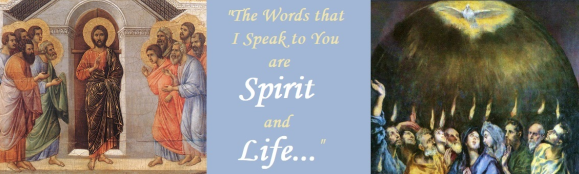
Studies on the Spirit: The Flesh, the World, and the Devil (Study 13)

The Flesh, the World, and the Devil

Study 13: The World (Part 8)

In the past few studies, we have been examining two key aspects of the ko/smo$-concept in the Gospel of John: (i) ko/smo$ as the inhabited world of human beings (i.e., human society); and (ii) ko/smo$ as a ‘fallen’ world, corrupted by sin, and dominated by darkness and evil. Both of these aspects were interpreted and developed within the distinctive Johannine theological idiom—emphasizing, in particular, the incarnation of the pre-existent Son of God and his earthly mission (for which he was sent to earth by the Father). This mission involves the inhabited world (of human beings) in which Jesus makes known his identity as the incarnate Son (and Word) of God, causing some (i.e., believers) to respond in trust to him, yet it also provokes opposition from the world.

Within the narrative of chapters 4-12, the Johannine development of these themes is presented as part of a series of Discourses by Jesus. In these Discourses, Jesus declares (and reveals) his identity as the incarnate Son of God, who has come down from heaven, sent by God the Father; yet this is done in such a way that many of his hearers fail to understand (and accept) the true nature of his words. In the previous study, we looked at the Living Water (chap. 4) and Living Bread (chap. 6) Discourses, and the use of the ko/smo$ term/concept in those passages. Now, in this study, we will explore the use of ko/smo$ in the Sukkot Discourse(s) of chaps. 7-8, along with the specific expression “(the) Light of the world” ([to\] fw=$ tou= ko/smou) in chapters 9 and 11.

John 7:4, 7; 8:12, 23, 26

The Sukkot Discourse-complex of chapters 7-8 is the most elaborate of the Johannine Discourses, prior to the great Farewell Discourse of 13:31-16:33. It is comprised of a set of interlocking Discourses, joined together by a number of key themes, as well as by transitional narration-units (vv. 25-27, 30-32, 40-44; cf. also 8:20, 30, 59) that describe the people’s reaction to Jesus and which illustrate the growing opposition and hostility toward him (an important aspect of the ko/smo$-concept in John). The Discourse-episodes are all set in Jerusalem during the Sukkot festival.

At the center of the Discourse are two statements by Jesus, relating to key motifs associated with the traditional Sukkot ceremonies:

    1. 7:37ff—Water: Jesus identifies himself as the source of Living Water
    2. 8:12—Light: Jesus identifies himself as (the source of) the Light of Life

An extended reaction episode (7:40-52) is set in between these two sayings. The identification of Jesus as the source of the “living water” was discussed in the previous study, on the use of ko/smo$ in the Living Water (Samaritan Woman) Discourse of 4:1-42. Our focus here is on the second theme-statement by Jesus, in which he identifies himself as “the light of the world” (to\ fw=$ tou= ko/smou), parallel with the expression “the light of life” (to\ fw=$ th=$ zwh=$):

“I am [e)gw\ ei)mi] the light of the world; the (one) following me will not (at all) walk in the darkness, but will hold the light of life.” (8:12)

In the previous study, I mentioned the distinctive manner of expression for these Christological statements, utilizing the syntactical formulation of Johannine essential predication; the “I am” (e)gw\ ei)mi) declarations by Jesus are a special category of these statements (self-predication):

Divine subject | verb of being | predicate noun/phrase
“I [e)gw\] | am [ei)mi] | the light of the world”

In terms of the ko/smo$-references in chapters 7-8, this statement in 8:12 also holds a central place, within a chiastic structure that helps to frame the Discourse theologically (and Christologically):

    • 7:4—Jesus is asked/challenged to manifest himself to the world
      • 7:7—Statement of the world’s opposition/hostility to Jesus
        • 8:12—Christological revelation: “I am the light of the world…”
      • 8:23—Statement of the world’s opposition to Jesus
    • 8:26—Jesus’ mission: The Son sent by the Father to address the world

The references in 7:4, 7 are part of the narrative introduction (7:1-9) to the Discourse-complex. The introduction itself contains certain Discourse-features, as Jesus interacts with his brothers, whose role prefigures that of the hostile/disbelieving people (see the narrator’s comment in v. 5)—Jesus’ audience in much of the Discourse, reacting to his words with a combination of misunderstanding and opposition. They challenge Jesus to go the festival in Jerusalem and prove himself (as the Messiah) publicly, performing his Messianic “works” (cf. the references in 4:16-19ff, 25f, 29, 39-42; 6:14-15) for all the people to see. Unwittingly, however, the brothers utter a statement that is fully in accord with the Johannine theology, regarding the nature of Jesus’ mission (such use of irony is frequent in the Gospel of John). Note the language they use in their imperative:

“shine yourself forth (un)to the world”
fane/rwson seauto\n tw=| ko/smw|

This, indeed, represents the nature of the Son’s mission: to reveal and make manifest his identity (as God’s Son) to the world. The verb fanero/w, while often understood in the generalized sense of “appear, (make) manifest”, literally means “(make to) shine forth” —which, of course, is fitting as preparation for the “light of the world” declaration in 8:12. The same verb is used (of Jesus) at the beginning of his mission (i.e., his public ministry, cf. 1:31; 2:11), and toward its close (17:6). Jesus responds to his brothers’ challenge with a saying (v. 6) and exposition (vv. 7-8), according to the Johannine Discourse-pattern. The exposition involves a statement regarding the nature of “the world” —viz., its fundamental opposition to God (and to His Son). This opposition is expressed in terms of hate (vb mise/w):

“The world is not able to hate you, but me it hates, (in) that I give witness about it that its works are evil.”

The “witness” that Jesus gives about the nature of “the world” is basic to his identity as the incarnate Son—who reveals the truth and presence of God the Father and who gives forth the Spirit of God. His very presence “in the world”, among human beings, effectively bears witness to the evil character of the world (and its “works”). This is clear from the close of the Nicodemus Discourse in chapter 3 (discussed in a prior study). The world, in its darkness, is fundamentally opposed to the Light, since the Light shines upon the world, revealing that what the world regularly does is evil:

“And this is the judgment: that the Light has come into the world, and (yet) the men [i.e. people] (of the world) loved the darkness more than the Light—for their works are evil. Every (one) practicing foul (deed)s hates the Light and does not come toward the Light, (so) that their works should not be shown (to be evil). But the (one) doing the truth comes toward the Light, (so) that it might be made to shine forth [fanerwqh=|] (of) his works that it is in God (they) have been worked.” (vv. 19-21)

The use of the verb fanero/w in 7:4, and the dualistic language regarding the world (and its opposition/hostility toward Jesus) in 7:7, clearly echoes the Johannine theology of 3:19-21.

Following the “Light of the world” declaration in 8:12, the kos/mo$ references in 8:23 and 26 correspond generally to those of 7:4, 7 (according to the chiastic outline above). The dualistic statement in 8:23, as to the opposition of the world toward the Son (Jesus), corresponds to that of 7:7 (cf. above):

“You are of the (thing)s below, (but) I am of the (thing)s above; you are of this world, (while) I am not of this world.”

Clearly, “this world” (below) is contrasted with the realm of God (in heaven, above); for Jesus to say that he is not “of [e)k] this world” implies that he instead belongs to the Divine/heavenly realm of God the Father. This, of course, in terms of the Johannine theology, refers to Jesus’ identity as the incarnate Son of God who was sent to earth (from heaven) by God the Father. Jesus alludes to his heavenly origins, and of his special relationship (as the Son) to God the Father, throughout these sections of the Discourse (vv. 14-19, 21-29, along with the final vv. 31-58).

The above/below juxtaposition, as a way of expressing the dualistic contrast of God/heaven vs. “this world”, also occurs prominently at the close of chapter 3, vv. 31ff (cf. the Discourse context of vv. 12-15ff). In the final ko/smo$-reference (8:26), Jesus refers again to the nature of his mission, for which the Father sent him to earth (from heaven); in this regard, it relates theologically to the brothers’ challenge in 7:4 (cf. above):

“I hold many (thing)s about you to speak and to give (in) judgment, but the (One hav)ing sent me is true, and I, the (thing)s which I (have) heard alongside Him, those (thing)s I speak unto the world.”

Like a dutiful son, Jesus (the Son) does the things that he sees the Father doing and says the things that he hears the Father say—viz., he faithfully follows the example of his Father and represents Him in all obedience. The works performed by the Son, and the words that he speaks, are those of the Father. Again, this theological point is echoed at the close of chapter 3 (vv. 32-35) and is found elsewhere in the Discourses as well.

John 9:5, 39; 11:9, 27

The great miracle-episodes of chapters 9 and 11 are not Discourses per se, but they do contain certain Discourse-elements and features. In the case of chapter 9, note the introductory dialogue between Jesus and his disciples (vv. 2-5) and the discourse-structure of the closing vv. 35-41 involving the exchange with his hostile opponents (among the Pharisees). These two Discourse-segments relate to the miracle-episode (healing of the blind man) in a manner similar to the relation of the Discourses in chapters 5 and 6 to the miracle episodes that precede them. The blind man receiving his sight functions as the dramatic-narrative detail that illustrates the theological significance of the light-motif in the Discourse-segments. In particular, we have Jesus’ reiteration of his “Light of the world” declaration (8:12, see above) in 9:5:

“Whenever I should be in the world, I am [ei)mi] (the) Light of the world!”

The conditional (temporal-relational) clause in v. 5a alludes to the incarnate Son’s mission “in the world”. The temporal conjunction o%tan means “when(ever)” —that is, the time during which the incarnate Son is present “in the world”, i.e., during his earthly ministry. The use of the verb of being (w@, first person present subjunctive) likewise alludes (implicitly) to Jesus’ Divine identity as God’s Son; it mirrors the essential predication (cf. above) of the following “I am” statement (with the Divine subject [“I”] implicit and embedded in the verb form):

“(When) I | should be [w@] | in the world”
“I | am [ei)mi] | the light of the world”

The light and sight/seeing motifs are brought together in the dramatic dialogue of the closing scene (vv. 35-41), making it quite clear that sight/seeing is meant in the Johannine Christological sense of recognizing the true nature of Jesus (as the incarnate Son of God, v. 35ff) and trusting in him. The lack of sight, or blindness, similarly refers to those who fail/refuse to trust in him, as in the case of Jesus’ opponents among the Pharisees (vv. 40-41). Though it is not so stated here, these hostile opponents belong to “the world” (i.e., they are “of the world”); cf. the ko/smo$-reference at the close of the Discourse in 10:22-39 (v. 36).

Jesus’ self-identification as “the Light of the world” occurs for a third time, by way of allusion, in the introduction-section of the Lazarus episode (chap. 11), as he tells his disciples:

“Are not there twelve hours of the day? If any(one) should walk about in the day, he does not strike (his foot) against (a rock), (in) that he looks (upon) the light of this world.” (verse 9; cf. v. 10)

The expression “the light of this world” refers specifically to ordinary sunlight (i.e., during the approximately 12 hours of daylight). Yet it clearly alludes to the earlier “I am” statements by Jesus (see above), in which he identifies himself (the incarnate Son of God) as “the Light of the world”. Indeed, the miracle-episodes of chapters 9 and 11 are parallel in a number of ways; most notably, at the theological level, the restoration of sight (to the blind man) matches the restoration of life (to Lazarus), with both serving as illustrative symbols for trust in Jesus Christ (as the Son of God) and the eternal life that comes to the believer as a result.

The exchange between Jesus and Martha (vv. 21-27) also resembles, in a general way, the exchange between Jesus and the healed blind man (9:35-38); both function as important confessional scenes in the Gospel of John, in which a believer confesses trust in Jesus Christ, recognizing his identity as the Son of God. The exchange with Martha is certainly more prominent, holding a place in the Johannine Gospel comparable to Peter’s confession in the Synoptics (Mark 8:27-29 par). It contains important Discourse-features, which I have discussed in some detail in an earlier set of notes. Of particular importance is the way that Martha’s confession (v. 27) blends together a belief in Jesus’ Messianic identity with his identity (in the Johannine Christological sense) as the Son of God:

“I have trusted that you are the Anointed (one), the Son of God, the (one) coming into the world.”

On the surface, Martha’s confession could be understood entirely in a conventional Messianic sense (cf. 4:25f, 29, 42; 6:14) without necessarily reflecting a deeper theological understanding and recognition of Jesus’ identity as the incarnate Son of God (sent from heaven). However, from the standpoint of the Johannine theology (cf. the confessional statement at the close of the Gospel, 20:31), the author certainly intends Martha’s confession to be understood in this fuller sense.

The Lazarus episode marks a climactic point for Jesus’ public ministry—the performance of signs which demonstrate (and illustrate) his identity as the Son of God. It also represents the peak of Jesus’ success “in the world”, as many people respond positively to him—with at least some measure of trust, if not (yet) as true believers. This is reflected in the Triumphal Entry scene of the following chapter 12 (vv. 12-19), as some of the Pharisees, still in opposition to Jesus, respond despairingly (with some exaggeration): “See, the world (has) gone away after him!” (v. 19). The scene immediately following (vv. 20-26), in which “some Greeks” seek to meet with Jesus, surely alludes to the wider early Christian mission (as a continuation of Jesus’ own mission) into the Greco-Roman world. The recurrence of the sight/seeing motif (“we wish to see Yeshua”) likewise foreshadows the numbers of people from the surrounding nations who would respond with trust to the Gospel and become believers.

John 12:46-47

The final sections of chapter 12 bring the narrative of Jesus’ public ministry to a close and prepare the way for beginning of the Johannine Passion narrative (in chap. 13). In the next study, we will survey the ko/smo$-references in the Farewell Discourse (13:31-16:33). However, it is worth taking note of several important occurrences in the final sections of chapter 12, which feature important and prominent foreshadowings by Jesus of his impending death and exaltation—the ultimate fulfillment of the mission for which the Son was sent “into the world” by God the Father.

The love/hate theme, in relation to the world (see above on 7:7 and 3:19-21), recurs here in verse 25, in a discipleship-saying by Jesus that resembles certain Synoptic sayings (e.g., Matt 10:39). The true disciple of Jesus must not love his/her life “in this world” but should rather hate it. The context of Jesus’ own death (v. 23) makes clear that his ‘hatred’ involves a willingness to give up the life “in this world” (including all of the things that “this world” values, in contrast to the things of God), sacrificing all—even to the point of death—according to Jesus’ own example.

The next section (vv. 27-36) also contains a ko/smo$ reference within the thematic-dramatic context of Jesus’ impending death/exaltation, as he announces: “Now is (the) judgment of this world; now the chief (ruler) of this world will be thrown outside!” (v. 31). This important aspect of Jesus’ death is developed in the Farewell Discourse and will be discussed in the next study. The section concludes with another light/darkness reference (vv. 35-36, cf. above), alluding to Jesus’ identity as “the Light of the world”. The reference is framed in terms of Jesus’ impending death (and departure), when, with the fulfillment of his mission (cf. the context of vv. 32-34), the Son (i.e., the Light) will be taken out of this world and will return to the Father in heaven.

The final section includes a narrative summary (vv. 37-43), explaining (in traditional terms) how/why many Israelites and Jews—including those (like the Pharisees) who were learned in the Scriptures—were unwilling or unable to trust in Jesus. Then, the narrative comes to a close with a final summary (vv. 44-50) of Jesus’ teaching (i.e., his mission), in which he again declares his identity as the Son sent from heaven by God the Father. Again, this identification is made primarily in terms of light, and with trust in Jesus by the thematic-theological motif of seeing (vv. 45-46). A declaration of his identity as “the Light of the world” is made one final time:

“I have come into the world as light, (so) that every(one) trusting in me should not remain in the darkness.” (v. 46)

The salvation and judgment of the world is defined (and realized) entirely in terms of whether or not individual people (in the world) trust in Jesus. The statement in verse 47f echoes important theological statements from earlier in the Discourses (most notably, 3:16-21).

“Who Is This Son of Man…?”: Johannine Sayings (Jn 8:28)

John 8:28

The next Johannine “son of man” saying is found in 8:28. The depth and complexity of the great Sukkot-Discourse (chapters 7-8 [excluding 7:53-8:11]) creates many challenges for commentators. As in the case of the Last (Farewell) Discourse (13:31-16:33), the Sukkot-Discourse is properly a Discourse-complex, comprised of a number of shorter, interconnected Discourse-sections. For each such section, the typical pattern for the Johannine Discourses is generally followed:

    • Principal statement/saying by Jesus
    • Response by his hearers, reflecting a misunderstanding of the true meaning of his words
    • Exposition by Jesus

The Discourse-section containing the “son of man” saying is 8:21-30. The principal saying by Jesus occurs in verse 21:

“I lead (myself) under—and you will seek (for) me, but you will die away in your sin!
(The place) where I lead (myself) under, you are not able to come (there).”

The verb u(pa/gw means “lead under”, i.e., go under cover, put (oneself) out of sight, be hidden, etc. It can be used in the very general sense of “go away”, but it would be rather misleading to translate it so here; it is important to preserve the aspect of being “under cover”, i.e., not able to be seen. The verb is used with frequency in the Gospel of John, and often in the special Christological sense of the Son’s departure back to God the Father (in heaven). That is how the verb is being used here in the Sukkot-Discourse (8:21-22, cf. earlier in 7:33; 8:14), anticipating a similar usage in the Last Discourse (13:3, 33, 36; 14:4-5, 28; 16:5, 10, 16).

Those who hear Jesus’ words without trusting in him—or, even worse, in hostile opposition to him—will not be able to follow him to God the Father in heaven. Indeed, they will die off in their sin, and will have no experience of the Divine (eternal) life that comes through trust in Jesus.

This is the thrust of Jesus’ saying. In the remainder of the Discourse-section, the pattern of Response/Exposition is repeated, producing a dialogue exchange. The first response by Jesus’ hearers is in verse 22; clearly they have not understood the meaning of his words, which he then restates, expounding the saying with greater Christological clarity:

“You are of the (thing)s below, (but) I am of the (thing)s above; you are of this world, (but) I am not of this world. So I said to you that you will die away in your sins—for, if you would not trust that I am [e)gw/ ei)mi], (then) you shall die away in your sins.” (vv. 23-24)

Jesus’ hearers cannot follow him to the Father (in heaven) because they do not belong to the Divine/heavenly things (“the [thing]s above [a&nw]”), but belong, rather, to the things below [ka/tw], in “this world”. This above/below contrast is part of the Johannine dualistic manner of thought and expression. Believers are “from above” (3:3ff), having come to be born from above, from the Spirit of God. On the contrast between believers and “the world” (o( ko/smo$), cf. throughout the Last Discourse, and also the great Discourse-Prayer of chapter 17 (where the noun ko/smo$ occurs 18 times); the theme also features prominently in 1 John (2:15-17; 3:1, 13; 4:1-5, 17; 5:4-5, 19).

Verse 24 contains an “I am” (e)gw/ ei)mi) saying by Jesus, an example of the essential predication that occurs throughout the Gospel (and Letters) of John. This, however, is one of the few instances where a predicate nominative is omitted, leaving only the Divine subject (Jesus, “I”) and verb of being (ei)mi). There are three such occurrences in the Sukkot-Discourse—here in v. 24, again in verse 28 (see below), and finally, at the conclusion, in verse 58: “Before Abraham’s coming to be [gene/sqai], I am [e)gw/ ei)mi]”. The lack of a predicate nominative places the emphasis squarely on the verb of being, which, here in verse 58, is contrasted with the verb of becoming (gi/nomai). This is an important theological distinction, reflecting the way that the Johannine writings tend to distinguish the verb of being from that of becoming. The verb of being tends to be applied to God (or to a Divine subject), as is reflected by the essential predication formula. By contrast, the verb of becoming properly applies to created (human) beings. Humans come to be, but only God is. The distinction between ei)mi and gi/nomai is most notable in the Gospel Prologue (1:1-18). The other absolute “I am” saying is found in 13:19.

Thus, for Jesus to say simply “I am” (e)gw/ ei)mi), it represents the ultimate attribution of Deity (on the Old Testament background for this Divine self-predication, see, e.g., Exod 3:14; 6:7; 7:5; Isa 43:25; 45:18; 51:12; 52:6; Hos 13:4; Joel 2:27; cf. the summary in Brown, pp. 533-8)—a point that Jesus’ opponents clearly recognized, based on their response (v. 59, compare 5:18). It is therefore strange that so many commentators are unwilling (or reluctant) to read the simple e)gw/ ei)mi here in v. 24 (and 28) the same way. This will be discussed further on verse 28, below.

Another exchange, between Jesus and his hearers, occurs in vv. 25-26. Jesus’ claim that he belongs to “the (thing)s above”, and that he is “not of this world”, leads them to ask “who are you? [su\ ti/$ ei@]”. Again, the use of the verb of being here is significant, even if the speakers do not understand its significance (in the Johannine context). The question represents the very essence of the Johannine Gospel—the identity of Jesus, who he is. As direct as the question might be, Jesus will not give to them a direct answer—at least, not in wording that they would clearly understand. Indeed, the Greek phrasing Jesus employs is suitably ambiguous; in answer to the question “who are you”, he replies:

“The beginning, that which even I speak to you.”
th\n a)rxh\n o% ti kai\ lalw= u(mi=n

For a concise summary of the various ways this line has been interpreted, see Brown, pp. 347-8; von Wahlde, p. 382. The most plausible explanation is (to paraphrase): “What I have been saying to you from the beginning”. However, it is possible to read it in an even more banal way, as an expression of frustration by Jesus: “Why do I even speak to you at all?”. Whatever the intended surface meaning to be conveyed by Jesus, there can be no real doubt that the statement contains a much deeper theological meaning—one which echoes the opening words of the Prologue—identifying Jesus as “the beginning”, i.e., as the Word/Wisdom (and Son) of God who was with the Father “in the beginning”. On this theological use of a)rxh/, couched in the expression a)p’ a)rxh=$ (“from [the] beginning”), cf. 1 John 1:1 and 2:13-14 (cp. 2:7, 24; 3:8, 11; 2 Jn 5-6).

The message regarding his identity is central to his mission, the purpose for which God the Father sent Jesus (the Son) to earth. Having come from God the Father, having been with Him from the beginning, Jesus naturally speaks the very words of God (v. 26):

“I hold many (thing)s about you to speak and to judge, but the (One hav)ing sent me is true, and I speak to the world the (thing)s that I (have) heard alongside Him.”

Not surprisingly, Jesus’ ambiguous and provocative answer leads to another response by his hearers (v. 27), presented by the Gospel writer as a simple summary, to the effect that “they did not know that he said (this) to them (about God) the Father”. This expression of their lack of understanding prompts Jesus to offer a further exposition of his words:

“When you would lift up high [u(ywshte] the son of man, then you will know that I am [e)gw/ ei)mi], and (that) from myself I do nothing—but (rather), just as the Father taught me, (so) I speak these (thing)s.” (v. 28)

The initial statement of verse 28 is a “son of man” saying that resembles (and echoes) the earlier one in 3:14:

“And, just as Moshe lifted high [u%ywmen] the snake in the desolate (land), so it is necessary (for) the son of man to be lifted high [u(ywqh=nai].”

This saying informs the use of the expression “the son of man” here, and so the earlier study (on 3:14) must be consulted.

As noted above, commentators have been strangely unwilling to recognize the ‘absolute’ use of “I am” (e)gw/ ei)mi) here in verse 28 (and in v. 24, cf. above), in spite of its clear use in v. 58. Many translators render e)gw/ ei)mi here as “I am he”, either as a reference to Jesus’ identity as the Messiah, or as “the Son of Man”. According to this line of interpretation, Jesus is using the expression “the son of man” here as a Divine (or Messianic) title, referring to the heavenly figure of Daniel 7:13-14. The translation of the first part of the verse, then would be:

“When you lift up high the Son of Man, (then) you will know that I am he…”

In my view, such a reading is wholly incorrect and thoroughly distorts the Johannine theological (and Christological) message here in the Gospel. The expression “the son of man” is, principally, a self-reference by Jesus, as if he were to say: “When you lift me up high, (then) you will know that I am…” —that is, you will know that I am the Son of God, who was with the Father (in heaven) from the beginning. The remainder of the verse clearly confirms that Jesus’ identity as the Son is being emphasized, essentially reiterating the point made in v. 26 (cf. above).
The possible influence of Dan 7:13f on the use of the expression “the son of man” (by Jesus) in the Gospel Tradition has been discussed in the earlier studies on the Synoptic sayings (esp. Mk 13:26; 14:62 par). It will be treated in more detail as this series comes to a close.

While the expression “the son of man” is principally used as a self-reference by Jesus here in v. 28, it certainly carries with it the Johannine theological associations we have discerned from the prior studies:

    • The heavenly origin of the son of man
    • The descent (vb katabai/nw, “step down”) of the son man
    • The authority of the son of man, given to him by God the Father, which includes the authority to give life to those who believe
    • The incarnation of the Son, whose mission on earth culminates in his sacrificial death, which serves to confer life to those who believe

On the latter point, in particular, I think that one may admit an allusion to the incarnation (and Jesus’ impending death) in the concluding verse 29:

“And the (One hav)ing sent me is with me; He did not set me forth alone, (in) that I do the (thing)s pleasing to Him at all times.”

The “sending” (vb pe/mpw) and “setting forth” (or “sending away”, a)fi/hmi) of the Son certainly involves his incarnation (1:14) in the person of Jesus. But the incarnate mission of the Son on earth is not done alone, apart from God the Father; rather, the Father remains with (meta/) him. This may allude to the descent of the Spirit upon Jesus at his baptism (1:32-33), suggesting that the Father’s presence is realized for Jesus through the Spirit. However, the Johannine writings say surprisingly little about how the Son’s relation to the Father was realized, in the incarnate ‘state,’ during Jesus’ earthly ministry.

In any case, the Son’s earthly mission culminates in the death of Jesus, and his death is certainly to be included as a principal component of the “lifting up high” (vb u(yo/w) of the Son. The verb u(yo/w (“lift/raise high”) is a principal Johannine verb for the exaltation of Jesus. This exaltation encompasses his death, resurrection, and return to the Father. It does, however, begin with Jesus’ death, and that is the primary point of reference both in 3:14 and here in 8:28. In this regard, the verb u(yo/w is specifically associated with the expression “the son of man”, occurring also in 12:32, 34 (to be discussed). This is not surprising, since, in the wider Gospel Tradition, the expression was frequently used in the context of Jesus’ suffering and death, as we saw in our study on the Synoptic Sayings (esp. the three Passion predictions, Mk 8:31; 9:31; 10:33 par). The formulation using the verbal particle dei= (“it is necessary [for]…”) is very much reminiscent of the Synoptic Passion predictions.

In 3:14 and 12:32, 34, the verb u(yo/w occurs in a passive form, but here in 8:28, it is active (“when you lift up high…”). It indicates the people’s role in putting Jesus to death. The passive form, by contrast, could be read as an example of the so-called Divine passive (passivum divinum), with God the Father as the implied actor. This would tend to emphasize the aspect of giving honor to the Son, parallel to the use of the verb doca/zw for the exaltation of Jesus.

The Discourse-section 8:21-30 concludes with the narrative summary in v. 30: “(With) his speaking these (thing)s, many (people) trusted in him”. This concurrence of the use of the expression “the son of man” with an emphasis on trusting in Jesus is significant, both in relation to the earlier use of the expression in the Bread of Life Discourse (cf. parts 1, 2, and 3 of the previous study), and to the next occurrence, in 9:35. It is this reference which will be examined in our next study.

References above marked “Brown” are to Raymond E. Brown, S.S., The Gospel According to John I-XII, Anchor Bible [AB], vol. 29 (1966).
Those marked “von Wahlde” are to Urban C. von Wahlde, The Gospel and Letters of John. Volume 2: Commentary on the Gospel of John, Eerdmans Critical Commentary (2010).


October 13: John 15:1b

John 15:1, continued
Verse 1b

“and my Father is the land-worker”
kai\ o( path/r mou o( gewrgo/$ e)stin

As discussed in the previous two notes (1, 2), verse 1 represents the central statement/saying by Jesus for the Discourse-unit 15:1-16:4a of the Last Discourse. It is also an example of what I call essential predication in the Johannine writings. These simple predicative statements contain three elements: (1) subject, (2) verb of being, (3) predicate. They are almost exclusively theological, insofar as they apply to a Divine subject (God, or Jesus as the Son of God). The verb of being itself is of theological significance, as I have discussed. The predication is deemed “essential” because the statements declare the essential identity and attributes of the Divine subject.

Two kinds of such predication are paired together here in the verse 1 statement by Jesus. First there is a self-predicative statement, an example of the “I am” sayings in the Gospel; Jesus declares what he is; the second, parallel, statement has God (the Father) as the Divine subject. As I have discussed, with this “I am” self-predication, Jesus is effectively identifying himself as the Son of God, and, as such, the predication involves his relation (as the Son) to God the Father. This is quite clear in regard to the parallel statements here:

“I | am | the true vine
and
my Father | is | the land-worker”

Consider the parallelism of the three elements:

    • Divine subject:
      “I” (e)gw/) [the Son of God]
      “my Father” [God the Father]
    • Verb of being:
      “am / is” (ei)mi / e)stin)
    • Predicate:
      “the true vine” (h( a&mpelo$ h( a)lhqinh/)
      “the land-worker” (o( gewrgo/$)

As noted above, I would argue that the “I am” formula itself implies Jesus’ identity as God’s Son; however, this is made explicit here by the way Jesus refers to God the Father (El-YHWH) as “my Father” (o( path/r mou).

The idea of El-YHWH as “Father” has ancient roots, going back to the earliest Old Testament tradition, and its Semitic/Canaanite religious background. The supreme Creator God (El, la@, the “Mighty [One]) was considered to be the “Father” of all beings—both divine and human. For the ancient Israelites, YHWH was the Creator, identified with the Creator El (as recognized by their ancestors); and, as such, the same religious conception of the Creator as “Father” of all divine and human beings automatically applied to YHWH (Deut 32:6).

Beyond this, YHWH was considered to be the “Father” of the Israelite people, in a special sense. This paternal motif was rooted in the unique covenant-bond between YHWH and His people. The Israelites could be called God’s “sons (and daughters)”, or by the singular “son” (in a collective sense). For the key Scriptural references, cf. Exod 4:22-23; Deut 32:6, 19; Hos 1:10 [2:1]; 11:1; Isa 43:6; 63:8 [7]; Jer 31:9. As an extension of this covenantal, figurative concept of the father-son relation, the king, functioning as a representative of the people, was also considered to be God’s “son” (2 Sam 7:14; Psalm 2:7; 89:27-29  [28-30]; Isa 9:6-7 [5-6]). This motif was applied, in particular, to David and his dynastic line (cf. 2 Sam 7:14; 1 Chron 17:13; 22:10; 28:16). Through this association, the idea of the king as God’s “son” came to be understood in a Messianic context, with the related passages (cited above) interpreted in a Messianic sense by Jews and Christians in the first centuries B.C./A.D.

Thus the title “Son of God”, with its underlying religious-theological concept, was readily applied, in this Messianic sense, to Jesus in the Gospels and early Christian tradition. For more on the subject, cf. Parts 6-8 and 12 of my series “Yeshua the Anointed”. And this background informs the various references by Jesus to God (YHWH) as “Father” and “my Father” in the Gospel tradition.

The Gospel of John builds upon this tradition, developing the Father-Son theme in the context of the distinctive Johannine theology. This theology is expressed primarily by Jesus himself, in the Gospel Discourses. In the Discourses, Jesus repeatedly refers to himself as “the Son”, and to God the Father as “the Father” or “my Father”; compared to the usage in the Synoptics, this language is far more frequent in the Gospel of John. Only rarely is the actual title “(the) Son of God” used (3:18; 5:25; 10:36; 11:4; cf.  1:34, 49; 11:27; 19:7; 20:31), however it is unquestionably implied in all the Son/Father references. Indeed, the theme of Jesus’ relationship (as the Son) to the Father is central to the Discourses, and to the Johannine theology as a whole.

In the Johannine Gospel, Jesus is God’s Son in much more than the traditional Messianic sense; rather, he is the eternal and pre-existent Son who was with God the Father in heaven from the beginning (1:1ff; 17:5). Throughout the Discourses, it is emphasized that Jesus (the Son) was sent from heaven to earth by God the Father; often the (traditional) title “Son of Man” is used when referring specifically to this heavenly origin (cf. Part 10 of the series “Yeshua the Anointed”). This distinctively Johannine theological/Christological orientation will be discussed further as we proceed through these notes.

Having established the importance of the Divine Father-Son relationship in verse 1, let us consider the specific predicative statement in 1b, with the Father (“my Father”) as the Divine subject. Jesus states that “my Father is the land-worker”. The predicate is the articular (arthrous) noun o( gewrgo/$. Given the parallel with the vine (a&mpelo$), the noun a)mpelourgo/$ could have been chosen instead. An a)mpelourgo/$ is literally a “vine-worker” —one who tends and works the vine (cf. Luke 13:7; LXX 2 Kings 25:12; 2 Chron 26:10; Isa 61:5; Jer 52:16). However, the noun gewrgo/$ has a broader range of meaning; it literally means “worker of the earth” —i.e., one who does work [e&rgon] on/in the earth [gh=].

The noun gh= can be rendered specifically as “land, ground”, and this would be more appropriate here in the agricultural (or viticultural) context of working on a vine. However, one should not overlook the theological implications of the word gh=, alluding to the cosmic context of the entire surface of the earth—i.e., the entire inhabited earth/world. God the Father is the Creator of the earth, whose creative work on the earth (and among human beings) is continuous, a work that is shared by His Son (cf. 5:17ff, 36; 10:25ff, 37; 14:10-12, etc).

The noun gewrgo/$ can refer to different kinds of work on the land/ground, including that of farming (cf. James 5:7; 2 Tim 2:6). Here, of course, the context is of work in a vineyard or garden; the term “gardener” would not be inappropriate as a loose rendering of gewrgo/$. The word is rare in the New Testament, but it features in one of the Synoptic parables of Jesus (Mark 12:1-9 par), where it similarly refers to people working on vines (in a vineyard).

From a paradigmatic standpoint (cf. the prior note), the parallel predicative statements tell us something significant about the relationship between the Father and Son. If the Son is identified as a vine, the Father is identified as the one who works on/around the vine, tending it and caring for it. As we shall see from the remainder of the illustration, this work is primarily described in terms of pruning the vine, enabling it to bear more and richer fruit.

As with the noun gh=, we should not overlook the component term denoting work (e&rgon) that is built into the compound noun gewrgo/$. This alludes to a significant theme in the Gospel of John, focused on the relationship between the Son (Jesus) and God the Father. The Son shares in the Father work, doing the same work that the Father does; at the same time, the Father works through the Son. This theme is especially prominent in the chapter 5 Discourse, which has, as its central saying by Jesus, the statement in v. 17:

“My father works [e)rga/zetai] (even) until now, and I also work [e)rga/zomai]”.

The implication is that Jesus (the Son) is doing the same work (healing, raising the dead) as God the Father. This provocative implication was not lost on those who heard him, producing a hostile reaction (v. 18). In the remainder of the Discourse (vv. 19-29ff), the theme of the Son doing the work of God is developed further (see esp. verses 20, 36), and, indeed, can be found all throughout the Gospel—cf. 4:34; 9:3-4; 10:25ff, 32ff, 37-38; 14:10-12; 15:24; 17:4. Of special interest is the statement in 6:29, where doing the “work [e&rgon] of God” is specifically defined as trusting in the one (i.e., the Son, Jesus) whom the Father sent to earth (from heaven).

In the next daily note, we will turn our attention to verse 2, and the continuation of the Vine-illustration.

October 12: John 15:1a (continued)

John 15:1, continued
Verse 1a

“I am the true vine”
e)gw/ ei)mi h( a&mpelo$ h( a)lhqinh/

In the previous note, I discussed the position of this “I am” saying of Jesus as the central statement of the Discourse-unit 15:1-16:4a. The background and theological significance of the “I am” formulation was also examined, in relation to the phenomenon in the Johannine writings that I call essential predication. These simple predicative statements, made up of three elements, utilizing the verb of being (ei)mi), declare what the subject is—i.e., stating the subject’s essential identity and attributes.

In the Johannine writings, essential predication is reserved (almost exclusively) for a Divine subject—that is, God, or Jesus as the Son of God. Thus Jesus, in making these predicative “I am…” statements, is effectively declaring his identity as the Son of God, and, with it, his relationship to God the Father. This is particularly clear here in 15:1, where Jesus’ self-declaration as the Son (“I am…”) is paired with a predicative statement about God the Father (“my Father is…”).

In one major class of “I am” sayings, Jesus identifies himself with an object or feature of the natural world—e.g., bread, light, shepherd, or, in this case, a vine (a&mpelo$). First, let us outline again the three elements of this predicative statement:

    • Divine subject: “I” (e)gw/)
    • Verb of being: “am” (ei)mi)
    • Predicate: “the true vine” (h( a&mpelo$ h( a)lhqinh/)

The first two elements, in combination (“I am,” e)gw/ ei)mi), were discussed in the previous note. It remains to analyze the third element (the predicate). It consists of an arthrous (i.e., with the definite article) noun and a modifying adjective (also with the article).

h( a&mpelo$ (“the vine”)—Jesus thus identifies himself as a vine, with the word a&mpelo$ denoting specifically the coiling and clinging tendrils of the grape-vine. The related noun a(mpelw/n refers to a place where vines are grown (i.e., vineyard). In the Synoptic Gospels, Jesus told several parables with a vineyard setting (Mark 12:1-19 par; Matt 20:1-16; 21:28-32; Luke 13:6-9), but the only other specific use of a vine-motif occurs in his saying at the last supper (Mk 14:25 par). The association between the fruit of the vine and Jesus’ death is significant, and is due to the obvious similarity between the juice of the red grape and blood (cf. Rev 14:18-19). This point will be discussed later on in our notes.

Since it makes little sense for a person to identify him/herself with an actual growing vine, it is quite clear that the use of the vine-image is figurative, serving as a metaphor. There is ample precedence for this in Old Testament tradition, most notably in the use of the vine/vineyard to represent the people/nation of Israel—cf. Psalm 80:8-16; Isaiah 5:1-7; 27:2-6; Jer 2:21; 6:9; 12:10; Ezek 19:10ff; Hosea 10:1. The vine/vineyard motif features prominently throughout the Song of Songs; this is imagery inherited from ancient Near Eastern love poetry, but, as the Song came to be interpreted allegorically by Jews and Christians (i.e., of God’s love for His people, etc), it relates to the prophetic passages cited above. In Wisdom tradition, the vine (or its fruit, wine) occasionally serves as a figure for wisdom (e.g., Sirach 24:17ff), though, more commonly, there are negative associations with the image of wine (as a symbol of sin and its judgment).

h( a)lhqinh/ (“the true”)—The figurative and symbolic character of the vine in 15:1 is clarified by the use of the modifying adjective a)lhqino/$ (“true”). The fundamental meaning of this adjective is “unhidden, unconcealed”, but it tends to be used in the more general sense of “true”, as also the similar adjective a)lhqh/$. The distinction between a)lhqh/$ and a)lhqino/$ is fine; but the latter, particularly as it is used in the Johannine writings, tends to connote something real, in contrast to that which one might consider to be real (but is not).

The a)lhq– word-group is especially important and prominent in the Johannine writings. The noun a)lh/qeia (“truth”) occurs 25 times in the Gospel (compared with 7 in the Synoptics combined), and another 20 times in the letters, making 45 in all (nearly half of the 109 NT occurrences). The adjective a)lhqh/$ occurs 14 times in the Gospel (compared with 2 in the Synoptics), and 3 times in the letters—more than half (17) of all NT occurrences (26). The adjective a)lhqino/$ occurs 9 times in the Gospel (and only once in the Synoptics), and 4 times in the letters; if one adds the 10 occurrences in the book of Revelation (considered as a Johannine work), then nearly all of the NT occurrences (23 out of 28) are Johannine.

The adjective a)lhqino/$ is somewhat less common than a)lhqh/$ in the Gospel (9 occurrences compared with 14). However, it’s usage is of particular importance, particularly given the closeness in meaning to a)lhqh/$; if the one adjective is used rather than the other, it likely is intended to convey something specific or distinctive. The other eight occurrences of a)lhqino/$ are:

    • 1:9— “He was the true light, that gives light to every man, coming into the world.”
    • 4:23— “…the true worshipers will worship the Father in (the) Spirit and (in) truth”
    • 4:37— “…the saying is true, that…”
    • 6:32— “…but my Father gives you the true bread out of heaven”
    • 7:28— “…I have not come from myself; but the (One) (hav)ing sent me is true, whom you have not seen [i.e. do not know]”
    • 8:16— “…and yet, if I should judge, my judging is true, (in) that I am not alone, but (it is) I and the (One) (hav)ing sent me, (the) Father”
    • 17:3— “And this is eternal life: that you should know the only true God, and the (one) whom He sent forth, Yeshua (the) Anointed.”
    • 19:35— “and the (one) having seen has given witness, and his witness is true…”

We may isolate three important theological themes related to this usage of a)lhqino/$:

    • Truth is a fundamental attribute and characteristic of God Himself—17:3; also 7:28, and implied in 8:16 and 4:23
    • The words and actions of Jesus (the Son) are true, because of his relationship to God the Father (the One who sent him to earth)—7:28; 8:16; the theme of the truthfulness of a witness is also present in 19:35
    • An essential association between the Spirit and truth—4:23f; cf. also 14:17; 15:26; 16:13; and 1 John 4:6; 5:6.

As we proceed through these notes, we will consider how all three of these points of emphasis apply to Jesus as “the true vine”.

The closest formal parallels to 15:1a are in 1:9 and 6:32, where Jesus is identified with the true form/version of a natural object or feature—viz., the “true light [fw=$]” and the “true bread [a&rto$] out of heaven”. The distinction “true” (a)lhqino/$) is applied in contrast to the ordinary physical/material thing (light, bread). In other words, a physical loaf of bread may seem to be real/true, but it is not so; the real (i.e. true) bread is eternal and spiritual, and is found in/with the person of Jesus (the Son). In the chapter 6 (Bread of Life) Discourse, the point of reference is the tradition of the “bread from heaven” (i.e., the manna) in the Exodus narratives (Exod 16:31ff; Psalm 78:24, etc). The manna was an actual physical substance, but it was not the true bread from heaven. Similarly, the ordinary light by which we see (with our physical eyes) is not the true light (cf. 3:19-21; 8:12; 9:5ff; 12:35-36, 46; 1 Jn 1:5, 7; 2:8-10).

Applying this same logic to our passage, an ordinary grape-vine is not the true vine—for that is found only in the person of Jesus the Son.

In the next daily note, we will turn to the second half of the verse 1 saying.

October 11: John 15:1a

John 15:1-17

This series of daily notes will cover the Vine Illustration in John 15:1-17. These verses are part of a larger literary and structural division in the Gospel of John—a division known as the Last Discourse of Jesus (13:31-16:33). This “Last Discourse” is actually a Discourse-complex, comprised of a number of different discourse-units. These discourse-units tend to follow the pattern for the Discourses of Jesus in the Gospel of John, a literary pattern that will be touched upon in our notes. I would identify three main divisions for the Last Discourse, the outline of which is as follows:

    • 13:31-38—Introduction to the Discourse (cf. above)
    • 14:1-31—Discourse/division 1—Jesus’ departure
      • The relationship between Jesus and the Father (vv. 1-14)
      • Jesus’ Words for His Disciples (vv. 15-31)
    • 15:1-16:4a—Discourse/division 2—The Disciples in the World
      • Illustration of the Vine and Branches: Jesus and the Disciples (vv. 1-17)
      • Instruction and Exhortation: The Disciples and the World (15:18-16:4a)
    • 16:4b-28—Discourse/division 3—Jesus’ departure (farewell)
      • The Promise of the Spirit (vv. 4b-15)
      • Jesus’ Departure and Return (vv. 16-24)
      • Concluding statement by Jesus on his departure (vv. 25-28)
    • 16:29-33—Conclusion to the Discourse

The Vine Illustration makes up the first half of the second Discourse/division (15:1-16:4a). This division can be further divided in outline:

    • 15:1-16:4a—Discourse/division 2—The Disciples in the World
      • Illustration of the Vine and Branches: Jesus and the Disciples (vv. 1-17)
        • The Illustration (vv. 1-3)
        • Application:
          —Remaining/abiding in Jesus (vv. 4-8)
          —Love and the Commandments (vv. 9-11)
          —The Love Command (vv. 12-15)
        • Concluding Exhortation (vv. 16-17)
      • Instruction and Exhortation: The Disciples and the World (15:18-16:4a)
        • Instruction: The Hatred of the World (15:18-25)
        • Exhortation: The Promise of the Spirit (vv. 26-27)
        • Concluding warning of the coming Persecution (16:1-4a)

As indicated above, the Vine Illustration itself has the following structure:

    • Illustration of the Vine and Branches: Jesus and the Disciples (vv. 1-17)
      • The Illustration (vv. 1-3)
      • Application:
        —Remaining/abiding in Jesus (vv. 4-9)
        —Love and the Commandments (vv. 10-11)
        —The Love Command (vv. 12-15)
      • Concluding Exhortation (vv. 16-17)

The illustration proper occurs in verses 1-3.

This study will proceed with a detailed examination of each verse and phrase. Information related to the historical and cultural background of the passage (and the Vine illustration, in particular) will be provided throughout the notes; however, a more thorough discussion will have to wait until our completion of the exegesis.

The Illustration: John 15:1-3

John 15:1

The Johannine Discourses typically begin with a central statement or saying by Jesus. For the Discourse-unit of 15:1-16:4a, this saying occurs here in verse 1. We begin with the first half of the saying.

Verse 1a

“I am the true vine”
e)gw/ ei)mi h( a&mpelo$ h( a)lhqinh/

This is one of the famous “I am” (e)gw/ ei)mi) sayings by Jesus in the Gospel of John. These sayings have been much discussed by commentators; however, it is not always recognized that they are part of a larger feature in the Johannine writings which I describe by the term essential predication. This involves short declarative and predicative statements which, syntactically, consist of three simple elements: (1) subject, (2) verb of being, and (3) predicate. Occasionally, the verb of being is implied, and only the subject and predicate are present. The subject is indicated by a noun or pronoun, and the predicate typically consists of a noun, along with a qualifying/modifying adjective or phrase. These predicative statements declare what the subject is. I call this predication essential, in that it states the essential identity and attributes of the subject.

In the Johannine writings (Gospel and Letters), this essential predication is reserved (almost exclusively) for God—that is, for a Divine subject. This same theological emphasis applies to the use of the verb of being (ei)mi) itself, which tends to carry a special theological (and Christological) significance. This can be seen, for example, by the clear distinction, in the Gospel Prologue (1:1-18) between the verb of being (ei)mi) and the verb of becoming (gi/nomai). Human beings come to be (vb gi/nomai), but God is (vb ei)mi). The same may be said of the careful use of verbs in the Johannine version of the Baptist-declaration (cp. Mark 1:7 par) in 1:15 and 30: (a) the verb e&rxomai (“come”) refers to the incarnate Son coming to be present in society (i.e., at the beginning of Jesus’ public ministry); (b) the verb of becoming (gi/nomai) refers to the Son’s birth as a human being; and (c) the verb of being (ei)mi) refers to the Divine/eternal pre-existence of the Son.

The “I am” sayings thus represent a specific kind of essential predication, in which the Divine subject (Jesus,  the Son of God) makes predicative statements in the first person: “I am {such}”. Here, in 15:1a, the elements of essential predication are as follows:

    • Divine subject: “I” (e)gw/)
    • Verb of being: “am” (ei)mi)
    • Predicate: “the true vine” (h( a&mpelo$ h( a)lhqinh/)

This predication has both syntagmatic and paradigmatic aspects. The syntagmatic aspect refers to the syntax of the statement, and the particular (sequential) relationship between the three distinct elements (subject, verb-of-being, predicate) in the statement. This structural relationship itself has meaning. The paradigmatic aspect refers to the different words that can be used/chosen to fill the syntactic role (for each of the three elements), thus shifting the connotation or nuance(s) of meaning for the relationship within the statement.

From a paradigmatic standpoint, the “I am” sayings are distinctive, in a number of different ways. For example, the first-person pronoun (and verbal form) emphasizes the essential predication as a self-claim by Jesus, by which he identifies himself as the Son of God, in relationship to God the Father. Moreover, the verb combination “I am” (e)gw/ ei)mi), in such a context, carries echoes in Greek religious tradition of a deity’s self-revelatory manifestation: “I am {Divine name}…”. For Greek-speaking Jews (and Christians), the revelation of YHWH, through the declaration “I am…”, in the LXX would come readily to mind—most notably in Exod 3:14, but see also, e.g., Gen 26:24; 28:13; Exod 6:6; 20:2, 5; Lev 18:5; Isa 43:25; 45:18; 51:12; Hos 13:4; Joel 2:27; Ezek 20:5.

The very use of the words e)gw/ ei)mi (“I am…”) thus carries important theological meaning. Beyond this, as noted above, essential predication in the Johannine writings is fundamentally theological, implying as it does a Divine subject.

With all of this in mind, let us examine the “I am” saying in verse 1a in more detail; this we shall do in the next daily note.

There have been many studies on the background, etc, of the “I am” sayings of Jesus in the Gospel of John; for a concise introduction and summary of the subject, see Appendix IV (pp. 534-8) in R. E. Brown, The Gospel According to John I-XII, Anchor Bible [AB] vol. 29 (1966).

Notes on Prayer: John 14:13-14, etc (continued)

John 14:13-14, continued

A major aspect of the references to prayer in the Last Discourse involves the expression “in Jesus’ name” and what this signifies in the Johannine context. This context is related to the wider early Christian tradition, but the Johannine Gospel give to the tradition a distinctive theological emphasis, along with a new and deeper meaning. The early tradition may be summarized according to three points: (1) disciples of Jesus acting and gathering “in his name”, i.e., as his representatives (Mk 9:37-39 par; Matt 7:22; 18:20; Lk 24:47; Acts 3:6ff; 9:15, etc); (2) speaking/praying “in Jesus’ name” as an extension of the apostolic witness (Acts 4:17-18; 8:12; 15:17; 2 Thess 1:12; Col 3:17; James 5:10-14, etc); and (3) the ritual dimension of being baptized “in(to) Jesus’ name”, that is, into the (religious) identity of being believers in Christ (Acts 2:38; 8:16; 10:48; 19:5; 1 Cor 1:13ff; 5:4, etc).

The Johannine development of the early tradition is significant, and must be studied carefully. I offer here an exposition, according to a number of key points.

1. To begin with, references to the name of Jesus in the Gospel of John are primarily related to trust (pi/sti$, vb pisteu/w) in Jesus. This can be seen most clearly in the confessional statements presented (and/or composed) by the Gospel writer—1:12; 2:23; 3:18; 20:31 (cf. also 1 John 3:23; 5:13). Jn 3:18 is part of a discourse by Jesus, but corresponds precisely (and is formulated according to) the Johannine theology. Trust in Jesus is defined by the expression “in his name”, using either the preposition ei)$ (“into”) or the more conventional e)n (“in”). This very much follows the early tradition (Acts 2:21; 4:12ff; Rom 10:13, etc), but with a more precise definition.

2. According to the ancient Near Eastern worldview, the name of a person represents and embodies the nature and character of the person. Thus, to trust in Jesus’ name fundamentally means to trust in the person of Jesus. There is nothing specifically Johannine about this, except insofar as the theology of the Johannine writings presents a distinctive portrait of who Jesus is. For more on the ancient background of names and naming, as it relates to the Gospel and early Christianity, cf. my prior series “You Shall Call His Name…”.

3. The Johannine Gospel and Letters, perhaps more than any other writings in the New Testament, emphasize trust in Jesus in terms of his special (and unique) identity, represented by the two titles “Anointed One” (Messiah/Christ) and “Son of God”. These titles are joined together in the key confessional statements of 11:27 and 20:31 (cf. also 1:34 [v.l.] and 1 Jn 3:23; 5:20), and it is clear that the identity of the (true) believer in Christ depends on the proper (Christological) view of what it means to call Jesus by these titles (cf. especially the discussion running through 1 John).

4. It is the title Son of God that is most pertinent for the Johannine theology and the portrait of Jesus in the Gospel. Throughout the Gospel Discourses, Jesus refers to himself as “the Son” —primarily in the discourses of chapters 5 and 6, but also in the opening sections of the Last Discourse (14:13, cf. also 13:31), and the great Prayer-Discourse (17:1). The statements in 3:16-18, while part of the Nicodemus discourse (of Jesus), are also formulated in accordance with the (Johannine) theology of the Gospel writer.

5. Central to the Johannine Christology, in this regard, is the special relationship between Jesus (the Son) and God the Father. The Father-Son relationship runs through the Gospel Discourses, and is established from the beginning, in the Prologue (1:1, 14, 18). Key statements occur within the chapter 3 discourse-episodes (vv. 16-18, 35-36), and are central to the Discourses of chapter 5 (vv. 17-27, 36-37) and 6 (vv. 27, 37ff, 57). Again this theological theme dominates portions of the Sukkot-discourses (8:16-19, 27-59; 10:15-18, 29-38), and features in the transitional episodes leading into the Passion narrative (and the Last Discourse)—12:26-28, 49-50; 13:1ff.

6. The theological dimension of the Father-Son relationship, within the Johannine Discourses, is based upon two lines of illustration. First, a son naturally imitates the behavior of his father; a dutiful son, in particular, consciously follows his father’s example, which often extends to a period of apprenticeship in his occupation. A number of times in the Discourses, Jesus refers specifically to how he, the Son, does and says what he sees/hears the Father doing/saying (5:19, 36; 8:28, 38ff; 10:37; 12:50; 14:10ff; 15:15). In this regard, the Son (Jesus) speaks and acts in His Father’s name (5:43; 10:25).

Second, is the image of a father providing for his son, giving to him, both in terms of instruction/guidance, but also covering the aspect of inheritance—the son as heir to the father. The Discourses also build upon this idea, emphasizing how the Father gives “all things” to the Son (3:34-35; 16:15). This includes the duty that the Father has given to him, to complete in his time on earth (5:36; 10:18; 17:4ff), and also the power to complete the work–specifically, the life-giving power that belongs to God (5:19-21ff; 6:27ff, 57; 14:10; 17:2). Jesus’ own disciples, those who come to trust in him, were also given to him by the Father (6:37, 44ff, 65; 10:29; 17:2, 6-19ff). All of this can be summarized, in the concluding Prayer-Discourse, by the key references to the name of the Father—which was given to Jesus (the Son), and who, in turn, has given it (i.e., made it known) to believers; note the important statements in 17:6, 11-12, 26.

7. According to the ancient significance of names and naming (cf. above), for Jesus to make known the name of the Father is essentially the same as making known the Father Himself. This is possible, again, because Jesus himself is the Son of the Father, the Son of God. The Son manifests the Father in his own person, because he represents the Father, speaking and acting just as the Father does (with the Father’s authority). He also shares in the Father’s own nature and character, possessing the same power and ability, indicated especially by (a) his life-giving power, and (b) the presence of God’s Spirit. The last point will be discussed further in the upcoming studies.

8. Jesus’ possession of a Divine name is a theme found in the Christ-hymns of Philippians (2:6-11) and Hebrews (1:2b-4), discussed in recent daily notes. In these passages, the “name” of Jesus in not simply “Jesus (Yeshua)”, but a name belonging to God Himself. The context in Hebrews suggests that the “name” is the specific title “Son (of God)”, in the developed Christological sense of the title that is evident throughout both Hebrews and the Johannine writings (cf. above). In the Philippians hymn, the “name” appears to be the divine name YHWH, as represented by the title “Lord” (ku/rio$). A similar dynamic occurs in the Gospel of John, where Jesus possesses the Divine name of God the Father.

Significantly, in Philippians and Hebrews, this Divine naming is associated with the exaltation of Jesus, following his death and resurrection. This reflects the exaltation-Christology of the earliest believers, to which a pre-existence Christology is balanced in the hymns (cf. also Col 1:15-20). What is distinctive in the Johannine Discourses, is the fact that Jesus is clearly identified as the Son of God, and possesses the Divine name, prior to his resurrection—that is, during the time of his earthly ministry, and even stretching back to his pre-existence, before the very creation of the world. In my view, this demonstrates an even more developed Christology within the Johannine writings that goes beyond what is expressed in the other Christ hymns.

9. Finally, along these same lines, we must note one aspect that is truly distinctive—if not unique—to the portrait of Jesus in the Johannine Discourses. It is evinced by the famous “I am” sayings of Jesus that occur throughout the Discourses—6:35ff; 8:12 (also 9:5); 10:7-9, 11, 14; 11:25; 14:6; 15:1, 5, cf. also 6:20; 18:5. As nearly all commentators recognize, this “I am” (e)gw/ ei)mi) usage intentionally alludes to ancient religious tradition, associated with the self-revelation of God—and, specifically, to the tradition involving the interpretation of the Divine name YHWH in Exodus 3:14 (LXX). In the Discourses, Jesus is identifying himself with God, even as the Son identifies himself with the Father, and the Logos is identified with the Creator God in the Prologue (1:1ff). Moreover, from the standpoint of Johannine theology, trust and belief in Jesus (= in Jesus’ name) entails a recognition of Jesus as the Divine “I am”. This is expressed rather clearly by the sayings in 8:24, 28 and 13:19 (cf. also 8:58). As is typically the case, the Gospel of John presents early Christian tradition—here, the idea of Jesus possessing the Divine name—with greater theological precision and depth of meaning.

This study, it is to be hoped, will aid greatly in our understanding of the key lines of Johannine thought, regarding the “name of Jesus”, as we continue through the remaining references to prayer in the Last Discourse.


Special Note: “Truth” in the Writings of John

As an appendix to the just-concluded series “Gnosis and the New Testament”, in which I gave special attention to the Gospel (and Letters) of John, I felt it worth added a note on the Johannine use of the term truth. This is expressed by three related Greek words:

    • a)lh/qeia (al¢¡theia, “truth”)—25 times in the Gospel, 20 in the letters (out of 109 in the NT)
    • a)lhqh/$ (al¢th¢¡s, “true”)—14 times in the Gospel, 3 in the letters (out of 26 in the NT)
    • a)lhqino/$ (al¢thinós, “true, truthful”)—9 times in the Gospel, 4 in the letters + 10 in Revelation (out of 28 in the NT)

While the Johannine concept of “truth” is not, strictly speaking, part of a contrasting pair (i.e. truth vs. falsehood), it is very much part of the dualistic language and imagery which we find in the Gospel (including the discourses of Jesus) and First Letter—on this topic, cf. Part 6 of this series. In particular, I would point to the basic contrast between God (or Christ) and the world (ko/smo$). The world is characterized by darkness, but also in the way that its thinking and acting is limited by that which is apparent, i.e. immediately visible or available to touch, etc. On the other hand, Jesus, as the one who comes from God, the Son sent by the Father, makes manifest what is eternal and Divine. That which comes from God is the Spirit and truth, just as He Himself is Spirit and Truth (4:23-24; 7:28; 8:26); indeed, the Spirit is referred to by Jesus as “the Spirit of truth” (14:17; 15:26; 16:13). When Jesus declares that he is the truth (14:6), this is essentially the same as declaring his (Divine) identity with God the Father (as Son). He has already stated that he speaks the truth from the Father (5:31-32; 8:14ff, 40-46). This truthfulness is, I think, also implicit in the frequent use of the double a)mh\n a)mh\n (am¢n am¢n) which transliterates the Hebrew /m@a*, a word derived from the root /ma, and which essentially refers to something which is firm, reliable, sure, etc. The Semitic idiom, preserved in Greek, and as used by Jesus in the Johannine discourses, emphasizes the truthfulness of Jesus’ words.

Another aspect of the “amen, amen” formula, is that it is often used to introduce specific teachings or sayings by Jesus regarding his own identity, especially of his relationship to the Father and the revelation (of the Father) which he brings—cf. 1:51; 5:19, 24ff; 6:26ff; 8:51, 58; 10:1ff; 13:16, 20, etc. This applies as well to his use of the adjectives a)lhqh/$ and a)lhqino/$. The first of these tends to be used in reference to the truth (and truthfulness) of Jesus’ words and testimony regarding the Father (5:31-32; 7:18; 8:13-14, etc), as well as to others (believers) who testify regarding Jesus (3:33; 10:41; 19:35; 21:24). The second (a)lhqino/$) has much the same meaning, but also carries the connotation of something that is genuine or real. This particular aspect has important Christological significance in the discourses, where Jesus draws upon images from ordinary human (earthly) experience and applies them to himself; for example—

    • the true bread (from heaven, i.e. manna) (6:32); similarly expressed with a)lhqh/$ in 6:55:
    • “my flesh is true food, and blood is true drink”
    • the true vine (15:1)

The same could be understood as implicit in all the “I am” declarations of Jesus—”I am the (true) light… shepherd… door…” etc. The Gospel writer had already made the first association explicit in 1:9, and it is also stated in 1 Jn 2:8:

“…the darkness passes along and the true light already shines (forth)”

This adjective is applied directly to God (the Father), as part of key Christological statements, in John 17:3 (cf. my earlier note on this verse) and 1 Jn 5:20; this latter verse, in particular, encapsulates a powerful summary of Johannine theology:

“And we have seen [i.e. known] that the Son of God comes (here) and has given us (understand)ing through (our) mind, (so) that we should know the true (One), and we are in the true (One), in His Son Yeshua (the Anointed). This One is the true God and (the) Life of-the-Age [i.e. eternal life].”

The word truth (a)lh/qeia) is also important in terms of the believer’s identity in Christ. On this, cf. especially 3:21; 8:31-32 (and my note on v. 32), 44ff; 14:6; 16:13; 17:8, 17ff. I have already discussed Jesus’ declaration in 18:36-37 on several occasions (cf. Part 5 and the note on 8:32). In the letters of John, this aspect of the believer’s identity is expressed through several different idioms used by Jesus in the Gospel:

“…Spirit and Life”: John 8:12

John 8:12

As discussed in the previous note (on 7:37-39), the festival of Sukkoth (Booths/Tabernacles) is the setting for a complex discourse-scene that appears to span the entirety of chapters 7-8 (excluding 7:53-8:11). Jn 8:12-59 is the second half of this discourse scene. It is actually made up of three sections, each of which follows the Johannine discourse format, beginning with a saying (declaration) by Jesus, followed by the people’s reaction, and an exposition from Jesus in response. In these three sections, Jesus is engaged in debate/dispute with the religious authorities (Pharisees), as in the chapter 5 discourse. Indeed, 8:12-59 is parallel to 5:30-47, sharing the central themes of Jesus’ words as a witness to his identity, and of his relationship to God the Father. The line of argument in 8:13-18 is quite similar to that of 5:30-47. Each of the three sections concludes with an important declaration by Jesus regarding his relationship to the Father; note the following outline:

    • Part 1—vv. 12-20
      • Narrative introduction: “Then Yeshua again spoke…”
      • Saying of Jesus (v. 12)
      • Reaction by the Jewish leaders (v. 13)
      • Exposition by Jesus (vv. 14-18)
      • Statement on his relationship to the Father (v. 19, picking up from v. 18)
      • Narrative conclusion (v. 20)
    • Part 2—vv. 21-30
      • Narrative introduction: “Then he again said to them…”
      • Saying of Jesus (v. 21)
      • Reaction by the Jewish leaders/people (v. 22)
      • Exposition by Jesus (vv. 23-27)
      • Statement on his relationship to the Father (vv. 28-29, picking up from v. 27)
      • Narrative conclusion (v. 30)
    • Part 3—vv. 31-59
      • Narrative introduction: “Then Yeshua said to the Jews trusting in him…”
      • Saying of Jesus (vv. 31b-32)
      • Reaction by the Jewish leaders/people (v. 33)
      • Exposition by Jesus (vv. 34-48)
      • Statement on his relationship to the Father (vv. 49-56, picking up from v. 48)
      • Concluding “I Am” declaration (vv. 57-58)
      • Narrative conclusion (v. 59)

Note here the way that the discourse-episode begins with Jesus in dispute with the Pharisees, and gradually widens to include other “Jews”, at least some of whom begin to trust in him (v. 31). At the literary level, and perhaps at the historical level as well, these three discourses fit together as a running dialogue, building with dramatic tension, until the climactic moments of vv. 31-59.

Today I will be discussing the saying of Jesus which begins this second half of the Sukkoth discourse scene, verse 12:

“I am [e)gw/ ei)mi] the light of the world—the (one) following me should not (ever) walk about in darkness, but will hold the light of life.”

This saying is similar in form to the “I am” declarations in the Bread of Life discourse: “I am the Bread of Life…” (6:35, also v. 48), “I am the Living Bread…” (6:51, also v. 41). It begins with a fundamental “I am” statement in which Jesus identifies himself with the true/living form of some image from the natural world or from daily life—indicating that this “living” form comes from God. The statement is then followed by a promise for the one who receives/accepts this “living” form, which is defined as trusting in, or coming to, Jesus. Both aspects are included here in the defining participle following (a)kolouqw=n)—”the one following” = “the one trusting”. The essential promise “he will hold the Light of Life” is precisely parallel to the statement “he will hold the Life of the Age [i.e. eternal life]”, introduced in 3:15-16 and repeated throughout the Gospel (3:36; 5:24, 40; 6:40, etc). Thus the expression “Light of Life” is largely synonymous with the “Life of the Age”, the eternal/divine Life which the righteous were thought to inherit at the end time, and which believers in Jesus possess already in the present.

It is worth examining each of the expressions Jesus uses here.

“Light of the World” (o( fw=$ tou= ko/smou)

In an earlier note, we examined the similar expression “Life of the World”, which was used by Jesus specifically in connection with his sacrificial death: “the bread which I will give is my flesh, (given) over the life of the world“. The basic concept involved reaches back to the Prologue, covering the role of Jesus (the Living Word) in Creation, as well as his coming into the world (i.e. the Incarnation). In verse 9 we read:

“(This) was the true Light, which gives light to every man, coming into the world”
which can also be read as:
“The true Light, which gives light to every man, was coming into the world”

In verses 10ff the Word (and Light) is described as being “in the world…and (yet) the world did not know him”; a more concrete reference to Jesus’ life in the world as a human being comes in vv. 14ff. This idea is repeated in 3:19-21, again using the motif of light, and introducing even more clearly the dualistic contrast of light vs. darkness:

“…the Light has come into the world, and (yet) men [i.e. people in the world] loved the darkness rather than the Light, for their works were evil” (v. 19)

Light features repeatedly in the Gospel, both the specific noun fw=$ (23 times), as well as the related verb fwti/zw (“give light”), and words derived from fai/nw (“shine [light]”). The expression “light of the world” appears again in 9:5, and cf. also 11:9; 12:46. In Matthew 5:14 it is Jesus’ disciples (believers) who are called the “light of the world”, much as they are referred to by the title “sons of light” in 12:36 (cf. also Lk 16:8; 1 Thess 5:5; Eph 5:8).

“Light of Life” (o( fw=$ th=$ zwh=$)

The background for this expression may be found in the Old Testament, in passages such as Job 33:30 (also v. 28) and Psalm 56:13. Ultimately, the association of light with life is fundamental to human experience and religious expression. Even without a modern scientific understanding, ancient peoples intuitively recognized the life-giving quality of light (from the sun’s rays, etc). The introduction of light represents the first stage of creation in the Genesis account, and precedes the formation of life. Light is typically associated with Deity in nearly all religions, and certainly is so in the Old Testament Scriptures—cf. Psalm 18:28; 27:1; 36:9; 43:3; Isa 2:5, et al. It often refers specifically to the manifestation of God—his Presence and action—to his people, especially in the live-giving (and preserving) salvation which he brings (Exod 10:23; 13:21 [the pillar of fire], etc; Psalm 97:11; Isa 9:2; 30:26; 42:6; 60:1ff, et al).

As mentioned above, Light and Life are related in the Johannine Prologue, again in connection both with the presence of God and the work of creation (vv. 4-9). Note the fundamental statement in verse 4:

“In him [i.e. the Word] was Life, and th(is) Life was the Light of men”

On the surface, it may seem that the author, in using the expression “the light of men”, is referring to knowledge and understanding (i.e. illuminating reason) in a general sense. This would fit the context of Creation, but the overall theological context of the Gospel, in which “life” (zwh/) virtually always refers to the divine/eternal Life of God, suggests something deeper. This, too, should be understood by the use of the expression “the Light of Life” in 8:12, with its parallel to “the Life of the Age [i.e. eternal life]”, as discussed above.

The association with the Sukkoth festival

Along with the symbolic use of water (cf. the previous note), light also features in the traditional ceremonies associated with the Sukkoth festival, as described in the Mishnah tractate Sukkah (5:2ff). On the first night of the festival, a ceremonial lighting of four golden candlesticks took place. The parallel with the drawing of water, and the ceremonial libation offering, on the morning of each day, suggests that the lighting might have taken place similarly on each evening. Note the parallelism in relation to the two central statements by Jesus in the Sukkoth discourse-scene:

    • Water
      • Ceremonial drawing of water in a golden pitcher and offering in the Temple
      • Jn 7:37-38—Jesus identifies himself as the source of life-giving water (“Living Water”)
    • Light
      • Ceremonial lighting of four golden candlesticks in the Temple court
      • Jn 8:12—Jesus identifies himself as the source of the “Light of Life”

Both of these motifs are also found in Zech 14:7-8, which also has a Sukkoth setting, and may be in view here in the discourse (cf. the previous note):

    • A day in which there will be light in the evening (v. 7)
    • On that day living waters will flow out of Jerusalem (v. 8)

The motif of light in the night-time relates to the contrast between light and darkness, for which there is a strong background in the Old Testament. In many of these passages the idea is that God (His presence) gives light to people within the darkness (cf. Exod 13:21; Job 12:22; Psalm 112:4; 139:11-12; Prov 4:18; Isa 9:2; 42:16; 58:8ff; 60:1ff, etc). The light/darkness contrast is a prominent part of the dualistic language and imagery in the Gospel of John, and appears here in verse 12: “the one following me should not (ever) walk in darkness, but will hold the Light of Life”. The same idea is expressed in 12:35, 46, and see also the the First Letter of John, 1:5-7; 2:8-11.

Light and the Spirit?

Unlike the symbolism of water, there is not as much of a direct connection between light and the Spirit, though it certainly can be inferred as part of Johannine theology; consider:

    • “God is Spirit [pneu=ma o( qeo/$]” (Jn 4:24)
    • “God is Light [o( qeo/$ fw=$ e)stin]” (1 Jn 1:5)

Nevertheless, light, as such, is not as common a symbol for the Spirit—fire is much more relevant and specific in this regard. In Old Testament tradition, the light of God is often connected with wisdom and the Law (Torah), as, for example, in Psalm 119:105, 130; Prov 4:18; 6:23, etc. Indeed, in the Qumran text 1QS, both the wisdom and Law of God are described by the very expression “light of life” (3:6-7), which is provided to the members of the Community through instruction and the interpretation of Scripture. It is possible that ancient Wisdom traditions, and those related to the Torah, also underlie the imagery of the Prologue of John (vv. 4ff)—i.e. God’s Word and Light is present in the world, seeking to find a dwelling place among human beings, but they do not receive it (i.e. the Wisdom of God). Jesus, of course, is the living personification of the Wisdom and Word (Torah) of God.

April 20: John 11:25

John 11:25

Jesus’ response to Martha in vv. 25-26, which also expounds the meaning of his saying in v. 23, can be divided into four parts, though it makes up a single sentence:

    • “I am the standing up [i.e. resurrection] and the life”
    • “the (one) trusting in me, even if he should die away, he will live”
    • “every (one) living and trusting in me, no he does not die away into the age”
    • “do you trust [i.e. believe] this?”

Each of these will be discussed in turn, beginning with the declaration in v. 25a:

e)gw/ ei)mi h( a)na/stasi$ kai\ h( zwh/
“I am the standing-up and the life”

There are three elements to this saying: (1) pronoun (subject), (2) verb, and (3) dual predicate. The first two are taken together, as the phrase “I am” (e)gw/ ei)mi) marks this as one of the famous “I am”-sayings of Jesus in the Gospel of John.

e)gw/ ei)mi—There are at least 17 “I am” sayings or statements by Jesus in the Fourth Gospel, and these can be divided into: (a) those with a predicate, and (b) those without a (specific) predicate. I begin with the latter, since they are necessary for a proper understanding of the former. There are three important occurrences in the discourse of Jesus set in Jerusalem during the festival of Sukkoth (Booths/Tabernacles) in chapters 7-8:

    • “for if you do not trust that I am [e)gw ei)mi], you will die away in your sins” (8:24)
    • “when you lift high the Son of Man, then you will know that I am [e)gw ei)mi]…” (8:28)
    • “…before Abraham(‘s) coming to be [gene/sqai], I am [e)gw ei)mi]” (8:58)

To these may be added Jesus’ wording in verses 18 (“I am the one witnessing about myself…”) and 23 (“I am out of [i.e. from] the things above”), which have more in common with the sayings with a predicate (below). The statement in 13:19 is similar in aspects of thought and vocabulary with the three sayings above:

“From now I say (this) to you before (its) coming to be, (so) that you may trust, when it comes to be, that I am [e)gw ei)mi]”

In two other instances, the expression e)gw/ ei)mi is understood, in the context of the narrative, as “I am he“—6:20 and 18:5.

The background for this Johannine usage of e)gw/ ei)mi by Jesus is to be found in the self-declaration by God (YHWH) in the Old Testament: “I am YHWH…”. This formula of divine revelation, occurs in key passages such as Gen 28:13; Exod 6:6-7; 7:5; 15:26; 20:2, 5; Lev 18:5; Isa 45:18; Hos 13:4; Joel 2:27, etc. This involves the pronoun yn]a& (“I”) but no specific verb (a verb of being is implied). A similar declaration, “I am He” (aWh yn]a&), occurring in Deut 32:39 and frequently in (Deutero-)Isaiah (41:4; 43:10, 13, 25; 46:4; 48:12; 51:12; 52:6) is translated in the Greek version (LXX) as e)gw/ ei)mi—”I am“. For Greek-speaking Jews in the post-Exilic period, “I Am”, e)gw/ ei)mi, could function effectively as the Divine name (i.e. YHWH), and this is important in the context of the portrait of Jesus in the Gospel of John.
For more on the name YHWH and the explanation provided in Exod 3:14, cf. the earlier Christmas season note.

A central theme throughout the Gospel, in the discourses of Jesus, is that Jesus (the Son) is making known the name of the Father to his disciples (i.e. to believers). In ancient thought, to make known a person’s name is essentially the same thing as making known the person himself. Thus the “I Am” sayings of Jesus should be understood in terms of theophany—the manifestation of God to human beings on earth. In this regard, even the sayings typically translated “I am he” (Jn 6:20; 18:5) still have the character of a theophany. This is especially clear in the case of 6:20, which is part of the walking-on-water episode, where Jesus appears to the disciples, in the midst of wind and storm (typical elements of a theophany), and declares: “I am (he) [e)gw ei)mi]—do not be afraid!”

A recognition of this religious and theological background of the expression e)gw/ ei)mi will help us understand the sayings which involve a specific predicate. In most of these, Jesus is identifying himself with a particular image or symbol:

    • “I am the bread of life” / “I am the living bread” (6:35, 51)
    • “I am the light of the world” (8:12, cf. also 9:5)
    • “I am the door of the sheep(-fold)” (10:7, 9)
    • “I am the excellent (shep)herd” (10:11, 14)
    • “I am the true vine” (15:1, 5)

Jesus appears to be taking details from the natural world and daily life, much as he does in the (Synoptic) parables, and interpreting them from a spiritual and divine standpoint—he is the true [i.e. eternal/divine] bread, water, vine, shepherd, etc. However, the saying closest in form to 11:25a is found in the famous declaration of 14:6: “I am the way and the truth and the life”. Both statements take the pattern “I am…the life”.

a)na/stasi$—This noun, derived from the verb a)ni/sthmi, literally means “standing up”, but is commonly used in the technical sense of “resurrection”, i.e. standing up from the dead. Martha uses it in the conventional religious sense of the end-time resurrection, as discussed in the previous note. Indeed, it is always used this way elsewhere in the Gospels (Mark 12:18, 23 par; John 5:29; and cf. also Acts 23:6, 8; 24:15). Eventually, early Christians applied it specifically to the resurrection of Jesus, as in Acts 1:22; 2:31; 4:2, 33, and throughout the letters. There is an interplay of both meanings in Acts 24:21 and 26:23 (cf. also 17:18, 32). Jesus’ statement to Martha in 11:25 combines these meanings and transcends them. By using the e)gw/ ei)mi formulation—”I am the resurrection”—Jesus is identifying himself with the effective power (of God) to raise the dead, and with God Himself who will raise them.

There are two aspects to Jesus’ correction of Martha’s misunderstanding, reflected in each of the two predicate nouns. First, he corrects her understanding of the resurrection (h( a)na/stasi$) by identifying himself as the resurrection—it is not simply something which will take place in the future, it is present now, in the person of Jesus. Second, he adds to it the life (h( zwh/).

zwh/—This word occurs quite frequently in the Johannine writings: 36 times in the Gospel, and 13 times in the letters; if we include the book of Revelation (17 times), that makes nearly half of all occurrences (135) in the New Testament. Based on the context of the narrative (the death of Lazarus), it would seem that ordinary physical life is in view. Certainly Martha has this in mind, thinking of the resurrection from the dead at the end time (v. 24). And yet, the word zwh/ almost always carries a deeper meaning throughout the Gospel and letters of John. In the Gospel, zwh/ occurs 17 times (nearly half of the 36) within the expression [h(] ai)w/nio$ zwh/, “[the] life of the age”, usually translated as “eternal life”. Even when it is used alone, it tends to denote eternal life, in the qualitative sense of spiritual and divine life—i.e., the life which is found in God the Father and the Son (Jesus). This fundamental identification is confirmed by the use of the e)gw/ ei)mi formula (cf. above), and is clarified by Jesus’ statement in 14:6. Jesus (the Son) reveals the life, truth, etc, of the Father and points/leads the way to Him.

I will be discussing the expression “life of the age” (i.e. eternal life) in more detail in upcoming notes. Here it is important to realize how Jesus (and the Gospel writer) makes use of the word “life”, and the idea of it, moving from the conventional understanding of the disciple (Martha), to a profound revelatory expression which even the committed believer can only begin to grasp. This will be examined as we proceed through the remainder of vv. 25-26 in the next few daily notes.

Jesus and the Gospel Tradition: The Galilean Period, Pt 4 (Jn 6:22-59)

John 6:22-59

This note will look at the relationship between the Feeding Miracle tradition (6:1-15) and the Bread of Life discourse (6:22-59) in the Gospel of John. There are three motifs from the Miracle tradition which are developed in the following discourse:

    1. The Passover setting—which is unique to John’s account, though Mk 6:39 could also indicate springtime.
    2. The eating of Bread, and
    3. The Eucharist (on these allusions, cf. the previous note)

These three themes run through the discourse, but it may be said that each dominates one of the three main sections. Verses 22-24 serve as the narrative introduction to the discourse, and are transitional, joining the discourse with the Feeding Miracle, etc, in vv. 1-21. Each of the three main sections builds on the dialogue/discourse format used in the Gospel—

    • Saying of Jesus
    • Reaction/question by the people, indicating some level of misunderstanding
    • Explanation/Exposition by Jesus

In addition, the three sections are joined together, forming a larger discourse, by way of a step-parallel thematic technique:

  • Miracle of the bread-loaves —>
    • Passover: manna / bread from heaven —>
      • Eating bread: Jesus the “bread from heaven”, Bread of Life —>
        • Jesus the Living Bread —>
          • Eucharist: eating his flesh/blood leads to (eternal) Life

Section 1 (vv. 25-34)

    • Principal saying by Jesus—verse 27:
      “Do not work (for) the food th(at is) perishing, but (for) the food remaining into (the) life of the Age(s) [i.e. eternal life]…”
    • [Explanation by Jesus]—v. 29
    • Reaction/question by the people—vv. 28-31
    • Explanation by Jesus—vv. 32-33
    • Theme: transition from the Feeding Miracle (v. 26) to the Passover motif (i.e. the manna, “bread from heaven”, vv. 31-33)

Section 2 (vv. 35-50)

    • Saying by Jesus—verse 35:
      “I am [e)gw\ ei)mi] the Bread of Life—the one coming toward me (no) he will not (ever) hunger, and the one trusting into me (no) he will not ever thirst. …”
    • [Explanation by Jesus]—vv. 36-40
    • Reaction/question by the people—vv. 41-42
    • Explanation by Jesus—vv. 44-50
    • Theme: Eating Bread—Jesus as the “Bread of Life”, the Bread come down from Heaven

Section 3 (vv. 51-58)

    • Saying by Jesus—verse 51a (parallel to v. 35):
      “I am [e)gw\ ei)mi] the Living Bread stepping down [i.e. coming down] out of Heaven—if any one should eat out of this bread he will live into the Age (to Come)…”
    • [Explanation by Jesus]—v. 51b
    • Reaction/question by the people—v. 52
    • Explanation by Jesus—vv. 53-58
    • Theme: transition from Bread (of Life) to the Eucharist motifs (vv. 53-56ff)

I will not here discuss the rich texture and theology of the discourse; this has been done in some detail in an earlier note. The outline above is meant to demonstrate how the Gospel writer has developed the Feeding Miracle tradition, by making it part of the larger Bread of Life discourse, much as he did with healing miracle (and Sabbath controversy) episode in chapter 5. The Discourses of Jesus in John are complex and difficult to analyze, due to the sophisticated way that authentic historical traditions have been adapted and interpreted within the Johannine literary style/format (i.e. of the Discourses). This compositional style can be seen at many different points in the Gospel. Compare, for example, the close similarity of structure, language and ideas, between Jesus’ exchange with the Samaritan woman (4:9-15) and that of 6:25-34 (above, cf. also Brown, p. 267). The parallel between Jesus as the living water (ch. 4) and the living bread (ch. 6) is unmistakable, and is clearly intentional within the context of the Gospel.

Also most difficult is the relation between the Bread of Life and Eucharist symbolism in second and third sections (vv. 35-58) of the discourse. As challenging as these passages have been for Christians throughout the ages, Jesus’ words must have been completely baffling to the first hearers, if we accept the essential historicity of the discourse (v. 59). Indeed, this is a prominent theme of the Discourses in John—the misunderstanding of his words by the people who hear him. The explanation by Jesus, within in the discourse format, expounds the true (and deeper) meaning of his words, much as we see him, on occasion in the Synoptics, explaining his sayings and parables to the disciples in private (Mk 4:10-20 par, etc).

John 6:60-65ff

As it happens, John records a similar sort of “private” explanation by Jesus to the disciples in vv. 60-65. This comes in addition to the exposition(s) within the discourse proper; as such, vv. 60ff functions as an epilogue or appendix to the discourse. There is a loose parallel, perhaps, to this in 4:31-38. Verses 60-65 have greatly complicated interpretation of the discourse (particularly the eucharistic motifs in vv. 51-58), since they contain a distinctly spiritual explanation of Jesus’ words. This section may be outlined as follows:

    • Reaction by the disciples (i.e. to the discourse)—v. 60
      “This account [i.e. word/discourse] is hard/harsh; who is able to hear it?”
    • Explanation by Jesus—vv. 61-65, which is framed by a question and a statement directed toward his disciples:
      “Does this trip you (up)?” (v. 61b)
      “But there are some of you that do not trust (in me)” (v. 64a)

The explanation in vv. 62-63 is comprised of three sayings, which must be taken together:

“Then if you should look upon the Son of Man stepping up to where he was at (the) first(, how will you react)?” (v. 62)
“The Spirit is th(at which) makes (one a)live; the flesh does not help (in) anything” (v. 63a)
“The utterances [i.e. words] which I have spoken to you (they) are Spirit and Life” (v. 63b)

The first saying (a rhetorical question) emphasizes the divine origin of the “Son of Man” (Jesus), and foreshadows his departure back to the Father. It is at the time of his departure that the Spirit will come to the disciples (14:16-17, 25-26; 15:26; 16:13-15; 20:22-23; cf. also 8:39). The second saying clearly states that the Spirit (of God, and Christ) is that which gives life; the flesh plays no role, or is of no use in this. In the third saying, Jesus identifies his words with the Spirit and with the life the Spirit gives. The disciples, at this point in the narrative, could not possibly understand the significance of these things, since they foreshadowed events which had not taken place. They simply had to trust Jesus. This is the emphasis of verses 64-65, and in the tradition which follows (vv. 66-71). Not all of Jesus’ disciples truly trust in him, but only those chosen and given to Jesus by the Father (i.e. the Elect believers). Here the author seems to have joined to the discourse a separate tradition, with similarities to several found in the Synoptics—i.e., the calling of the Twelve (cf. Mk 3:13-19 par) and the confession by Peter (vv. 68-69; cp. Mk 8:29 par). On the latter point, compare Peter’s words in Mk 8:29/Lk 9:20 and Jn 6:69 respectively:

“You are the Anointed One [xristo/$] of God”
“You are the Holy One [a%gio$] of God”

It is another example (among many) of how the Synoptic and Johannine traditions are so very similar, and yet, at the same time, so very different.

References marked “Brown” above are to R. E. Brown, The Gospel According to John I-XII Anchor Bible [AB] Vol. 29 (1966).