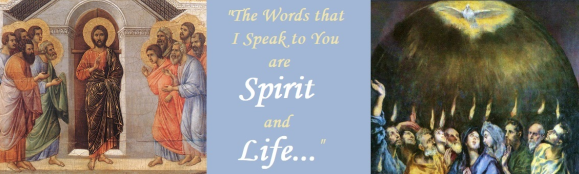
August 19: 1 Corinthians 1:21

[This series of notes is on 1 Corinthians 1:18-2:16; the previous day’s note looked at 1:18, the first statement in the section]

1 Corinthians 1:21

“For thereupon, (since) in the wisdom of God, the world did not know God through the wisdom, God considered (it) good, through the ‘stupidity’ of the proclamation, to save the (one)s trusting.”

The basic contrast set in verse 18 (cf. the previous note), and strengthened by the citation of Isa 29:14 in verse 19, culminates in the rhetorical challenge in verse 20:

“…has not God made dull/stupid [e)mw/ranen] the wisdom of the world?”

The verb mwrai/nw is related to the noun mwri/a, and continues the contrast between “wisdom” (swfi/a) and “dullness, stupidity” (mwri/a).

The use of the compound particle e)peidh/ which opens verse 21 is meant to give emphasis to a particular statement or conclusion; in English, we would say something like “now then, since…”. The first half of the verse uses a delightful bit of (elliptical) wordplay which is easily lost in translation:

    • “in the wisdom of God [e)n th=| sofi/a| tou= qeou=]”
      —”the world did not know”
    • “through the wisdom, God [dia\ th=$ sofi/a$ to\n qeo/n]”

The central phrase is important—”the world did not know”, emphasizing ignorance and lack of (true) knowledge. An interesting question involves whether, or to what extent, this refers to the world’s unwillingness to know, as opposed to a natural blindness/ignorance placed on it (by God). I would suggest that both aspects are indicated by the parallel phrases which bracket the statement:

“in the wisdom of God” (e)n th=| sofi/a| tou= qeou=)
“God through the wisdom” (dia\ th=$ sofi/a$ to\n qeo/n)

However, much depends on the exact force of the second use of “the wisdom”; in context, it can be read two ways:

    • “they did not know God through th(is) wisdom [i.e. through the wisdom of God]”, or
    • “they did not know God through the(ir) wisdom [i.e. through their own human wisdom]”

Both make sense, but I feel that the first option better fits the contrast with the second half of the verse (though perhaps only slightly so). Let us examine the basic outline of the sentence:

    • in the wisdom of God
      • the world did not know God
        • through th(is) wisdom
    • God considered it good
      • to save the ones trusting
        • through the stupidity (of the proclamation)

This does not represent the syntax of the Greek so much as the logic of the statement. According to the first interpretation (above), the world was unable (and/or unwilling) to know God by way of God’s own wisdom. It is possible that this assumes or alludes to the Jewish tradition of Wisdom (that is, God’s wisdom personified) looking to find a dwelling place among human beings on earth, and finding no welcome (1 Enoch 42:2; cf. also Prov 8:31; Sirach 24:8-12, and the likely influence on John 1:10-12). Jewish (and early Christian) Wisdom traditions would have affirmed a basic sense of what we call “natural revelation”—i.e., the manifestation of God’s nature and character through the works of creation, etc. Paul, in his own way, draws upon such thinking in Romans 1:18-23 (cf. also the speech in Acts 17:22-31 [esp. verses 26-28]). The second interpretation (above) yields a somewhat different emphasis:

    • in the wisdom of God
      • the world did not know God
        • through the wisdom (of the world), i.e. their own wisdom

This is more amenable to modern ways of thinking, and, certainly Paul makes reference to the world’s unwillingness/refusal to recognize God (esp. in Rom 1:18-23ff); however, the emphasis on human responsibility, if you will, is perhaps a bit out of place here. When Paul speaks of human ignorance (being “without knowledge”) prior to the introduction of the Gospel, it tends to be in the context of what God Himself specifically has established or has allowed—cf. Acts 14:16f; 17:30; Rom 14:16. In 1 Cor 2:8, the death of Christ is attributed to human ignorance, due to the fact that God has hidden his wisdom away from them; this will but touched on in a subsequent note (cf. also Acts 3:17). The emphasis of God’s action and purpose is perhaps expressed most forcefully in Galatians 3:22, which has a structure similar to 1 Cor 1:21:

    • he (God, through the Scripture, i.e. the Law)
      • closed all things together under sin
    • so he might give the promise (“it might be given”)
      • to the ones trusting
        • through [lit. out of] trust in Jesus Christ

The phrase “he closed all things together under sin” is parallel to “the world did not know”; similarly, “trust in Jesus Christ” is parallel with “the proclamation”. However one interprets 1 Cor 1:21, priority must be given to the will and purpose of God governing these things (“in the wisdom of God” / “God considered [it] good”). Let me summarize the two main interpretations presented above:

    1. The world did not know God through the wisdom of God, so:
      He chose to save the ones trusting (in Him) through something “stupid/foolish”
      —This expresses a kind of (divine) irony
    2. The world did/could not know God through its own wisdom, so:
      He decided to save the ones trusting through something the world itself considers “stupid/foolish”
      —An example of the popular “reversal of fortune” theme, and likewise ironic in its own way

In some ways, the most striking part of this verse is Paul’s expression “the stupidity of the proclamation”—that is, the proclamation of the Gospel. In what way is this proclamation “stupid”?—in that it has at its core the message of man put to death through the disgraceful punishment of crucifixion. This is made clear by Paul in vv. 23ff, which I will be discussing in the next daily note.

August 18: 1 Corinthians 1:18

[This series of notes is on 1 Corinthians 1:18-2:16; the previous day’s note examined 1:17, the concluding statement of the narratio, which leads into the first main section of the letter]

1 Corinthians 1:18

“For the account of the stake [i.e. cross] is (mere) stupidity to the (one)s being lost/destroyed; but to us the (one)s being saved, it is the power of God.”

This declaration by Paul begins the section 1:18-2:16, the first section of the probatio—the main body of the letter, which presents arguments and illustrations in support of the central proposition (in 1:10ff). It builds immediately off of the closing words in verse 17 (cf. the previous note):

“…the Anointed (One) set me forth…to give the good message, (and) not in (the) wisdom of (the) account, (so) that the stake [i.e. cross] of (the) Anointed (One) should not be emptied.”

The Gospel (“the good message”) is identifying as “the account of the stake” (o( lo/go$ [o(] tou= staurou=)—that is, a declaration or proclamation of the death of Jesus on the cross. We typically translate stauro/$ as “cross”, but it really means a stake or post set in the ground, such as that upon which a prisoner or executed man might be hung or impaled. It graphically signifies the punishment of crucifixion. In verse 17, Paul is stating that the significance is in the message itself, not in the way it is delivered or presented. The preacher ought to declare the fact of Jesus’ death (and subsequent resurrection), and what it means for humankind, without relying upon the style and technique of the oration, or clever/persuasive reasoning, etc. This Paul refers to by the expression “(the) wisdom of the account”—i.e. the intelligence and cleverness, etc, with which the message is proclaimed. The word lo/go$ (“account”) often means specifically the Gospel message (“the account/word of God”), but can also mean more generally the use of speech itself (“word[s]”)—Paul is playing on both of these meanings in vv. 17-18. According to the statement in v. 17, to rely on “wisdom” (that is, human wisdom) in proclaiming the Gospel risks emptying it of its true significance. One must admit that there is a bit of (rhetorical) exaggeration at work here, since, as any reading of the letters (and the speeches, etc., in the book of Acts) makes clear, Paul was himself a gifted speaker in many respects, and was more than willing to make use of “wisdom” to persuade men and women of the truth of the Gospel. However, the stark contrast has a definite purpose—to focus our attention on the content of the message, to the death (and resurrection) of Christ.

In verse 18, a different kind of contrast is established, with regard to the purpose and effect of the Gospel message (“the account of the cross/stake”), involving two distinct groups or classes of persons:

    • “the ones being lost/destroyed” (oi( a)pollume/noi)
    • “the ones being saved” (oi( swzome/noi)

Each group is identified by a verbal participle:

(1) The verb a)po/llumi (compound of o&llumi + the preposition a)po/ [“from”]) fundamentally means suffering loss from (someone/something). In the intransitive (middle) form, it often has the sense of “perish, be ruined, destroyed”. A strict rendering of the middle voice would indicate “lose/ruin oneself, lose one’s (own life)”, etc, implying that the loss is the fault or responsibility of the one who suffers it.

(2) The form here is a passive participle of sw/zw (“[to] save”)—i.e. “being saved”. Clearly the passive form here is an example of the passivum divinum (“divine passive”), used frequently in the Scriptures, in which God is assumed to be the one who acts. Both participles are present forms, indicating something which occurs generally or is going on at the present.

The message of the death of Christ has a different effect on each group:

    • the ones being lost/destroyed—”it is stupidity [mwri/a]”
    • the ones being saved—”it is (the) power of God [du/nami$ qeou=]”

Conventional Christian thinking associates being saved or lost with the person’s response to the Gospel; however, here Paul sets a different priority—the one (already) being saved/lost responds differently to the Gospel message. Salvation or destruction is realized and confirmed by how a person is affected by the message; the two responses may be compared:

(1) mwri/a—the word fundamentally means “dull(ness)”, which is typically applied to a human being in the sense of being “dim(-witted)”, often in the pejorative sense of “stupid, silly, foolish”, etc. The five occurrences in the the New Testament all come from 1 Cor 1:18-4:21, and are used in tandem (by way of contrast) with sofi/a (“wisdom”).

(2) du/nami$ qeou=—the word du/nami$ (“power”) also appears frequently (7 times) in 1:18-4:21, providing a different kind of contrast with “wisdom [sofi/a]” (that is, human wisdom). It is also a word that may be implied already in verse 17, in Paul’s statement that relying on “(human) wisdom” risks emptying the Gospel message (“the cross/stake of Christ”)—i.e. emptying it of its power. I prefer to understand the verb keno/w in the more ‘literal’ sense of emptying the message of its content; however, in Paul’s mind, the two aspects are probably connected rather closely. Certainly, he writes elsewhere (Rom 1:16) of the Gospel as being “the power of God”, which normally connotes the ability of God to effect a miraculous transformation of (human) nature. In 1 Cor 1:24 (to be discussed), the power of God is identified with the person of Christ himself.

The dualism established in 1:18 provides the basic framework for the line of argument running through this section. It is hard to say how far this was influenced by Isaiah 29:14, which Paul cites in v. 19:

“For it has been written:
‘I will destroy/ruin the wisdom of the wise (one)s,
and the understanding of the understanding (one)s I will unset [i.e. set aside]'”

The quotation follows the LXX—particularly in its substitution of the 1st person for the 3rd (“the wisdom of the wise will perish…”)—but with, it would seem, a free gloss or adaptation in the second half using the verb a)qete/w (“unset, set aside”) in place of kru/ptw (“hide” = Hebrew rt^s*). At any rate, the use of Isa 29:14 is fitting and confirms two basic points in Paul’s argument:

    1. The salvation and destruction are ultimately the result of God’s own will and action, and
    2. It is particularly human wisdom and knowledge which are destroyed or “set aside” in the proclamation of the Gospel

These are important to keep in mind as one reads the verses which follow, especially as Paul begins to play with the various aspects of the word “wisdom” (sofi/a)—alternating between divine and human wisdom—in verse 21, which is the subject of the next daily note.

August 17: 1 Corinthians 1:17

[This series of notes is on 1 Corinthians 1:18-2:16; the previous day’s note looked especially at the earlier statement—the central proposition (propositio) of the letter—in 1:10]

1 Corinthians 1:17

Verses 11-17 of chapter 1 make up the narratio of the letter; following the main proposition in verse 10, the basic facts of the case are narrated. The reason (causa) for his writing to the Corinthians is given in verse 11: Paul has been informed (“it was made clear/plain to me”) by those “under Chloe” (a house church which she hosted/presided as minister? cf. Rom 16:1-2) about the situation in Corinth—”…that there are disputes/quarrels [e&ride$] among you”. Here Paul uses a different word in place of “splits/divisions” (sxi/smata) in verse 10. The basic of meaning of e&ri$ is some sort of fighting or contest—i.e. strife, quarrel, dispute, etc; it can also carry the specific sense of “rivalry”, which perhaps fits the context of what is described in vv. 12ff. Apparently, a tendency has developed whereby Christians in Corinth are identifying themselves as ‘belonging’ to a particular leading (apostolic) figure—”I am of Paul/Peter/Apollos…”, while some were simply identifying themselves as being “of the Anointed {Christ}”. Paul, it would seem, objects even to this last designation, which suggests that we are dealing with a sectarian tendency—believers identifying themselves with a specific group or congregation within the wider Church, to the exclusion of, or in contrast to, the others. In verses 13ff, Paul seeks immediately to shift the focus away from a sectarian label, and back toward the Gospel message that should be unifying believers. Verses 14-16 offer autobiographical information by way of example. The illustration can be outlined as followed:

    • You were not baptized in the name of an apostle (such as Paul), but in the name of Jesus [cf. v. 10] (v. 13)
      • I (Paul) myself have hardly baptized anyone (v. 14 & 16)
        • I have avoided doing this so that no one should say that I baptized anyone in my (own) name (v. 15)
          • I was sent not to baptize, but to proclaim the Gospel (“give the good message”) (v. 17)

This is a rather subtle (and clever) way to shift attention away from the personal action/role of the minister (i.e. Paul) and toward the message which the minister proclaims. Verses 13 and 17 effectively set the nature and content of this message, as being centered primarily upon the death (the stake/cross) of Christ. Note the substance of v. 13:

    • (Christ, not Paul) was put to the stake [i.e. crucified] over you
    • You were dunked [i.e. baptized] into the name (of Jesus, not Paul)

For the connection of baptism with the death of Christ, cf. Romans 6:3-4; Col 2:12, etc. Paul was perhaps the first to give a definite theological expression to baptism as symbolizing the believer’s identification with, and participation in, the death (and resurrection) of Jesus. Baptism and the death of Christ are connected differently in verse 17:

“for (the) Anointed (one) {Christ} did not set me forth [a)pe/steile/n] to dunk {baptize} (people), but to give the good message—(and) not in (the) wisdom of (the) account, so that the stake {cross} of (the) Anointed should not be emptied.”

A simple reading of this verse in translation may obscure the clarity of its structure; Paul makes a very precise parallel:

    • the good message [eu)agge/lion] (here he uses the related verb eu)aggeli/zw)
      —not in (the) wisdom of (the) account [ou)k e)n sofi/a| lo/gou]
    • the stake/cross of Christ [o( stauro\$ tou= Xristou=] (i.e. the death of Christ)
      —should not be emptied [mh\ kenwqh=|]

The parallel is clear in two respects: (1) that the Gospel message is identified specifically with the death of Christ (on the cross), and (2) that the message must be protected from damage or distortion. This last point is indicated by his use of the two negative statements:

“not in (the) wisdom of (the) account [ou)k e)n sofi/a| lo/gou]”—this is the first occurrence of the word sofi/a (“wisdom”) in 1 Corinthians; it occurs 14 more times in 1:18-2:16 (and once more in 3:19). Paul plays with the various nuances and senses of the word throughout the passage, and these instances must be read with care. The same applies to the word lo/go$, which (like the related verb le/gw) has a wide semantic range. It is typically translated “word”, but its more fundamental meaning is “account” (with the verb le/gw often “[to] give [an] account”); this is usually understood to be an oral account, that is, by speech (words). In the New Testament, and particularly in Paul’s letters, there are two primary senses to the word lo/go$: (a) the mode or manner of the account (i.e. in words/speech), and (b) as “the account of God”, i.e. the Gospel message regarding the person and work of Christ, which is proclaimed by Christian ministers and believers generally. Here in verse 17, Paul uses the word in the first sense, and the phrase basically means “not in the clever way, by techniques of oration, etc, that the message is told”—i.e., the emphasis is on the message itself, not the way he (or any other preacher) delivers the message. Paul will return to this theme in 2:1ff.

“(so) that the stake/cross of Christ should not be emptied [mh/ kenwqh=]”—by Paul’s reasoning, to rely on a clever/skillful delivery of the Gospel message effectively “empties” the message of its fundamental content: the death of Christ on the cross. He makes a similar argument in Galatians 5:11, using the verb katarge/w (“make inactive/ineffective”). The verbs keno/w (“[make] empty”) and katarge/w are used together in Rom 4:14, where the point is that, if being made right/just in God’s eyes comes about through observance of the (Old Testament/Jewish) Law, then trust (in God/Christ) is emptied of meaning and is of no effect (cf. also Gal 2:21). For other occurrences of keno/w, cf. 1 Cor 9:15; 2 Cor 9:3; the verb is connected to the (sacrificial) death of Christ in a very different way in Phil 2:7. One should also note the use of the related word keno/$ (“empty”) in 1 Cor 15:14; there Paul relates it not to the death of Christ, but to his resurrection—if Jesus was not truly raised from the dead, then the proclamation of the Gospel has been empty, to no purpose.

The juxtaposition of the words lo/go$ and stauro/$ in v. 17b is picked up again right at the start of the next section, in verse 18: “For the account [o( lo/go$] of the stake [o( tou= staurou=]…”. This verse will be the subject of the next daily note.

August 1: Romans 8:3-4

This is the second of two notes on 2 Cor 5:21 and Rom 8:3-4; the passage in 2 Corinthians was discussed in the previous day’s note.

Romans 8:3-4

“For the powerless (thing) of the Law [i.e. what the Law lacked power to do], in which [i.e. in that] it was weak through the flesh, God (has done), sending his own Son in (the) likeness of flesh of sin [i.e. sinful flesh] and about [i.e. for the sake of] sin, judged against sin in the flesh, (so) that the just/right (thing) of the Law should be filled up [i.e. fulfilled] in us—the (one)s not walking about according to (the) flesh, but according to (the) Spirit.”

The relevant portion parallel to 2 Cor 5:21 is indicated by italics above; here it is extracted out, along with the Greek text:

“…sending his own Son in (the) likeness of flesh of sin [i.e. sinful flesh] and about [i.e. for the sake of] sin, judged against sin in the flesh, (so) that the just/right (thing) of the Law should be filled up [i.e. fulfilled] in us”
pe/mya$ e)n o(moiw/mati sarko\$ a(marti/a$ kai\ peri\ a(marti/a$ kate/krinen th\n a(marti/an e)n th=| sarki/, i%na to\ dikai/wma tou= no/mou plhrwqh=| e)n h(mi=n

Here are 2 Cor 5:21 and Rom 8:3b-4a in translation side-by-side:

2 Cor 5:21

“the (one) not knowing sin, He [i.e. God] made (to be) sin over us [i.e. for our sake], (so) that we might come to be (the) justice/righteousness of God in him”

Rom 8:3b-4a

“…sending his own Son in (the) likeness of flesh of sin [i.e. sinful flesh] and about [i.e. for the sake of] sin, … (so) that the just/right (thing) of the Law should be filled up [i.e. fulfilled] in us”

I feel it is best to proceed here by comparing the key words and phrases between the two passages:

“the one not knowing sin”
(to\ mh\ gno/nta a(marti/an)
“his own Son”
(to\n e(autou= ui(o/n)

It is interesting to consider these expressions as complementary: in Corinthians, the emphasis is on Jesus’ lack of familiarity with sin; in Romans, it is on Christ as the (beloved) son and heir (cf. Rom 4:13ff; 5:10; 8:12-17), highlighting the importance and preciousness of the sacrifice God makes. Based on Rom 4:13ff (cf. also throughout Gal 3-4), there is probably here an allusion to Abraham’s willingness to sacrifice Isaac, which may already have been present in Christian thought prior to Paul.

“He made (to be) sin”
(a(marti/an e)poi/hsen)
“sending in the likeness of flesh of sin”
(pe/mya$ e)n o(moiw/mati sarko\$ a(marti/a$)

Does Romans here explain the phrase in Corinthians? This is certainly possible, though it raises some interesting questions regarding the traditional view of Christ’s sinlessness. Was sin dwelling in his flesh just as it is for other human beings (cf. Rom 7:13-20)? In order for the expression to have its full significance, this would seem to be the case. It certainly could be affirmed without admitting that Christ committed any sin. On the other hand, the expression “in the likeness of flesh of sin” could be taken to mean that it was not actually “flesh of sin”; but, then, in what way was it like sinful human flesh? If all that Paul meant to say was that Jesus had a “human nature”, without sin, this is a curious way to state it. Needless to say, the entire matter is extremely sensitive from an orthodox Christological standpoint.

“over us” (u(pe\r h(mw=n) “about sin” (peri\ a(marti/a$)

The preposition u(pe/r fundamentally means “over”, while peri/ means “around, about”; however, both can be understood as “on behalf of, for the sake of, because of”, depending on the context. In Corinthians, Paul uses traditional early Christian language for the atoning, sacrificial work of Christ, which takes place “over us”, that is, for our sake. In Romans, the focus is more what is done about (and to) sin—i.e. the power of Sin, especially that which dwells (“houses”) in the flesh (Rom 7:17-18, 20). This is clear from the clause which follows: “he (God, through Christ) judged against sin in the flesh”. Does this mean Christ himself took on sinful flesh—that sin dwelt in his flesh, in common with humankind? There would seem to be three main possibilities:

    • There was no sin in his flesh; he was human, but it was not “flesh of sin”. To say that God “judged against sin in the flesh” means that it was judged through the suffering (and death) of the sinless flesh of Christ.
    • The “curse” or effect of sin was in his flesh, but not the power of sin itself. God judged against what sin had done to human beings in the flesh.
    • Sin did “dwell” in his flesh, and it was this that God judged against. Christ himself knew no sin (2 Cor 5:21) in the sense that: (a) he did not commit sin, and (b) was not enslaved by the power of sin; however God made him to be sin, in order to deal with sin.

The first of these accords with orthodox Christology, especially the blunt declaration in 1 John 3:5; however, the last of these, in my view, seems closer to Paul’s thought in Romans, though perhaps not without further qualification. Ultimately, the most important point is that the power of sin was destroyed and made inactive through the death (and resurrection) of Christ, allowing believers to be set free from bondage to sin and death (Rom 6:6-11).

“so that we…” (i%na h(mei=$) “so that… in us” (i%na…e)n h(mi=n)

Both passages conclude with a i%na purpose-/result-clause (“so that…”), indicating primarily the purpose, but also the result, of God’s work in Christ. The difference of focus or location in terms of the believer (“we/us”) is relatively slight, and complementary—in Corinthians, the emphasis is on what happens to us, in Romans, on what takes place in us.

“we might come to be”
(genw/meqa)
“might be (ful)filled (in us)”
(plhrwqh=|)

Both verbs are aorist subjunctive forms, indicating the possibility or potential of what God can (and) will accomplish in the person of the believer, based on what he has already done (past action). The aorist subjunctive often carries an imperitival force, i.e., “we should/shall become…” In Corinthians, indeed, it is a matter of what the believer will become; in Romans, on the other hand, something is completed or fulfilled (“filled [up]”) in (and among) believers.

“(the) justice/righteousness of God”
(dikaiosu/nh qeou=)
“the just/right (thing) of the Law”
(to\ dikai/wma tou= no/mou)

These expressions reflect what it is that we as believers will become, or what will be fulfilled in us, respectively. In 2 Corinthians, it is the “justice/righteousness (dikaiosu/nh) of God”, an expression which Paul uses in Romans (Rom 1:17; 3:5, 21-22; 10:3, cf. also 3:25-26; 6:13). It is best, I think, to consider this as an attribute of God Himself (subjective genitive), which he demonstrates primarily and fundamentally in the person and work of Jesus Christ. An important emphasis in Romans is that this justice/righteousness has been manifested in Christ altogether separate and apart from the Old Testament Law (cf.  Rom 3:21ff, etc), so it is interesting that the parallel passage in 2 Cor 5:21 specifically mentions the Law (no/mo$). The fact is, that Romans very much builds upon the idea, already discussed in Galatians, that Christ, by his sacrificial death, fulfills the Law for human beings. In Gal 3:10-13, this takes place by Jesus becoming the curse of the Law himself (par. to the idea of being “made sin”). The curse came into effect (pronounced as judgment) when the Law, representing the terms of the covenant between God and his people, was violated. According to Paul’s view, human beings, held in bondage under the power of sin, are incapable of fulfilling the Law (i.e. the Law of God, as expressed in the Torah). In Rom 8:3-4, God judges against sin itself in the flesh, removing its enslaving power over those who trust in Christ.

What about the specific expression in 2 Cor 5:21? how exactly do believers “become” or “come to be” the justice/righteousness of God. According to what Paul teaching and relates in his letters (especially in Galatians and Romans), I would suggest three aspects of this process:

    1. Justification—this is essentially what is described in Rom 8:3-4: (a) Christ is made sin and, through his death, becomes the curse, (b) this sacrificial acts fulfills and completes the requirement of the Law, (c) through Christ God judges sin itself, removing its enslaving power, (d) believers in Christ are thus made right before God, and (e) now have the freedom and ability to fulfill the Law, through the Spirit, no longer by observing the Torah itself.
    2. Union with Christ (“in Christ”)—believers are united with Christ, and thus participate in the very justice/righteousness of God which he himself manifests and embodies. It is communicated in the believer through the power of the Spirit, which is also the Spirit of Christ.
    3. Resurrection/Glorification—Experience of God’s justice/righteousness is also eschatological, with the completion of salvation in the end-time judgment. Ultimately it is the body (“flesh” in the strict sense) which remains to be redeemed and loosed from bondage. Paul never loses sight of this future aspect of salvation.

Paul’s View of the Law: Romans (3:21-5:21, Part 2)

This is the second part of the article on Romans 3:21-5:21 (cf. part 1), according to the following outline:

    • Rom 3:21-5:21: Announcement of God’s justice/righteousness (in Christ), apart from the Law (Torah)
      —3:21-31: A description of God’s justice and on being made/declared just
      —4:1-25: Argument from Scripture: The blessing/promise to Abraham (by trust/faith)
      —5:1-11: The effect/result of being made/declared just: salvation from the coming judgment
      —5:12-21: Argument/Illustration from Scripture: Sin and Salvation (Adam/Christ)

Two discussions on the twin theme of Justice/Justification (3:21-31; 5:1-11) alternate with expository arguments (or illustrations) from Scripture (4:1-25; 5:12-21). This concluding part examines Rom 5:1-11 and the argument from Scripture in 5:12-21.

Romans 5:1-11

This section runs parallel to that of Rom 3:21-31 (discussed in part 1); while the emphasis there was on the justice/righteousness of God and the manifestation of it in action (“justification”), here it is on the effect of justification—believers being made (or declared) just/right before God. We can also see this parallel in its relation to the esteem (do/ca, or “glory”) of God—i.e. the honor/glory which He intrinsically possesses, and which should be shown to him:

    • the justice/righteousness of God—the esteem/glory of God (Rom 3:23)
    • justification of believers—the hope (e)lpi/$) of the glory of God (Rom 5:2)

Verses 1-11 can be divided into three sub-sections, each of which describe the result of justification for believers in terms of boasting (vb. kauxa/omai, n. kau/xhma, kau/xhsi$). Nearly all of the NT occurrences of these three related terms are found in Paul’s letters—it was a favorite of his, and one that can be difficult for other Christians to appreciate in the way that he clearly did. It is possible that it reflects his previous religious zeal and devotion (to the Law and Jewish tradition, etc), as expressed in Gal 1:13-14; 2 Cor 11:22; Phil 3:5-6. Paul was well aware, even from his own experience perhaps, that the flesh (as he would put it) can tend to take pride and exult in one’s religious status and accomplishments. Several times in his letters, Paul makes the point that “boasting” ought to be centered on God’s grace, on the Gospel and the person and work of Christ (Gal 6:13-14; Phil 3:3, etc), doubtless influenced by the famous passage in Jer 9:23-24 (cf. 1 Cor 1:31; 2 Cor 10:17). More often, however, he uses the term in association with the missionary work—his own, and that of other believers—and it is this context that can be hard for modern readers to understand entirely (see esp. the many references in 2 Corinthians). He appears to use the terminology in two basic senses:

    1. In terms of confidence (including the idea of rejoicing) before God—context of divine judgment
    2. In terms of personal pride and satisfaction regarding one’s accomplishments, etc.

Both of these can further be understood in either a positive or negative sense—Paul’s line of argument and rhetoric in the letters often moves between these, playing one off against the other. For his use of the verb, in Romans and Galatians, see Gal 6:13-14 and Rom 2:17, 23, apart from the three occurrences in 5:1-11; for the two nouns (kau/xhma, kau/xhsi$), cf. Rom 3:27; 4:2; 15:17; Gal 6:4.

Verses 1-2: Boasting in the hope of glory— “we boast upon (the) hope of the honor/esteem [i.e. glory] of God” (kauxw/meqa e)p’ e)lpi/di th=$ do/ch$ tou= qeou=). This is prefaced by several statements predicated upon “justification by faith”—”being made just/right out of trust” (dikaiwqe/nte$ e)k pi/stew$):

    • we have/hold [e&xomen] peace toward [i.e. with, before] God (through the Lord Jesus Christ) [v. 1]
    • we have/hold [e)sxh/kamen] the way leading into the favor (of God) [v. 2a]
    • we stand [e)sth/kamen] in this favor (of God) [v. 2b]

Note the word play and assonance of the three verbs (in Greek); the first is in the present tense/aspect, the last two are perfect forms, indicating past action which continues into the present (or is a permanent condition).

Verses 3-5: Boasting in hope through affliction— “we also boast in the (moment)s of distress” (kai\ kauxw/meqa e)n tai=$ qli/yesin). The word qli/yi$ fundamentally refers to pressure, stress, constriction, etc.—it can mean suffering or trouble generally, or affliction and oppression specifically. Verses 1-2 started with believers’ status before God (through justification), and ended with the boast; here vv. 3-5 has an inverse structure, beginning with the boast, and concluding with the presence and work of God in believers (through the Spirit). This structure in vv. 3-5 follows a memorable chain of development:

    • distress/affliction (qli/yi$) which produces…
      • endurance (lit. “remaining under” u(pomo/nh), which produces…
        • proving/testing (“being accepted/received” dokimh/), which produces…
          • hope/expectation (e)lpi/$)

Finally, hope will never shame or embarrass (i.e. disappoint) us (v. 5); the reason for this confidence (“boasting”) is, according to Paul, that “the love of God has been poured out in our hearts through the holy Spirit th(at) is given to us”. Love (a)ga/ph) is parallel to God’s favor (xa/ri$) in v. 2; more notable is the parallel between the “honor/esteem of God” (do/ca qeou=) in v. 1 and the “love of God” (a)ga/ph qeou=) here in v. 5.

Interestingly, we may also find an organizing principle in these verses reflecting the famous triad of 1 Cor 13:13—faith (v. 1), hope (vv. 2-5a), and love (v. 5b).

Verses 6-11: Boasting in the sacrificial work (death) of Christ— “we also are boasting in God through our Lord Yeshua (the) Anointed, through whom we now (have) received the katallagh/” (v. 11). This last verse of the section sums up the sacrificial work described in vv. 6-10. The elements are clear—it is: (1) the work of God, (2) that takes place through Christ, (3) resulting in katallagh/ for believers. The Greek word katallagh/ (katallag¢¡), from the verb katalla/ssw (katallássœ), fundamentally means making (something to be) other, or different, i.e. a change, often in the sense of a (mutual) exchange or reconciliation between two parties. Just as God makes the situation right (dikaio/w, i.e. “justification”) for human beings (believers), so he also has made things different—he has eliminated the separation and hostility which existed under the power of sin. Note the elements of this sacrificial work as expressed in vv. 6-10:

    • It involves Christ’s death, which was over (u(pe/r, i.e. on behalf of, for the sake of) those who lacked proper fear/reverence (a)sebh/$) toward God (i.e. the impious/wicked–all human beings, cf. Rom 3:9-20, 23, etc)—v. 6
    • It took place especially for human beings who are wicked/impious (a)sebh/$), and not just/righteous (di/kaio$) or good (a)gaqo/$)—this makes the sacrificial act all the more noteworthy and significant (v. 7)
    • The character of this sacrificial act reflects and expresses the love (a)ga/ph) of God for (“unto”, ei)$) human beings (v. 8)
    • Its result and effect is that people (believers) are:
      • made just/right, i.e. “justified” (dikaio/w), by means of Christ’s very death (e)n tw=| ai%mati au)tou=, “in his blood”), v. 9a
      • saved (sw/zw) from the passion/anger (o)rgh/, i.e. “wrath”) of God which is about to come upon humankind—this also takes place through Christ (di’ au)tou=, “through him”), V. 9b
    • Ultimately, its effect is to make different (katalla/ssw) the situation of separation and hostility between human beings and God, who were effectively enemies (e&xqroi) to each other (V. 10)
      • this reconciliation also is understood specifically as a result of Christ’s death (v. 10a)
      • however, ultimately salvation also comes as a result of Christ’s life, i.e. his resurrection (v. 10b)

Romans 5:12-21

Just as Rom 4:1-25 contained an argument from Scripture, centered on Abraham (Gen 15:6), and God’s blessing and promise to him, so in this section we find a parallel sort of argument, based on Adam, the first human being (according to Scripture and tradition). Paul does not cite a specific verse; rather, he draws generally upon the narrative in Genesis 2-3. It is similar, in some respects, to the ‘allegory’ he uses in Gal 4:21-31, though the argument here in Rom 5:12-21 would better be described as a kind of parallelistic and synchronistic typology—between Adam and Christ. Paul has already used a typological comparison along these lines in 1 Cor 15:21ff.

Romans 5:12-21 is perhaps the best known section of the letter, and is justly famous. However, for good or for ill, it has also served as a springboard for all sorts of speculative exposition, on theological and other matters—from the historicity of the Genesis narrative, to questions on the origin and nature of the human soul, to specific and elaborate ‘theories on the atonement’, etc—most of which are rather far removed from Paul’s original purpose and intent. A good deal of confusion, I believe, stems from difficulty in understanding Paul’s view regarding sin, and the language with which he expresses it. I will be discussing this briefly in a separate supplementary article. Here, I focus strictly on the context of the passage in Romans, with a careful examination of its structure. I would divide it as follows:

    • Vv. 12-14: The first man (Adam)—sin
    • Vv. 15-17: The second man (Christ)—the favor (“grace”) shown (by God)
    • Vv. 18-19: Contrast of sin vs. justice
    • Vv. 20-21: Contrast of Law vs. favor (“grace”)

Verses 12-17 set the comparison (and contrast) between Adam and Christ; verses 18-21 expound and apply the contrast theologically. The comparison works on two levels: (1) the historical/traditional narrative regarding Adam, and (2) a kind of narrative regarding sin personified. God’s responsive action, in the person and work of Christ, relates to both levels.

Verses 12-14: The first man (Adam)—sin. Interestingly, Paul actually says very little about Adam; the story is really one about sin, which takes place (at a deeper level) through (dia/) the first man. The story can be outlined fairly clearly and simply:

    • sin enters (“comes into”, ei)se/rxomai) the world (death also enters through sin) (v. 12)
    • sin was in (h@n e)n) the world, exercising power, prior to the Law (a&xri no/mou, “until the Law”) (v. 13)
    • sin rules as king (basileu/w), with/through death (“death reigned”), until the Law (me/xri Mwu+se/w$, “until Moses”) (v. 14a)

This is set temporally, in the period before the Law and the Mosaic/Sinai covenant, which is important to keep in mind; the entry of the Law is a climactic moment, serving to increase and enhance the reign of sin (vv. 20-21). Verse 14b is transitional, establishing the typology between Adam and Christ—Adam being “the stamp/pattern [tu/po$] of the (one) about to come”.

Verses 15-17: The second man (Christ)—the favor of God. I have translated xa/ri$ as favor, though it is typically rendered as “grace” or “gift”; properly, it relates better to the idea of God showing favor on human beings. In verse 15, Paul again sets the comparison, this time between sin and the favor of God. The word here, however, is not a(marti/a (“sin”), but para/ptwma (“falling alongside”). Paul generally does not use the singular a(marti/a to refer to individual misdeeds (though he will, on occasion, use it this way in the plural); rather, he prefers para/ptwma or para/basi$ (“stepping alongside”). The force of the prefixed particle para/ in these two words can be understood either in the sense of “falling/stepping away” or “falling/stepping over (the line)”. Note the similarity of outline with vv. 12-14 (above):

    • the favor (xa/ri$/xa/risma) of God enters (the world), by/through Christ, unto (ei)$) many people (v. 15)—it is a gift offered without charge or cause (dwrea/)
    • the favor is in the world, working/multiplying, coming “out of” (e)k) many sins, “unto” (ei)$) justice/justification (apart from the Law) (v. 16)—note the contrast between “judgment against” (kata/krima) and “justification” (dikai/wma)
    • the favor—through its abundance, believers reign, in life (v. 17)

In both instances, this three-stage development reflects the transition of the “one” to the “many” (“abundance”, etc):

    • initial act/work which creates an ‘opening’ for sin/favor
    • ongoing work (and its effect), multiplying and increasing
    • ruling/reigning in abundance

Yet Paul also indicates that the gift (work of Christ) is not like the sin (of Adam)—being effectively the opposite and a reversal of the former, ultimately surpassing it. This provides the basis for the exposition in vv. 18-21, building upon the contrast.

Verses 18-19: Contrast of sin vs. justice/righteousness. Verse 18 sets the contrast:

the transgression (para/ptwma) through one (di’ e(no/$)
unto all men (ei)$ pa/nta$ a&nqrw/pou$)
unto judgment against (them) (ei)$ kata/krima)
the (act of) justice (dikai/wma) through one (di’ e(no/$)
unto all men (ei)$ pa/nta$ a&nqrw/pou$)
unto (their) being made/declared just (ei)$ dikai/wsin)

In verse 19, this contrast is defined in terms of disobedience (parakoh/, lit. “hearing alongside [i.e. incorrectly, neglectfully]”) and obedience (u(pakoh/, “hearing under” [i.e. under submission/authority]).

Verses 20-21: Contrast of Law vs. favor. In verse 20, the Law (no/mo$) is said to enter in alongside sin, causing sin to increase and become more abundant. This connection between the Law and sin is unique to Paul’s teaching, and will be expounded further in chapters 6-7. Just as sin reigned through death (v. 14), in verse 21 it is said to reign “in death” (e)n tw=| qana/tw|). By contrast, the favor (xa/ri$) or “grace” of God also has entered (through Christ) and increased and multiplied even more than did sin (v. 20b); and, while sin reigned in death, the favor of God reigns (through justice/righteousness) “into/unto life” (ei)$ zwh\n)—this is eternal life (lit. “life of the ages”). An outline diagram of this contrast may be helpful:

Law (no/mo$)
|
the power/reign of sin
|
death
Favor (xa/ri$) of God
|
the reign of justice/righteousness
|
(eternal) life

It is this last contrastive comparison, of course, which is most relevant to the question of Paul’s View of the Law, the subject of these articles. And it is the relationship between the Law and sin which is a primary subject in the next section of Romans (Rom 6:1-7:25)—to be discussed in the next article.

July 22: Galatians 5:17, 24

In the previous note, I discussed the pair of statements which bracket vv. 16-25 (see the chiastic outline for this section), the first of three concentric pairs (vv. 16-18, 23b-25) surrounding the central lists of vices (“works of the flesh”) and virtues (“fruit of the Spirit”). As previously indicated, these pairs may be summarized:

    • Exhortation (vv. 16, 25)
    • Conflict—Flesh vs. Spirit (vv. 17, 24)
    • Affirmation regarding freedom (vv. 18, 23b)

Today’s note will examine the second pair.

Conflict for believers (Flesh vs. Spirit)—Gal 5:17, 24

This conflict is expressed two different ways by Paul: (1) the current conflict (v. 17), and (2) its resolution (v. 24).

Verse 17:

“aFor the flesh sets (its) impulse against the Spirit, and the Spirit against the flesh—bfor these lie (stretched out) (one) against the other, so that you might not do the (thing)s which you might wish (to do).”

On the juxtaposition of flesh and Spirit in Galatians (and elsewhere in Paul’s letters), see the previous note and articles; on the “impulse [e)piqumi/a]” of the flesh, cf. also the previous note. Here, in verse 17, we find the related verb e)piqume/w, which I have translated by way of conflating two valid renderings: (a) “have an impulse toward (something)”, and (b) “set (one’s) mind/heart upon (something)”. The principal statement is 17a, which juxtaposes “flesh” and “Spirit”, setting them against each other. Previously in Galatians kata\ sarko/$/pneu/mato$ meant “according to the flesh/Spirit”, here it means, more precisely and fundamentally, “against the flesh/Spirit”. The opposition and mutual incompatibility (even hostility), indicated throughout Galatians, is here expressed directly.

Verse 17b expounds the essential statement with two, related, explanatory clauses:

    1. “for these [i.e. flesh and the Spirit] lie out (one) against the other…”—The particle ga/r relates this clause to what came before (the statement in 17a). The verb Paul uses is a)nti/keimai, “to lie (stretched out) against”, as two opposing animals or armies, etc; the preposition a)nti, like kata, means “against”, but in the more precise sense of two opponents facing each other.
    2. “…so that you might not do the (thing)s which you might wish (to do)”—The subordinating conjunctive particle i%na could indicate either a purpose or a result clause, i.e. “so (in order) that…” or “so that (as a result)…”; formally, a result clause is more appropriate, however, there is clearly the sense of a will being imposed, whether that of the opposing forces, or the overriding will/purpose of God (or both). The two verbs—qe/lhte and poih=te—are both subjunctive forms (“might wish”, “might do”); in other words, each opposing force obstructs and resists the will and action of the other.

Anyone familiar with Paul’s letters will recognize the similarity between verse 17 and Romans 7:15-25. A proper discussion of this passage will have to wait until its place in the series of articles and notes on “Paul’s View of the Law (in Romans)”. Even though, by consensus of most commentators, in Romans 7, Paul is dramatizing the situation of human beings prior to faith in Christ, while Galatians 5 relates specifically to believers as they live in Christ and by the Spirit, the dynamic he describes in each letter is very similar. The main difference, I believe, is that, in Romans 7, the flesh is additionally bound up under the enslaving forces of the Law and sin; in Galatians 5, on the other hand, only the flesh (the “impulse of the flesh”) is involved. The believer, as Paul teaches repeatedly in Galatians (and in Romans, for that matter) is free from both the Law of the Old Testament and the “law of sin”.

Verse 24:

“But the (one)s of (the) Anointed [Yeshua] have put to the stake [i.e. crucified] the flesh (together) with the sufferings and impulses (it brings)”

If the conflict (between flesh and Spirit) was stated in verse 17 (above), the way of resolution to the conflict (if believers are willing to accept it) is presented in verse 24. Each of the important expressions in this verse ought to be examined, at least briefly:

de\ (“but”)—the adversative conjunctive particle de/ properly relates to the prior verses (vv. 19-23), but it could just as well connect back to the statement of conflict in verse 17; in many ways, it is more appropriate and makes better sense in this context.

oi(…tou= Xristou= [ )Ihsou=] (“the ones of the Anointed [Yeshua]”)—here Christian identity is described with a genitival expression, i.e. believers as the ones belonging to Christ, “of Christ”. Certainly this should be understood in relation to the familiar Pauline expression “in Christ” (e)n Xristw=|).

e)stau/rwsan (“have put to the stake”)—the reference of course being to the believers’ identification with, and symbolic/spiritual participation in, the death (crucifixion) of Christ. This was already stated, famously and most powerfully, by Paul in Gal 2:19f:

“…I died away to the Law, so that I might live to God. I have been put to the stake (together) with the Anointed…”

For other mention of the death and cross of Christ in Galatians, see Gal 1:1, 4; 2:20-21; 3:1, 13; 5:11. Through identification with the crucifixion (at the spiritual level), believers are freed from the Law, and, with it, from the power of sin (the “curse” of the Law, cf. 3:10-14). This freedom is expressed vividly in terms of dying—becoming dead to the Law; in Col 2:13-14, we find the even more dramatic image of the Law (and sin [debt/trespass]) itself dying, being nailed to the cross.

th\n sa/rka (“the flesh”)—on Paul’s use of sa/rc (“flesh”) see the previous notes and articles on the relevant passages in Galatians (“Paul’s View of the Law in Galatians”). Interestingly, while Paul declares that, in Christ, believers are free from the Law and the power of sin, he never goes so far as to extend this freedom to the flesh. As he indicates repeatedly in his letters, and specifically here in Gal 5:17 (cf. above), believers face a regular conflict and daily struggle against the “impulse of the flesh”. For more on this thought, see below.

su\n (“with”)—the conjunction su/n, “(together) with” also appears in Gal 2:19, but prefixed to the verb stauro/w (“put to the stake”) in the compound form sustauro/w (“put to the stake [together] with”). There the conjunction connects the believer with Christ; here, in a different, opposite direction, it connects the flesh with its “sufferings and impulses”

toi=$ paqh/masin kai\ tai=$ e)piqumi/a$ (“the sufferings and the impulses”)—on the word e)piqumi/a (translated here as “impulse”), cf. the previous day’s note; the expression e)piqumi/a sarko/$ (“impulse of the flesh”) was used in verse 16. The word is fairly common in Paul’s letters (cf. 1 Thess 2:17; 4:5; Rom 1:24; 6:12; 7:7-8; 13:14; Phil 1:23; Col 3:5, also Eph 2:3; 4:22, etc), and can be fairly rendered “desire, longing”, sometimes in a positive sense, but more often in the negative sense of fleshly/carnal or sinful desire. The word pa/qhma refers to pain or (painful) suffering, hardship, affliction, etc., often indicating a strong emotion or impulse, i.e. “passion”; as such, the word (or the related noun pa/qo$) may be connected semantically with e)piqumi/a, cf. 1 Thess 4:5; Col 3:5. The nouns are plural, and should be seen as both deriving conceptually from the singular “impulse [e)piqumi/a] of the flesh”—the “impulses” (pl.) reflect the reality that believers will experience the “impulse” of the flesh on different occasions and in various forms, along with the effects (the “pains/sufferings”) they bring.

There is an important implication in the language of verse 24, when Paul states that believers (“the ones of Christ“) have put to death (crucified) the flesh—in other words, it does not happen automatically (or magically) as a result of Christ’s death; it requires involvement by the believer, in at least two respects:

    • Identification/participation with the crucifixion at the symbolic/spiritual level, through faith and the work of the Spirit—see esp. Gal 2:19-20 (cf. above)
    • The daily life of the believer, whereby the flesh—both its “impulse” and its “works” —are regularly “put to death” in a practical, habitual sense, cf. Rom 6:6ff; 8:13; Col 3:5; also Gal 6:8-9, 14; and note Jesus’ words in Mark 8:34 par. In traditional theological language, this is sometimes referred to as (self-)mortification.

Just as we are exhorted to “walk” in the Spirit (even though we already live in the Spirit), so we are exhorted to put the flesh to death (i.e. “crucify” it), even though we have already been “crucified with Christ”.

“…Spirit and Life”: John 10:10, 28; 12:25

Not long ago (May 21, 2020) we celebrated the ascension of Jesus—i.e. 40 days after Easter, based on the information in Acts 1:3ff. The “ascension” of Jesus is referred to differently in the Gospels and Acts, and can be understood several ways, based upon the particular narrative under consideration. Most Christians have the scene in Acts 1:9-11 in mind, but there are other references to Jesus’ ascension/departure from the disciples in Luke 24:50-51 [MT] and the “long ending” of Mark (16:19), and, because of the differences in the narrative location and setting, it is not entirely clear if these passages are supposed to refer to the same event as Acts 1:9-11. The situation is further complicated by mention of an ‘ascension’ by Jesus in John 20:17. I have discussed these matters in a prior article.

The earliest Christians, in their preaching and proclamation of the Gospel, did not refer to specifically to the Ascension as such, but rather, the resurrection of Jesus was connected closely to his exaltation by the Father, to a place in Heaven at the Father’s right hand. The emphasis is not so much on Jesus’ actual departure from earth, as to his position in glory in Heaven following the resurrection. The Gospel of John preserves this early view, but it is expanded and developed in the discourses of Jesus in several ways:

    1. The motif of the Son’s ascent is set parallel to his descent—i.e. his coming to earth (as a human being). This ascent/descent theme appears numerous times throughout the Gospel and is related to the dualistic imagery of above/below, etc. The motif is expressed primarily through use of the related verbs a)nabai/nw (“step up”) and katabai/nw (“step down”)—Jesus (the Son) has stepped down (descended) from heaven, and again steps up (ascends) back to the Father in heaven.
    2. There is a strong emphasis on the Son’s return to the Father—he was sent (into the world) by the Father, and returns back to Him.
    3. In the Last Discourse (chaps. 14-17), the theme of Jesus’ departure becomes prominent, though it had been introduced earlier in the Gospel as well (6:62; 7:33-34; 8:21-22ff). It has a two-fold meaning, referring to: (1) Jesus’ death, and (2) his ultimate return to the Father.

Of all the New Testament writings, it is in John that the death, resurrection and ‘ascension’ of Jesus are most thoroughly combined—and by Jesus himself, in the great discourses which make up the core of the Gospel. One of the ways this is expressed is by the verb u(yo/w (“raise/lift high”). In 3:14 and 8:28, Jesus refers to himself being “lifting high”, with the title “Son of Man”; while in 12:32, he makes the same essential declaration, but with the personal pronoun:

“And I, if I am lifted high out of the earth, I will drag all (person)s toward myself”

In 3:14, it is the death of Jesus (i.e. lifted up on the cross) which is most clearly in view, as also in 8:28; however, the same verb in 12:32 seems rather to refer to Jesus’ exaltation. He speaks of being “lifted high out of the earth“. This can refer concretely to being raised out of the tomb, but also, more properly, in the sense of his departure from earth. Just as the Father sent him into the world, so also he will be going out of it. Both aspects are likely in view here in this reference.

This series of notes is dealing with the themes of Life (zwh/) and the Spirit (pneu=ma). The theme of life in connection with resurrection features prominently in the Lazarus episode of chapter 11, especially the dialogue between Jesus and Martha in vv. 20-27. However, I have discussed these verses at length in an earlier series, and so will not be addressing them here. Instead, I wish to consider briefly three verses from the surrounding chapters (10 and 12) where Jesus makes use of the word zwh/ (“life”).

John 10:10

This is part of the “Good Shepherd” parable-discourse in chapter 10. It is here in this discourse that the sacrificial death of Jesus comes more clearly into view. The structure generally follows the Johannine discourse format and may be outlined simply as follows:

    • Saying (parable) of Jesus (vv. 1-5)
    • Reaction by the people indicating a lack of understanding (v. 6)
    • Exposition by Jesus, which may be divided into three parts (each beginning with an “I am” declaration):
      • Jesus as the door/gate of the sheepfold (vv. 7-10): “I am…”
      • Jesus as the herdsman of the sheep (vv. 11-13): “I am…”
      • What Jesus as herdsman does for the sheep (vv. 14-18): “I am…”
    • Narrative conclusion [reaction by the people] (vv. 19-21)

Verse 10 concludes the first expository section (on Jesus as the door or entrance [qu/ra] to the sheepfold). It is only the shepherd, with charge over the sheep, who opens and closes this door; thus this verse provides the transition to the next section, in which Jesus is no longer the door, but the shepherd. Only the shepherd is able to open/close the door, and, when it is closed, any other person who enters presumably does so only to steal or harm the sheep. This effectively distinguishes the shepherd from all other persons. Jesus makes this contrast clear in verse 10:

“The (one) stealing does not come if not [i.e. except] that he might steal and slaughter and bring to ruin; (but) I came that they [i.e. the sheep] might hold life, and might hold (it) over (and) above (all else)”

This involves the familiar expression “hold life”, using the verb e&xw (“hold”); elsewhere in the Gospel, as we have seen, this life is often specified as “the Life of the Age” (i.e. eternal life). The role of herdsman is to protect the sheep (from harm) and to guide them where they can find life-giving sustenance. In both respects he is saving/preserving their lives—the sheep have/hold life under his care.

John 10:28

This verse is from the second half of chapter 10 (vv. 22-39), which comprises a second discourse, but one which shares important themes with vv. 1-21, and it is possible to read the passages in tandem as part of a single discourse-scene. Verses 25-30 reprise the “Good Shepherd” illustration—but here there is a more definite contrast between those sheep who belong to the shepherd and those who do not. For the religious leaders and others who are unable (or refuse) to accept Jesus, he designates them as those who are not part of his flock (vv. 25-26). By contrast, those who do trust in him are part of the flock:

“My sheep hear my voice and I know them, and they follow me, and I give them (the) Life of the Age, and no, they should not (ever) come to ruin into the Age, and no one will seize them out of my hand.” (vv. 27-28)

This motif, of Jesus giving to believers the “Life of the Age” (i.e. eternal life), occurred in the earlier discourses, as has been discussed in prior notes. In the context of the Johannine discourses, this Life which Jesus gives is to be identified primarily with the Spirit (cf. 3:34-35; 4:10ff, 24; 6:27ff, 63; 7:37-39). This is an important theological development of the traditional expression “life of the Age”, as we have discussed. That this Life is connected with the very presence and power of God is clear from vv. 28f, where God (the Father) is the ultimate source of this life (and its preservation/protection) for believers:

“My Father, who has given (them) to me, is greater than all, and no one is able [i.e. has power] to seize (anything) out of the Father’s hand.” (v. 29)

For the chain of relationship between Father and Son, see especially 3:34-35 and 5:26. This will become a central theme in the Last Discourse, in particular the great prayer-discourse of chapter 17.

John 12:25

The theme of Jesus’ sacrificial death, so central to the Good Shepherd discourse (10:11-18)—the laying down of his soul/life and taking it up again—takes on even greater significance as we approach the start of the Passion narrative. In the Gospel of John, the (triumphal) entry of Jesus into Jerusalem is narrated in 12:12-19; Jerusalem is the setting, from verse 20 on, into the beginning of the Passion (chap. 13). There is an interesting parallel here between 12:20-36a (set in Jerusalem) and the Synoptic tradition at the transition point between the end of Jesus’ Galilean ministry and the beginning of the journey to Jerusalem. Consider the following points of similarity:

Indeed, the saying of Jesus in 12:25 is close in thought to the Synoptic saying in Mk 8:35 par:

“For whoever would wish to save his soul will bring it to ruin, but whoever will bring his soul to ruin for my sake and (for) the good message [i.e. Gospel] will save it.” (Mk)
“The one loving his soul brings it to ruin, and the one hating his soul in this world will watch/guard it into (the) Life of the Age.” (Jn)

However one would explain the development of the sayings of Jesus in the Gospel tradition (on this, cf. my recent series “Jesus and the Gospel Tradition”), there can be no doubt that the Johannine version of this traditional saying—this particular form of it—has certain elements which are distinctive to the Fourth Gospel. We may note the use of the articular participle, so frequent in John, to describe the disciple (believer)—”the (one) …ing”—as well as his opposite. Even more important are the qualifying expressions which enhance the point of contrast:

    • “in this world”—with the use of ko/smo$ (“world-order, world”)
    • “into the Life of the Age”—for this expression, cf. the previous notes of this series

The believer is one who “hates” his soul [i.e. his human life] insofar as it is in the world—that is, in the current age and world-order dominated by sin and darkness. The non-believer, by contrast, loves the darkness (3:19), and thus loves his life in the darkness. The contrast to the world and its darkness is the Life and Light of God found in the person of Jesus. This aspect of (eternal) Life will be discussed further in the next daily note, on 12:50.

June 14 (1): John 6:51; Luke 22:19f

John 6:51; Luke 22:19f

Today, in commemoration of Corpus Christi (originally for Memorial Day), I wish to return to the declaration by Jesus in John 6:51, part of the great Bread of Life discourse (cf. the previous note and the earlier Saturday Series discussion), especially as it relates to the institution of the Lord’s Supper (Eucharist). Here is verse 51, with the main points for comparison given in italics:

“I am the Living Bread th(at) is stepping [i.e. coming] down out of heaven—if any one should eat out of this bread, he will live into the Age; and the bread which I will give is even my flesh, (given) over the life of the world.”

The form of the words of institution (in the Synoptic tradition), closest to the language here, is found in the Gospel of Luke:

“And taking bread (and) giving (thanks to God) for (his) favor, broke (it) and gave (it) to them, saying: ‘This is my body th(at is) being given over you—do this unto my remembrance’.” (Lk 22:19)

The last phrase is unique to the Lukan version, but Paul has similar wording in 1 Cor 11:23-25, except that the phrase “do this unto my remembrance” is applied to both the bread and the cup.

It is interesting to consider the differences in the object of the preposition (u(pe/r, “over”) between the Lukan and parallel Synoptic versions, as well as here in Jn 6:51:

    • “over you [pl.]” [u(pe\r u(mw=n] (Lk 22:19-20, applied to both bread and cup)
    • “over many” [u(pe\r pollw=n] (Mk 14:24, par Matt 26:28, applied only to the cup)
    • “over the life of the world” [u(pe\r th=$ tou= ko/smou zwh=$] (Jn 6:51, applied to bread)

The Lukan version is straightforward—Jesus is referring to his disciples (believers). The references in Mark/Matt and John 6:51 are more difficult. Who are the “many” in Mk 14:24 par? There is a similar expression in Mk 10:45 (par Matt 20:28), in which Jesus says:

“For the Son of Man also did not come to be served, but to serve, and to give his soul [i.e. life] in exchange for (the) many [a)nti\ pollw=n], as a means of loosing (them from bondage).”

In both passages, Jesus is almost certainly alluding to Isaiah 53:11-12:

    • “by his knowledge my [righteous] Servant will cause righteousness (to be established) for the many [<yB!r^l*]” (v. 11)
    • “…and he carried/lifted the sin of (the) many [<yB!r^]” (v. 12b)

There is strong sacrificial language used in Isa 53:10-12, including the offering for sin/guilt (<v*a*, v. 10), which relates to the suffering and/or death of the Servant. This made the passage an obvious Scripture to apply to the sacrificial death of Jesus, an association which was recognized already by the earliest Christians (Acts 8:30-35, etc). However, there is some question whether “(the) many” should be understood in the generic sense (i.e. many people), or in a specific religious sense, as the assembly (of God’s people). While Christians typically read the passage in the former sense, an increasing number of commentators feel that it is really the latter which is in view. The same would apply to the use of <yB!r^(h*) in Daniel 11:33; 12:3.

The basis for this specific denotation of the word <yB!r^ is found in the texts associated with the Qumran Community, where the the word is used repeatedly as a title for the Community, especially in the Damascus Document (CD) 13-15 and the “Community Rule” (1QS) 6-8. The members of that Community viewed themselves as the Elect of Israel, the ones remaining faithful to the ancient covenant, who will see (and play a central role in) the coming Messianic Age. The Anointed One(s) will deliver and lead the Community. This involves a decidedly sectarian identity of the people of God—not the entire Israelite/Jewish population, but only a portion, the elect who, when assembled together in the Community, represent “the Many”. There is a clear application and development of the “remnant” image from the Prophets.

It is possible that a similar background of thought applies to the earliest Christians and Jesus’ own use of the expression “(the) many” in Mk 10:45; 14:24 par (cf. also Rom 5:15-19; Heb 9:28). In other words, he is not saying that he gives his body/life for people generally “many people”, but for “the Many” who are his followers. Certainly the fundamental idea of the covenant (diaqh/kh) God established with Israel is present in the Last Supper scene. While it is described as a new covenant (cf. Jer 31:31ff), the basic imagery is derived from the sacrificial ritual by which the covenant between God and Israel was established (Exod 24:4-8). There is thus a dual meaning to the preposition u(pe/r (“over”):

    • the concrete sense of blood being poured (or sprinkled) over the altar and on the people
    • the more abstract meaning “on behalf of”, “for (the sake of)”

If “the many” designates the disciples of Jesus as the new covenant Community within Israel, then it corresponds with the the plural pronoun (“you”) in the Lukan version (22:19-20):

“this is my body th(at is) being given over you“
“this cup (is) the new covenant [diaqh/kh] in my blood being poured out over you“

What of the expression in Jn 6:51, “over the life of the world”? We are accustomed to seeing this in the more general (universalist) sense—i.e., Jesus died on behalf of all people in the world. This would seem to be supported by 3:16-17 (cf. also 4:42; 12:47), in which the desire is expressed that the world (i.e. the people in it) should not be destroyed, but saved. Yet, elsewhere in the Gospel, there is a strong negative connotation (and denotation) to the word ko/smo$ (“world”), where it more literally signifies the world order—the current order and arrangement of things, dominated and governed by sin and darkness. The imagery is fundamentally dualistic—the “world” is opposed to God and his Spirit, to Jesus and his disciples (believers). The basic Johannine construct may be summarized as follows:

    • The “world” has rejected God’s Word and is dominated by sin and darkness
    • God sends Jesus (the Son and Living Word) into the world, to bring light, truth, etc, and salvation to it—that is, to believers—the elect who are in the world, but do not belong to it
    • Jesus (the Son) returns to God the Father and will bring believers with him—he has called them out of the world

The work of Jesus in the world is centered upon his self-sacrificial act—laying down his life, giving his (human) life for the sake of the world. Yet we must be careful to preserve his distinctive wording in 6:51 (and earlier in v. 33):

    • “for the Bread of Life is th(at which is) stepping [i.e. coming] down out of heaven and giving Life to the world” (v. 33)
    • “and the Bread which I will give is even my flesh (given) over the life of the world” (v. 51)

There is here a parallel to Creation, as expressed in the Prologue: Jesus (the Living Word) brings light and life to the world, but those who belong to the darkness do not receive the light—only those who belong to the light are able to receive it. Thus, we should probably not read the expression “life of the world”, as ‘for the sake of the world’, but, rather, in the more precise theological sense found in the Johannine discourses, etc—of Jesus as “the Life of the world”. This would be almost exactly parallel with the expression “Light of the world” in 8:12, which I will be discussing in an upcoming note. We also find the expression “Light of Life” in that same verse. This Light (and Life) is found in Jesus’ own person (in the world), and believers come to hold this Light/Life (in the world).

I would conclude this note with the one element which is unique to the Lukan (and Pauline) version of the words of institution of the Lord’s Supper. While it is stated that Jesus gives his body and blood “over you”—that is, over believers—who are also “the many” whom God has called out of the world, an additional directive is given to us (who are believers):

“do this [i.e. this same thing] unto my remembrance [ei)$ th\n e)mh\n a)na/mnhsin]”

We are thus called to repeat Jesus’ action as a memorial, in memory of what he has done. This should be understood on two levels. First, in terms of repeating the ritual/symbolic act—i.e. the consecrated “Lord’s Supper”. This is certainly how Paul understands it in 1 Cor 11. However, second, and even more important: we are to follow Jesus’ own example of self-sacrifice, on behalf of others (and esp. our fellow believers)—not as a mere repetition of ritual, but as a way of life and thought. This comes through abundantly clear in the foot-washing scene in the Gospel of John (Jn 13:4-17), which effectively takes the place of the Lord’s Supper institution in the narrative. As expressed by the love command (13:34-35), it also becomes the central theme of the great Last Discourse (chaps. 14-16, and the prayer-discourse of chap. 17).

“The fine (shep)herd sets (down) his soul over the sheep…and I set (down) my soul over the sheep”
(Jn 10:11, 14)

(Peter): “I will set (down) my soul over you”
(Jesus): “Will you (indeed) set (down) your soul over me?”
(Jn 13:37-38)

“No one holds greater love than this—that one should set (down) his soul over his dear (friend)s”
(Jn 15:13)

Notes on Prayer: John 17:16-19

John 17:16-19

Verses 16-19 close the first Expository section of the Prayer-Discourse (vv. 12-19, cf. the outline in the previous study). A curious detail to note is the way that verse 16 repeats, almost verbatim, the second half of v. 14. This apparently led a number of scribes to omit the verse, but there a number of such repetitions throughout the Johannine Discourses of Jesus (and the Last Discourse, in particular), and text here is secure. As a result, we ought to regard the repetition as intentional, in terms of the structure of this section. It gives to the triadic structure a chiastic outline:

    • Expository narration—the work of the Son (vv. 12-14a)
      • Unity of Believers with Jesus—”not out of the world” (v. 14b)
        • Petition to the Father—protection from the evil in the world
      • Unity of Believers with Jesus—”not out of the world” (v. 16)
    • Exposition—the work and presence of the Son in believers (vv. 17-19)

According to this detailed outline, verses 17-19 are parallel to 12-14a, both representing the core exposition in the section. How do these two passages relate? The first deals with the time of Jesus’ ministry on earth (“When I was with them…”); the second focuses on the time after Jesus’ departure back to the Father. It must be admitted that the latter emphasis is not explicit or immediately apparent on a reading of the text; however, with a little study, I believe it come through quite clear. There are three statements in this exposition:

    1. A request that his disciples be “made holy” by the Father (v. 17)
    2. A declaration similar in formula to Jesus’ words to his disciples after the resurrection, sending them into the world as apostles/missionaries (20:21)
    3. A statement explaining that the disciples are “made holy” even as Jesus himself is made holy, using reciprocal language and hearkening back to the invocation (v. 1, cf. also 13:31)

Let us examine each of these in turn.

Verse 17

This is another petition by Jesus to the Father, and must be understood in relation to the central petition of vv. 9-11, as well as the further request in v. 15 (cf. the previous study). The motif of protection has been defined in terms of holiness—which, from a religious standpoint, essentially refers to separation from evil (and the world) and protection from it. Here is the request:

“Make them (to be) holy in the truth—your word is truth.”

We may isolate three key components to this petition:

    • The verb (a(gia/zw, “make holy, treat as holy”)
    • Emphasis on truth (a)lh/qeia), and
    • The identification of truth with the word (lo/go$) of God the Father

The second and third of these are important theological key words in the Johannine Writings (both Gospel and Letters), and occur far more frequently than the first. In this regard, they serve to expound and explain the primary petition comprised of the initial words: a(gi/ason au)tou\$, “(May you) make them (to be) holy”. The verb a(gia/zw (hagiázœ, “make holy, treat as holy”) is relatively rare in the New Testament, occurring just 28 times, compared with the much more common adjective a%gio$ (hágios, “holy”). In the Synoptic Gospels, in the words of Jesus, its usage is almost entirely limited to the opening petition of the Lord’s Prayer (Matt 6:9; Lk 11:2), a context similar to that in John 17 (with the emphasis on the name of God the Father and His holiness, vv. 1, 6ff):

Pa/ter […] a(giasqh/tw to\ o&noma/ sou
“Father […], may your name be made holy”

Pa/ter… (“Father…”, v. 1)
e)fane/rwsa/ sou to\ o&noma (“I made your name shine forth…”, v. 6)
Pa/ter a%gie th/rhson au)tou\$ e)n tw=| o)no/mati/ sou
(“Holy Father, keep watch [over] them in your name…”, v. 11)

Paul uses the verb 6 times in the undisputed letters (1 Thess 5:23; Rom 15:16; 1 Cor 1:2; 6:11; 7:14 [twice]); it occurs three more times in Eph 5:26; 2 Tim 2:21; 1 Tim 4:5. It is used 7 times in Hebrews (2:11 [twice]; 9:13; 10:10, 14, 29; 13:12), in the context of the Israelite priesthood—a point to be discussed on v. 19 below.

It is important to emphasize again that the following phrase “in the truth” and the statement “your word is truth” both qualify and explain the meaning of the petition. First, we have the full form of the petition: “Make them (to be) holy in the truth”. The noun a)lh/qeia (“truth”) occurs 25 times in the Gospel of John, and another 20 times in the Letters (9 in 1 John). It has a special theological (and Christological) meaning, going far beyond the simple idea of factual truth, or even moral and religious truth. Rather, it is a fundamental characteristic of God the Father Himself, and of Jesus as the Son (of God). Moreover, it does not refer primarily to Jesus’ teaching and the proclamation of God’s word (as a message), but is embodied in the person of Jesus himself. Cf. John 1:14, 17; 8:32ff, 44-46; 14:6; 18:37-38; 1 Jn 1:6, 8; 2:21, etc. Distinctive of the Johannine theology, including that expressed by Jesus in the Discourses, is the special association (and identification) of the Spirit with this Truth (4:23-24; 14:17; 15:26; 16:7, 13; 1 John 4:6). The declaration in 1 John 5:6 makes this identification explicit and unqualified, and provides the answer to Pilate’s provocative question (Jn 18:38, “What is [the] truth?”):

“The Spirit is the Truth”
to\ pneu=ma/ e)stin h( a)lh/qeia

This declaration also informs the statement in 17:17b (cp. Psalm 119:142b Greek v.l.), which has similar wording (the only real difference being the emphatic position of the verb):

“Your Word is (the) Truth”
o( lo/go$ o( so$ a)lh/qeia/ e)stin

Taking these statements together, we have the fundamental identification of God’s Word (lo/go$) with the Spirit. Again, this does not refer to any particular message or set of words spoken by Jesus (though these are included, Jn 6:63, etc), but to the essential identity of Jesus (the Son) as the living embodiment of God’s Word on earth (Jn 1:1ff, 14, etc). Jesus’ manifest presence with the disciples cleanses them (Jn 13:10-11; 15:3), culminating in his sacrificial death (1 Jn 1:7-9) that protects believers and makes them clean (i.e. holy) from sin. This cleansing power again is identified with the Spirit (“water and blood”, Jn 19:34; 1 Jn 5:6-8)—the living and indwelling presence of Jesus (and God the Father) in believers. The Spirit is given following Jesus’ death (19:30, 34, understood symbolically) and resurrection (20:22).

Thus we may see here in verse 17 an implicit reference to the Holy Spirit as the means by which the disciples (believers) are made holy.

Verse 18

This is confirmed by what follows in verse 18, a reciprocal statement similar to the ‘commission’ of the disciples in 20:21:

“Even as you se(n)t me forth into the world, I also se(n)t them forth into the world” (17:18)
“Even as the Father se(n)t me forth, I also send [pe/mpw] you” (20:21b)

In 17:18, the aorist is used (indicating a past occurrence), while in 20:21, in addressing the disciples, Jesus uses the present tense (and a different verb [pe/mpw]). It is possible that the aorist assumes a tradition such as in the Synoptics (Mk 3:14-15; 6:6b-13 par; Lk 10:1ff), where Jesus is to have sent the disciples out on preaching assignments. The Gospel writer is certainly familiar with such traditions (3:34-38; 6:67-71), though he makes little of them in the narrative. However, a better explanation is at hand in the context of the Last Discourse. An important point of emphasis (discussed in the prior studies) is that Jesus was able to sanctify his disciples by his presence with them on earth (i.e., in the past, up to this point). Now that he is about to return to the Father, he is no longer able to “make them holy” the same way—thus the need (in the present) for the Father to send the Spirit as the Divine Presence (and Power) to fill this role in Jesus’ place. The words of commission in 20:21 are followed directly by the disciples receiving the Spirit from Jesus (who, in turn, had received it from the Father). The Spirit’s presence cleanses the disciples and makes them holy.

In this regard, the disciples are to function in the manner of priests in ancient religious tradition. Through a proscribed ceremonial ritual, Israelite priests were consecrated (made holy) for service in the sacred place(s), handling of sacrifices and sacred objects, etc—e.g., Exod 40:13; Lev 8:30; 2 Chron 5:11. Jesus’ disciples (believers) are compared or described as priests at numerous points in early Christian tradition, part of a wider religious phenomenon whereby devotion to Jesus takes the place of (or fulfills) the earlier cultic ritual practiced by the priesthood. Of the passages in the New Testament indicating this, cf. Matt 12:1-8; Rom 12:1-2; 15:16; 2 Cor 3:6ff; 1 Pet 2:5ff; Rev 1:6; 5:10; 20:6.

Verse 19

The imagery of priesthood is even more prominent in verse 19. Indeed, it is due almost entirely to the influence of verses 17-19 that the Prayer-Discourse in chapter 17 is sometimes called the “High Priestly” Prayer of Jesus. However, this label is quite inappropriate for the Prayer as a whole, since it is only in these three verses that there is any real indication of priestly language or emphasis. Nevertheless, it remains a small, but important, element of the Prayer, and follows the overall theology of the Gospel, in which it is not believers, but Jesus himself, who is described in priestly terms. The emphasis is on the sacrifice (esp. the Passover sacrifice) rather than the one administering it; however, as in the Letter to the Hebrews, Jesus would certainly be seen as fulfilling both roles. This is expressed here in verse 19, where the Passion setting of the Prayer again comes to the fore:

“And (it is) over them [i.e. the disciples] (that) I make myself holy, (so) that they (also) would be made holy in the truth.”

Jesus functions as a priest, consecrating himself for service (symbolized by his actions in 13:4-12)—the primary service being his impending sacrificial death on the cross, which represents the completion of his ministry on earth (19:30). The only other occurrence of the verb a(gia/zw is in 10:36, which comes at the end of the “Good Shepherd” Discourse. The central motif of this Discourse is the idea that Jesus, as the excellent or exemplary (kalo/$) herdsman, lays down his life for the sake of the sheep. God the Father has given him the authority (and the command) to lay down his life (death) and take it up again (resurrection), cf. 10:11, 15, 17-18. The preposition is u(pe/r (lit. “over”), essentially the same idiom as we see here in 17:19, and also in the Last Supper scene in the Synoptics; let us compare these (and the general parallel in Jn 6:51):

    • “This is my blood of the covenant th(at is) being poured out over [u(pe/r] many” (Mk 14:24 par)
    • “the bread which I will give is my flesh over [u(pe/r] the life of the world” (Jn 6:51)
    • “…I set (down) my soul [i.e. life] over [u(pe/r] the sheep” (Jn 10:15, cf. also vv. 11, 17-18)
    • “I make myself holy over [u(per/] them…” (17:19)

There can thus be no real doubt that there is a direct allusion to sacrificial death of Jesus. The idiom in Mk 14:24 par is more concrete, drawing upon the ritual image of blood actually being poured (or sprinkled) over the people at the covenant ceremony (Exodus 24:6-8). In the Johannine references, it is more symbolic, dealing the sacrificial nature and character of Jesus’ death, much as we see in the Letter to the Hebrews (esp. throughout chapters 5-10). From the Johannine (theological) standpoint, it is the sacrificial death (and resurrection) of Jesus which releases the Spirit to believers, both symbolically (19:30, 34) and literally (20:22). The Spirit remains essentially connected with the cleansing power of Jesus’ blood (1 John 1:7-9; 5:6-8), transmitting its live-giving (and protecting) efficacy to the believer.

A point should be made about the reflexive use of a(gia/zw in verse 19, whereby Jesus says: “I make myself holy” (a(gia/zw e)mauto/n). We might have expected him to ask the Father to make him holy, or at least to emphasize the Father as the source of holiness (v. 11). The key to understanding this lies in the Johannine theological-christological framework, perhaps best expressed by Jesus in 5:26:

“as the Father holds life in himself, so also he gave life to the Son to hold in himself”

There is a parallel to this in 13:31-32, using the idea of honor/glory (do/ca) rather than life (zwh/). Moreover, the context of 17:19 is elucidated in this regard by turning back to the use of the verb a(gia/zw in 10:36:

“…the (one) whom the Father made holy [h(gi/asen] and se(n)t forth into the world”

This expresses the same chain of relation as in 5:26, both reciprocal and hierarchical:

The Son alongside the Father—made holy by the Father’s Life and Power
|
Sent into the world by the Father
|
The Son (on earth) has the Life and Power given to him by the Father
|
Prepares to finish his work in the world
|
The Son about to return to the Father—makes himself holy

This dynamic continues as the Son makes his disciples (believers) holy in turn, through his work, and, ultimately, through the presence of the Spirit. Indeed, the Spirit represents the presence of both Father and Son (together) in and among believers, and this theme of unity becomes dominant in the remainder of the Prayer (vv. 20-26), as we will begin to explore in next week’s study.

April 15 (2): Acts 7:55-56

This is the last in the series of daily notes for Easter Season, during which we have explored the Son of Man sayings of Jesus in the Gospels of Luke and John. Today’s note is on Acts 7:55-56—the last Son of Man verse in Luke-Acts, and one of only four occurrences of the expression “Son of Man” outside of the Gospels (the others being Heb 2:6 [quoting Ps 8:4ff] and Rev 1:13; 14:14 [referring to Dan 7:13]).

Acts 7:55-56

Most of the Son of Man sayings in Luke relate either to: (1) Jesus’ suffering and death, or (2) his exaltation to Glory (and future return in Judgment). As I have previously discussed, the use of “son of man” in the first instance would seem to identify Jesus specifically with humankind in its mortality (weakness, suffering and death); in the second, he identifies himself as the Divine/Heavenly figure (of Daniel 7:13ff) who will appear at the end-time Judgment by God. These two aspects of the expression “Son of Man” are present during the night of Jesus’ arrest and “trial” before the Sanhedrin (Lk 22:22, 48 and Lk 22:69), and also in the Angelic announcement of Lk 24:7 where the predictions of Jesus’ Passion (Lk 9:22, 44-45; 18:31-33) are connected with the Resurrection.

When we turn to the book of Acts, the theme of Jesus’ suffering (and death) continues—both with regard to the message that is proclaimed by the disciples (Acts 1:16; 2:23ff; 3:13-15, 17-18; 4:10, 27-28; 5:30 etc), and as a pattern for their own experience of suffering and persecution (cf. throughout chapters 3-7), predicted by Jesus himself (Lk 12:11-12; 21:12-19). So also the theme of Jesus’ exaltation (cf. below). Acts 7:55-56 represents the climactic moment of the Stephen narrative, which spans chapters 6-7:

  • 6:1-7: Introduction, setting the stage for the conflict
  • 6:8-15: The conflict with Stephen, including his arrest and appearance before the Sanhedrin
  • 7:1-60: The Sermon-Speech and Execution of Stephen
    • 7:1: The question of the High Priest to Stephen, which serves as the immediate narrative introduction to the Speech
    • 7:2-53: The Sermon-Speech of Stephen
    • 7:54-60: The response to the Speech and Execution of Stephen
  • 8:1a: Transitional verse, mentioning Saul/Paul’s role in the execution
  • 8:1b-4: Narrative summary describing the onset of Persecution (led by Saul)

Of the three major scenes in Acts which show the early believers in conflict with the Jewish authorities in Jerusalem (cf. Acts 4:1-22; 5:17-42), it is the Stephen narrative which most clearly follows the pattern of Jesus’ Passion. The parallels (some more precise than others) may be outlined as follows:

  • Stephen was “full of faith/trust and the Holy Spirit” and “full of the favor (of God) and power” (Acts 6:5, 8)
    —Jesus likewise, at the beginning of his ministry (Lk 4:1), was said to be “full of the Holy Spirit”; cf. also Lk 4:14 and Lk 1:15, 17; 2:40.
  • Stephen did “great wonders and signs among the people” (Acts 6:8)
    —Cf. especially the notice of Jesus’ miracles in Acts 2:22
  • It is stated that Stephen’s opponents “did not have strength to stand against the wisdom and the Spirit in which he spoke” (Acts 6:10)
    —Cf. Luke 20:26, etc; 21:15
  • The accusation of blasphemy (i.e. insult/slander against God) (Acts 6:11)
    —The declaration of the High Priest (Mark 14:64 par), implied in Lk 22:71
  • Stephen’s opponents “stirred together” the crowds etc. against him (Acts 6:12)
    —The Jewish authorities “shook up” the crowds against Jesus (Mark 15:11, not in Luke)
  • “They seized him and led him into the Sanhedrin” (Acts 6:12b)
    —Cf. Luke 22:52, 54, 66; 23:1, also the specific mention of “Elders and Scribes” (Lk 22:66)
  • False witnesses give testimony, involving the Temple (Acts 6:13)
    —False witnesses against Jesus rel. to the “Temple-saying” (Mark 14:57-59 par, not in Luke)
  • The claim that Jesus would destroy the Temple (Acts 6:14)
  • Stephen stands in the middle of the Council (cf. Luke 22:66)
  • The question by the High Priest regarding the truth of the accusations (Acts 7:1)
    —The specific question in Mark 14:60 par (not in Luke); cf. also Mk 14:61 par; Lk 22:67, 70
  • Stephen’s vision of the Son of Man (Acts 7:55-56)
    —Jesus’ answer to the Council regarding the Son of Man (Lk 22:69 par; in Matt/Mark, seeing the Son of Man)
  • The reaction of the Council (including tearing their garments) (Acts 7:52; Mark 14:63-64 par, cf. Lk 22:71)
  • Stephen is taken outside of the city to be put to death (Acts 7:58, cf. Lk 23:26, 33)
  • Stephen’s dying words: “Lord Jesus, receive my spirit” (Acts 7:59)
    —Jesus’ dying words: “Father, into your hands I place [i.e. give] along my spirit” (Lk 23:46)
  • Stephen asks God to forgive those putting him to death: “Do not hold up this sin against them” (Acts 7:60)
    —Jesus’ prayer of forgiveness on the cross (Lk 23:34 [not in some MSS])
  • After Stephen’s death “there came to be… a great persecution upon the Church” (Acts 8:1)
    —After Jesus’ death “there came to be darkness upon the whole land” (Luke 23:44)

From a narrative standpoint, these parallels illustrate vividly the disciple following in Jesus’ footsteps, even to the point of death (Lk 5:11, 27-28; 9:23, 57-62; 18:22, 28; 21:12-19; 22:39, 54; 23:27, 49 pars; cf. also Mk 10:38-40, etc). Let us compare specifically the Son of Man parallel:

Jesus’ saying (Lk 22:69):

“From now on, the Son of Man will be sitting out of [i.e. on/at] the right hand of the power of God”

The formula in Mark/Matthew is:

“[From now] you will see the Son of Man sitting out of [i.e. on/at] the right hand of the Power, and coming with/upon the clouds of Heaven“

The declaration by Stephen (in Acts 7:56) is:

“I behold the heavens opening through and the Son of Man standing out of [i.e. on/at] the right hand of God“

The preceding narrative in verse 55 adds the following details: (1) he saw the glory of God, and (2) Jesus is specifically identified as the Son of Man (“Jesus standing at the right hand of God”).

The use of the verb dianoi/gw (“open through[out], open thoroughly”) is interesting, as it appears to be a favorite of Luke’s—7 of the 8 occurrences in the New Testament are in Luke-Acts, and five of these refer to the knowledge and awareness of Jesus, and of coming to faith, etc. Note:

    • Luke 24:31—”and their eyes were opened through [dihnoi/xqhsan] and they knew upon [i.e. recognized] him…”
    • Luke 24:32—”Were our hearts not burning [i.e. being set on fire] [in us] as he spoke with us in the way, as he opened through [dih/noigen] to us the Writings [i.e. Scriptures]?”
    • Luke 24:45—”Then he [i.e. Jesus] opened through [dih/noicen] their mind for th(eir) bringing together the Writings [i.e. understanding the Scriptures]”
    • Acts 16:14—”a certain woman {Lydia}… of whom the Lord opened through [dih/noicen] (her) heart”
    • Acts 17:3—Paul gathered through [i.e. discussed, argued] with them from the Scriptures, “opening through [dianoi/gwn]…that it was necessary for the Anointed (One) to suffer and stand up (again) out of the dead, and that this Yeshua is the Anointed (One)…” (cf. Luke 9:22; 24:7, 26, 46)

The early chapters of Acts (chs. 1-7) are still connected in many ways with the Gospel narrative, so it is fitting perhaps that they close with this vision by Stephen of the Son of Man, a fulfillment of the sayings by Jesus such as that in Luke 22:69. His vision confirms the reality of Jesus’ exaltation to heaven (at the right hand of God) and of his identity as the divine/heavenly Son of Man. Christ’s presence in heaven at God’s right hand was a common motif in early Christian tradition (Acts 2:25, 33ff; 5:31; Rom 8:34; Col 3:1; Eph 1:20; 1 Pet 3:22; Heb 1:3, etc), largely influenced by Psalm 110:1 (Acts 2:34; Heb 1:13). The remainder of the book (chapters 8-28), on the other hand, narrates the spread of Christianity outside of Judea, out into the wider Greco-Roman world, and thus focuses more precisely on the message (the Gospel) of Jesus, and how people respond to it. If Stephen saw a vision of heaven “opened”, that is, the revelation of God in the person of Jesus, so also do believers have their hearts and minds “opened” to the truth, and, in turn, proclaim the message of Christ to others, “opening” and explaining the Scriptures.